
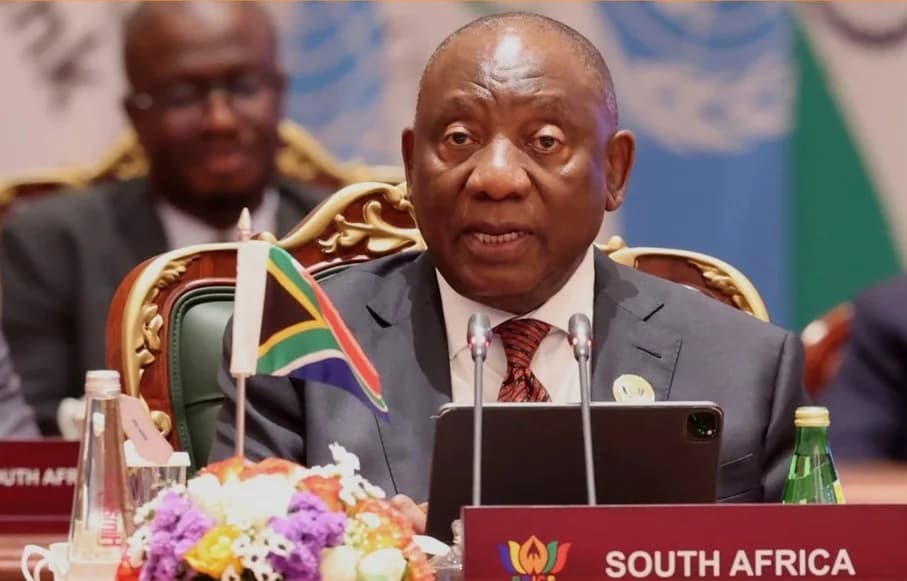
South African President Cyril Ramaphosa has deployed 510 soldiers to support police in KwaZulu-Natal province following recent violence linked to misinformation about a court ruling on refugee law.
The soldiers will work alongside the South African Police Service (SAPS) under Operation Prosper, with the deployment running until November 30. The deployment is expected to cost 34,082,720 South African rand (Sh265.6 million).
In a statement on Tuesday, the South African Presidency said the military personnel would be placed on standby to help police respond to any further incidents as authorities seek to maintain law and order in the province.
“The members of the South African National Defence Forces (SANDF) will be on standby to support the police for any eventuality that may occur,” the Presidency said.
The government linked the recent violence to what it described as a campaign of misinformation about a Constitutional Court ruling delivered on July 7, 2026.
The court ruled that asylum seekers should not be denied the chance to apply for protection just because they entered South Africa without a transit visa or failed to report to an asylum office on time. The ruling fuelled protests against immigration, with demonstrators wrongly claiming it gives undocumented foreigners automatic permission to remain in South Africa.
The unrest has since turned violent, with some migrants being attacked by protesters. Last week, a foreign national was reportedly beaten to death by a crowd of about 50 protesters in Durban. The man, believed to be in his late 30s or early 40s, was attacked on the roadside after two men reportedly broke away from a marching group and approached him.
The killing came amid wider anti-immigrant demonstrations in South Africa that gathered momentum in April, with demonstrations led by groups demanding tougher immigration enforcement and the removal of undocumented foreign nationals.
The protests escalated in the weeks leading up to June 30, when thousands of people marched in cities including Durban and Johannesburg. The date had been circulated as a deadline for undocumented migrants to leave the country, although the South African government had not issued such an order.
The marches were marred by reports of attacks on foreign nationals and looting of migrant-owned businesses. March and March, one of the groups behind the mobilisation, vowed to continue demonstrating until its demands for mass deportations were met.
The violence prompted African governments, including Kenya, Nigeria, Ghana and Mozambique, to help citizens leave South Africa, while diplomatic tensions grew over the treatment of migrants.

Comments
No comments yet. Be the first to share your thoughts.