
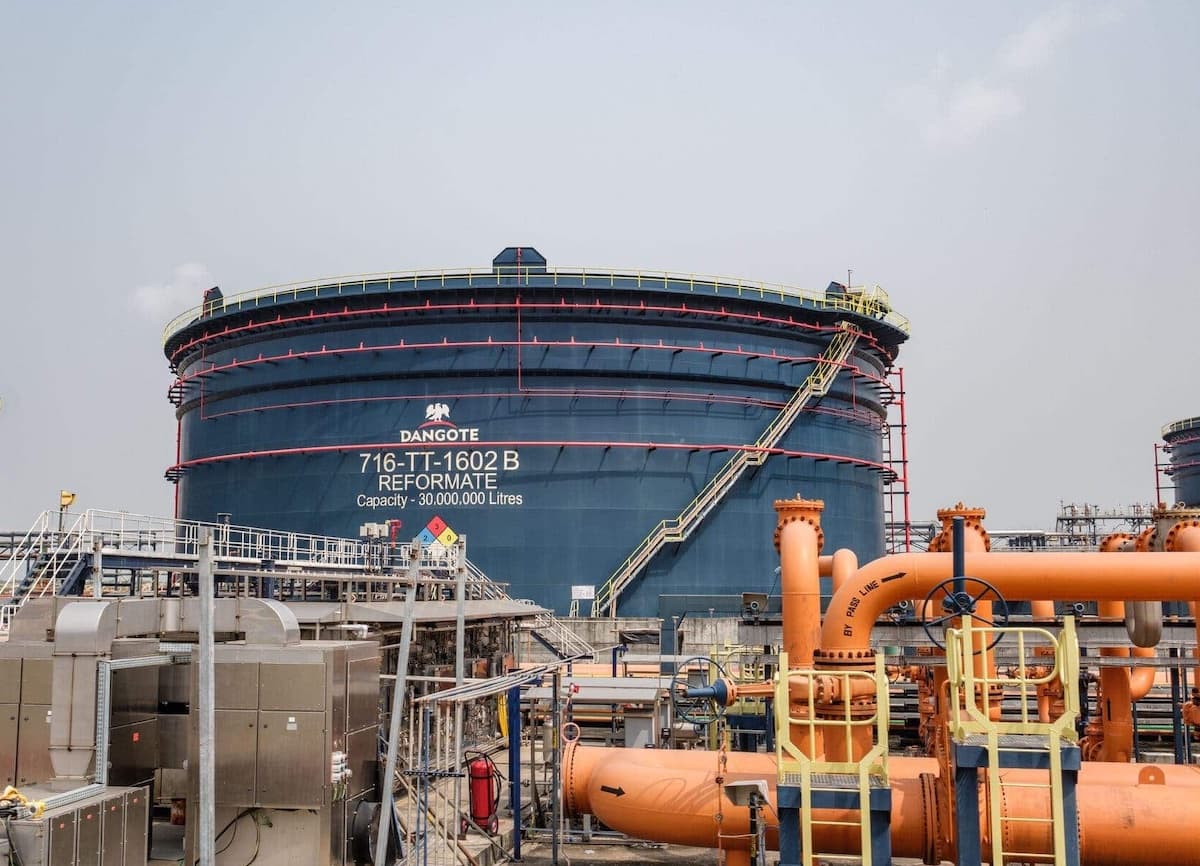
The politics surrounding Dangote’s planned oil refinery in Lamu could eventually prove more consequential than the refinery itself and realign regional relationships. On the surface, the project is a a major industrial investment. Beneath the veneer, its location, regional ambitions and the interests of neighbouring countries evoke a political story as much as a business one.
The proposed $16 billion, 700,000-barrel-a-day refinery is expected to serve a market extending well beyond Kenya. It comes at a time when Uganda and Tanzania are pursuing their own petroleum ambitions around Hoima and Tanga, creating an emerging contest over where East Africa’s oil business.
President Yoweri Museveni’s appearance at the Lamu groundbreaking captured this complicated regional equation. Uganda supports the Lamu refinery, but Museveni made it clear that Kampala will continue with its own Hoima refinery and will not immediately invest in Lamu.
More revealing was his reference to Tanga. Museveni said he wanted to speak to President Samia Suluhu Hassan and President William Ruto to establish what happened to the Tanga refinery before Uganda decides whether to take a stake in Lamu. It was a reminder that Uganda’s interests stretch across all three projects rather than fitting neatly into a Kenya-versus-Tanzania contest.
SEE ALSO >> Dar es Salaam Port Gives Mombasa a Run For Its Money in Regional Trade
Only weeks before the Lamu ceremony, Museveni and Samia had witnessed the signing of an agreement to develop Tanga as a regional energy hub. The project is expected to strengthen petroleum storage, refining, logistics and trading around Tanga and adds another strategic dimension to Uganda’s relationship with Tanzania.
This makes the politics around Lamu difficult to ignore. Kenya is positioning the refinery as part of a wider economic transformation of the Lamu corridor, while Tanzania is developing Tanga and Uganda is maintaining its Hoima project, with each country seeking to secure its place in the region’s petroleum economy.
President Samia’s absence from the Lamu ceremony raises an interesting question. Tanzania was represented at the ceremony by its Deputy Energy Minister. It is not clear whether her absence was a deliberate political snub.
However, it would also be difficult to separate it completely from Tanzania’s strategic interest in Tanga, particularly when the Tanzanian and Ugandan governments had only recently committed themselves to developing that energy corridor.
The issue is made more interesting by Tanzania’s earlier disagreement with Kenya over the Tanga refinery proposal. President Samia had publicly complained that President William Ruto announced the proposed Tanga refinery without consulting her, while Dangote subsequently settled on Lamu after considering several possible locations, including Tanga and Mombasa.
What is now emerging is therefore not simply a choice between different refinery sites. It is a competition over the infrastructure and economic influence that will follow oil, including pipelines, storage facilities, investment, industrial development and access to regional markets.
Other countries are already positioning themselves around these opportunities. Ethiopia’s Prime Minister Abiy Ahmed attended the Lamu ceremony, while Rwanda has expressed interest in the proposed regional equity structure, and Dangote has offered up to 30 per cent of the refinery to East African countries.
For these countries, the calculation is likely to be less about political loyalty to Kenya, Tanzania or Uganda and more about where their economic interests can best be served. Lamu offers access to a large new refining facility and the Indian Ocean, while Tanga has the advantage of its connection to Tanzania’s existing energy infrastructure and the Uganda-Tanzania crude oil corridor.
Uganda is the clearest example of the delicate balancing act. Museveni can support Lamu, maintain the Hoima refinery and continue working with Tanzania on Tanga because Uganda’s interest is in securing reliable routes for its petroleum resources and access to regional markets than choosing one neighbour at the expense of the others.
Read Also >> New Export Processing Zone to Drive Industrialization and Employment
Kenya’s interests are equally clear. If Lamu develops into the regional petroleum and industrial hub envisaged by its promoters, it could strengthen the LAPSSET corridor and give Kenya considerable economic influence over the movement and processing of petroleum products in the region.
That possibility is bound to attract attention in Kampala and Dar es Salaam, where governments have their own ambitions. This is why the Lamu refinery should be watched beyond the impressive investment figures and promises of jobs and industrialisation. Its bigger significance may lie in how it changes the relationship between Kenya and its neighbours at a time when East Africa is talking increasingly loudly about regional integration.
Museveni used the Lamu occasion to renew his call for an East African political federation, yet the region’s emerging oil infrastructure shows how difficult such integration can become when national economic interests overlap.
Although there is no declared oil war between Kenya, Uganda and Tanzania, a quiet contest for the region’s petroleum future is discernible. Dangote’s Lamu refinery has brought that contest into sharper focus, and what happens next could affect not only where East Africa gets its refined fuel, but also where the region’s economic and political influence begins to settle.


Comments
No comments yet. Be the first to share your thoughts.