
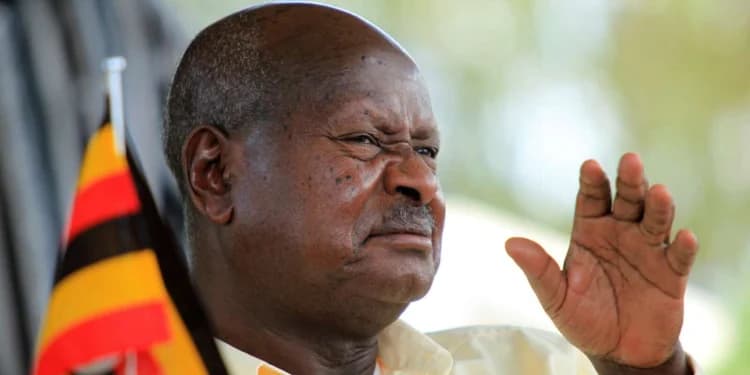
Ugandan President Yoweri Museveni has explained why his government moved away from buying petroleum products through Kenyan middlemen, saying a Kenyan senator first alerted him to the arrangement.
Museveni said he was surprised to learn that Uganda was purchasing fuel through intermediaries in Kenya instead of dealing directly with refineries and bulk suppliers.
The Ugandan President made the remarks on Thursday, September 17, while presiding over the groundbreaking of a 320-million-litre petroleum storage terminal in Mpigi District, Uganda.
According to Museveni, the intervention eventually led Uganda to change how it sourced petroleum products, with the Uganda National Oil Company (UNOC) taking a direct role in fuel imports.
Museveni Says Kenyan Senator Alerted Him
Museveni said Uganda had for years been purchasing petroleum products through middlemen based in Kenya before a Kenyan senator brought the matter to his attention.
He said the revelation prompted him to question why Uganda was not purchasing fuel directly from companies involved in refining and bulk supply.
“The Republic of Uganda was buying petroleum products through middlemen in Kenya. And the person who woke me up first was a senator from Kenya,” Museveni said.
Museveni said he later contacted Irene Muloni, then Uganda’s Energy and Mineral Development minister, after being informed about the arrangement.
He described the situation as a serious problem and questioned why Uganda was relying on intermediaries when it could source petroleum directly.
Why Uganda Turned to Refineries and Bulk Suppliers
Museveni said Uganda eventually changed its approach after linking up with companies that had access to refineries and operated as bulk suppliers.
He explained that the companies could purchase petroleum products, store them until they were needed and then sell them to buyers.
“If you know there are refineries in the world, why don’t you buy from them? That’s how we eventually linked up with people who had refineries, or what they call bulk suppliers. It’s their job: they buy petroleum, keep it when it is needed, and sell,” stated Museveni.
In July 2024, UNOC received its first directly imported petroleum consignment at the Port of Mombasa and Uganda’s Energy Ministry said the first shipment contained about 58,000 metric tonnes of petrol.
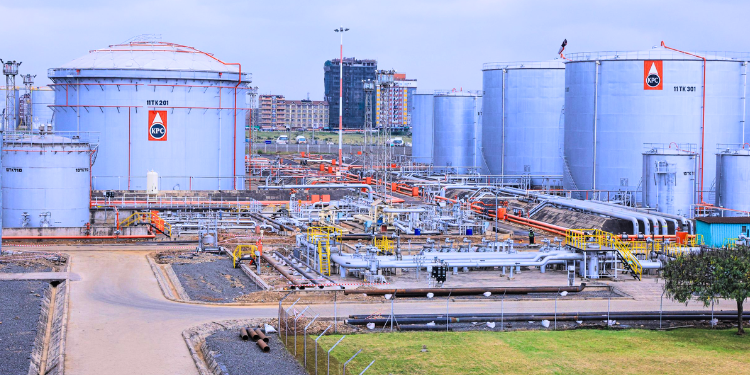
The fuel continues to enter through the Port of Mombasa and is transported using Kenya’s petroleum infrastructure, including the Kenya Pipeline Company network.
Under the new arrangement, UNOC imports the petroleum products directly rather than relying on Kenyan oil marketing companies to procure the fuel for the Ugandan market. Kenya and Uganda agreed on an arrangement allowing UNOC to import through Mombasa while continuing to use the Kenya Pipeline system.
Museveni also linked the procurement change to lower premiums paid for petroleum products.
He said the premium on diesel fell from US$118 to US$83 per metric tonne, while the premium on petrol declined from US$97.50 to US$61.50.
For aviation fuel, he said the premium dropped from US$114.25 to US$79.25 per metric tonne.
Museveni presented the reductions as evidence of the savings achieved after Uganda changed its fuel procurement system.
How the Shift Affected Kenya
Uganda’s move to direct imports also changed the regional petroleum trade and reduced the role previously played by Kenyan oil marketing companies, and the change came as Kenya recorded a decline in petroleum exports in 2025.
According to the Kenya National Bureau of Statistics (KNBS), petroleum exports fell from 989.1 thousand tonnes in 2024 to 983.5 thousand tonnes in 2025.
Petroleum re-exports also declined from 945.3 thousand tonnes to 940.6 thousand tonnes during the same period.
The figures provide context to the effect of changing regional fuel trade arrangements, particularly the reduction in fuel previously imported into Kenya and re-exported to neighbouring countries.
At the same time, Kenya’s total petroleum imports increased by 12.2 percent to about 5.5 million tonnes in 2025.
The decline in exports therefore came as the country continued to handle substantial volumes of imported petroleum products.
Follow our and X Account for real-time news updates



Comments
No comments yet. Be the first to share your thoughts.