

The Ministry of Education has clarified the potential disruptions to national examinations due to the October–December 2026 El Niño during the 13th National Climate Outlook Forum.
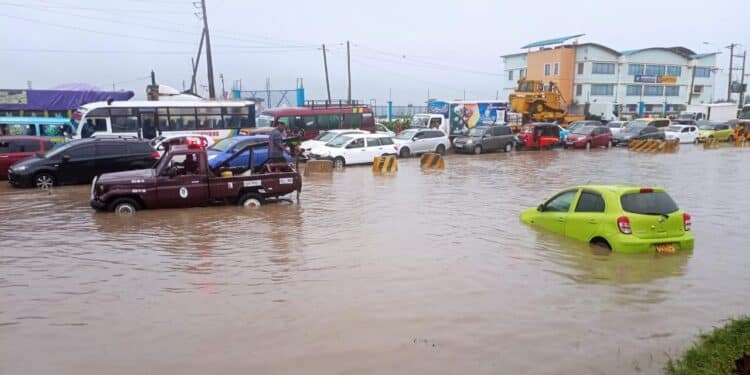
However, the Kenya Meteorological Service Authority warned that the 2026 Kenya Certificate of Secondary Education (KCSE) examinations, scheduled by the Kenya National Examinations Council (KNEC) for November 2 to November 20, could be disrupted by forecast El Niño rains, which may flood roads.
Additionally, the expected downpour may also cut off examination centers and disrupt the movement of examination materials.
The Ministry of Education cautioned that the presence of El Niño does not mean every part of Kenya will automatically experience extreme rainfall.
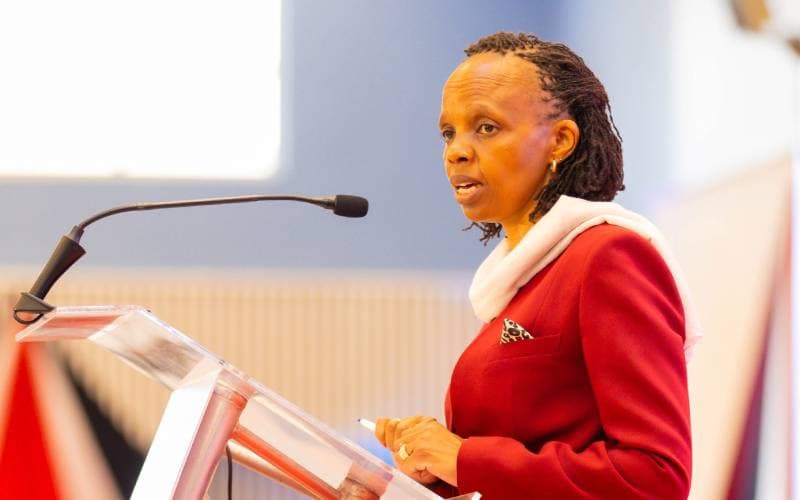
“Disruption of national examination. The examinations are zero-sum. They cannot be postponed, and they cannot be delayed. Everybody must do the paper at the same time across the country,” Dr. Kanyi Gioko, the Director of Administration, Ministry of Education, explained.
Education Sector Maps Vulnerable Examination Centers
At the 13th National Climate Outlook Forum in Nairobi, government agencies and other stakeholders assessed the effects of the October–December rains and outlined measures.
Education officials said they would map examination centers to identify locations that could become difficult to access during heavy rainfall.
Where necessary, centers could be relocated to safer or more accessible locations.
The contingency plan also includes alternative ways to transport examination materials, including air transport and drones to deliver materials to affected examination centers.
El Niño Preparation
El Niño could disrupt learning, with schools expected to adjust learning hours, relocate learners, or establish alternative centers during the rainy season.
Boarding school management has been advised to ensure the are stocked so learners have enough food throughout the rainy season.
Additionally, education officials said candidates will also undergo mental awareness counseling before the exams.
Officials are also preparing for potential telecommunications and power disruptions.
Satellite communication will be used to maintain contact between examination and security teams if conventional networks fail.
“This year we are expecting El Niño, which is a bit more dangerous, and we lose power, we lose connectivity; teams, security teams, examination teams cannot communicate. For this one we have employed the use of satellite communication as a mitigation and because it’s an expensive intervention, of course we are working with the Ministry of Interior.
National Exams and Assessment Dates
According to the Ministry of Education, candidates will undertake the Kenya Primary School Education Assessment (KPSEA) from October 26 to October 29, 2026.
The Kenya Intermediate Level Education Assessment (KILEA), designed for learners at the intermediate level of basic education and assessing competencies, will run from October 26 to October 30.
Candidates will also sit for the Kenya Junior School Education Assessment (KJSEA) and Kenya Pre-Vocational Level Education Assessment (KPLEA) between October 26 and November 5, 2026.
Meanwhile, candidates sitting the Kenya Certificate of Secondary Education (KCSE) examination will begin their tests from November 2 to November 20, 2026.
Earlier El Niño Disruptions
During the 2023 national examinations, the government used helicopters to reach areas affected by El Niño.
In 2019, three helicopters were placed on standby in Northeastern Kenya to airlift examination papers to areas affected by flooding.
During the 13th National Climate Outlook forum, Kenya Red Cross Secretary General Ahmed Idris also called for early action, warning that households, institutions, and government agencies need to turn climate forecasts into practical decisions.
The Kenya Meteorological Service Authority has forecast an enhanced October–December 2026 rainfall season, with above-average rainfall expected across about 80 percent of the country.
Additionally, the World Meteorological Organization has similarly warned that the Greater Horn of Africa is likely to experience wetter-than-normal conditions.
Urban centers such as Nairobi, Kisumu and Mombasa were identified as areas where flooding could occur rapidly, while floodplains could experience problems within the first week of the rainfall.
Follow our WhatsApp Channel and X Account for real-time news updates.
Comments
No comments yet. Be the first to share your thoughts.