

Kenya’s education system is undergoing a major phase of the Competency-Based Curriculum (CBC) transition as the first cohort moves from Junior School to Grade 10 under the new Senior School system.
The learners, who began Grade 7 in 2023, completed Grade 9 and sat the Kenya Junior School Education Assessment (KJSEA) in 2025 before transitioning to Senior School in January 2026.
According to President William Ruto, the government had arranged with the NG-CDF, including the construction of 23,000 new classrooms, to ensure that 1.1 million students were placed under the new system.
“I want to assure parents across the Republic of Kenya and other stakeholders that we have made adequate arrangements so that all the 1.1 million children have a place to go to in senior school. Together with the NG-CDF, we have delivered 23,000 new classrooms, and 1,600 laboratories are under construction, easing congestion and giving CBC the dignified facilities it requires,” Ruto stated during a State of the Nation Address.
Learners who underwent the 2025 assessment were the first, as the new Senior School structure is being implemented with learners who have progressed entirely through the CBC pathway.
From 8-4-4 to a New Education Structure
The CBC system was introduced to replace the 8-4-4 education model, which had been in place for decades.
Under the new structure, learners spend six years in primary school, three years in Junior School, and another three years in Senior School.
Grade 10, therefore, marks the beginning of the final three years of basic education according to the Ministry of Education.
Unlike the traditional system, where learners largely followed a common secondary-school curriculum before choosing careers later, Senior School lets learners specialize according to their interests, abilities, and career aspirations.
Three Pathways Define Senior School
Grade 10 learners choose from three broad pathways, including STEM, Social Sciences, and Arts and Sports Science.
The Ministry of Education’s official Grade 10 selection system lets learners choose pathways, subject combinations, and Senior Schools.
Under the educational reforms, the STEM pathway covers pure sciences, applied sciences, technology, and technical studies.
The Social Sciences pathway focuses on languages, humanities, and business-related subjects, while the Arts and Sports Science pathway provides options in performing arts, visual arts, and sports science.
To support the system’s effectiveness, the Ministry’s selection platform provides information on the subject combinations offered by individual Senior Schools.
KJSEA Replaces the Old Examination Approach
One of the biggest changes is how learners are assessed before entering Senior School. Under the old 8-4-4 system, KCPE marks played a central role in determining secondary-school placement.
In contrast to the 8-4-4 system, CBC uses a broader assessment framework for the transition to Grade 10.
The KJSEA formed part of the process for the pioneer cohort, alongside school-based assessment and other placement considerations.
The Grade 10 placement system also takes into account learners’ choices, performance, psychometric results, equity considerations, and school capacity.
Additionally, the new Senior School model places greater emphasis on specialization, with learners expected to study subjects linked to their selected pathway and track, while also undertaking compulsory areas.
For schools, however, the model requires adequate laboratories, workshops, ICT facilities, sports infrastructure, and teachers who can deliver specialized subjects.
Government Intervention in CBC to CBE Transition
Kenya is currently managing a period in which learners following the legacy 8-4-4 system and those following CBC/CBE exist within the education system at the same time.
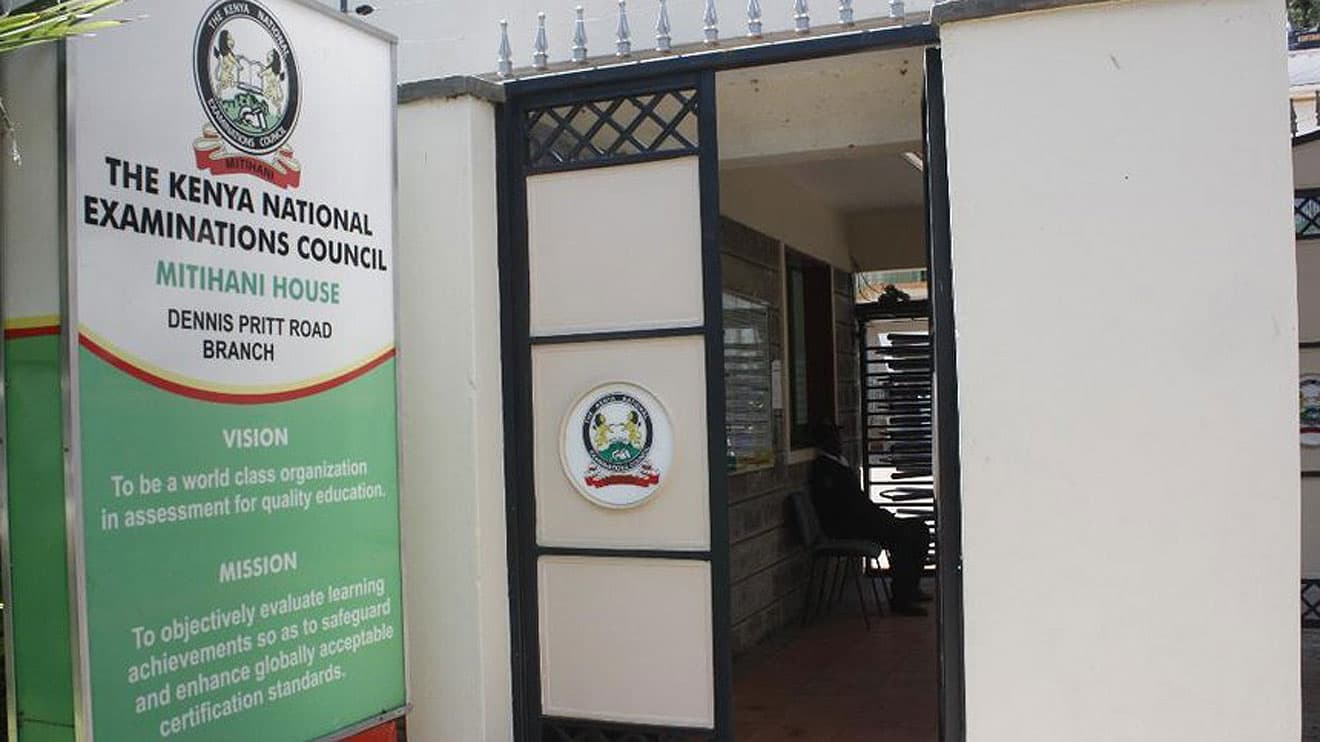
KNEC continues to administer KCSE, with registration arrangements in place for the 2026 examination. At the same time, the new Grade 10 system is being implemented, and schools and education officials must manage two different assessment and progression frameworks during the transition.
The transition has placed significant pressure on Kenya’s education infrastructure. Junior School has already created demand for additional classrooms, laboratories, and teachers.
Moreover, the arrival of the first Grade 10 cohort adds another challenge since Senior Schools must provide the facilities required by different pathways.
To address the educational reform challenges, the government has invested in classrooms and laboratories while expanding teacher recruitment and training.
In April 2025, Education CS Julius Ogamba announced in Parliament that the government planned to begin constructing another 1,600 laboratories from July 2025 as part of preparations for the first Grade 9-to-Grade 10 transition under CBE.
Follow our WhatsApp Channel and X Account for real-time news updates.
Comments
No comments yet. Be the first to share your thoughts.