
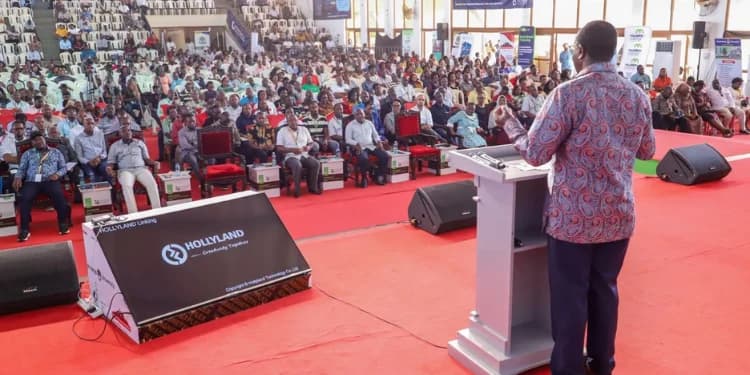
School principals, headteachers and board members who illegally increase fees or charge tuition in public schools could face heavy penalties under a new proposed law before Parliament.
The Basic Education Bill, 2026, seeks to regulate fees charged by public schools and prevent administrators from imposing unauthorized levies on parents.
Under the proposed law, public school heads or anyone who violates the provision prohibiting extra tuition fees would face a fine of up to KSh1 million, imprisonment for up to three years, or both upon conviction.
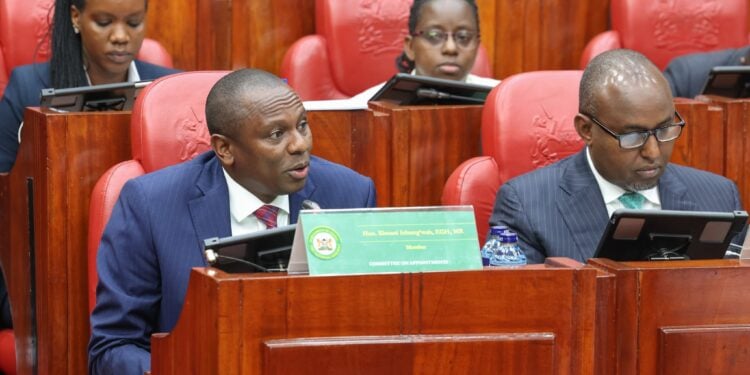
The Bill is sponsored by National Assembly Majority Leader Kimani Ichung’wah and was introduced in the National Assembly on July 24, 2026.
Public School Heads Face Tough Penalties for Charging Tuition
However, tuition fees may still be charged to non-Kenyan citizens.
“A public school shall not charge or cause any parent or guardian to pay tuition fees for or on behalf of any learner in the school. Notwithstanding this provision, tuition fees may be payable by persons who are not Kenyan citizens.
A person who contravenes this provision commits an offence and shall, on conviction, be liable to a fine not exceeding one million shillings or to imprisonment for a period not exceeding three years, or to both. A public school shall not impose other charges without the approval of the Cabinet Secretary,” reads the Bill.
According to the Bill, public schools would also be required to obtain written approval from the Education Cabinet Secretary before introducing or increasing other charges, including boarding, development, and activity fees.
School administrators collecting approved charges would also be required to issue official receipts for every payment.
The proposed law would further prevent schools from sending learners home for unpaid approved charges, stating that no child should be barred from attending school for failure to pay such fees.
Parents would also have a role in discussions on school charges through Parent-Teacher Associations, which would be allowed to discuss and recommend fees. However, the proposed charges would still require approval from the relevant government authorities before they could be collected.
Parents to Also Face Fines
The Bill would also impose a legal duty on parents and guardians to enroll their children in basic education at the start of the academic year or within a period set by the authorities.
It would require schools to admit learners without discrimination based on ethnicity, sex, religion, race, colour, social background, age, disability, language or culture.
Learners would also be allowed to practice their religion while in school, provided the institution is not specifically registered for learners of a particular sex or disability.
Parents or guardians who fail to enroll their children could face a fine of up to KSh100,000, imprisonment for up to two years, or both.
The proposed law would also prevent schools from denying admission because a child does not have proof of age. Public schools would further be prohibited from conducting admission tests.
Parents whose children are denied admission would have the right to challenge the decision before the County Education Board, which must determine the matter within 14 days.
The law would also criminalize keeping children out of school because of employment, income-generating activities, religion, parental disputes, or cultural practices. Those found guilty could face a fine of up to KSh5 million, a prison term of up to five years, or both.
Parents would additionally be required to ensure their children attend school regularly. Failure to do so could attract a fine of up to KSh100,000 or imprisonment for up to one year.
Follow our WhatsApp Channel and X Account for real-time news updates.
Comments
No comments yet. Be the first to share your thoughts.