
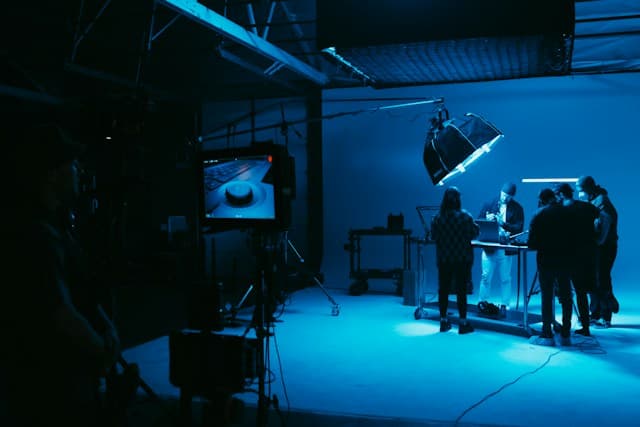
Film shoots in Africa can offer visuals that would be hard to recreate in any other place. In Africa, one finds everything from modern cities and coastal locations to desert landscapes, mountainous areas, forests, open savannahs, ancient locations, and rural surroundings.
For foreign filmmakers, the above diversity is a very big advantage. However, there is a different reality when it comes to filming in such locations.
Location shots may look great artistically, but it is what happens outside the shot that determines whether the shoot will be a success or not. Issues such as access, permits, local crews, production equipment, transport arrangements, weather conditions, among others, determine the finished product.
Successful shoots are normally those where the location and the filming plan are equally important.
Table of Contents
ToggleChoosing Locations That Work Beyond the Camera
Location scouting in Africa always starts with one fundamental question asked anywhere else around the world: does the location tell the story?
A scenic landscape may be obvious right from the start and draw a director’s eye, but a good filming location must have more than that. One has to think about the way equipment will get there, the availability of parking facilities, the space for the production crew, and the services provided in the area.
This factor plays a crucial role in remote locations especially.
What may appear close on the map may take hours to get to because of difficult terrain and road conditions. A scenic location may have nothing around it, such as power, accommodation, mobile network or even a safe place to store the equipment.
This does not mean that one should forget the location, however, it influences the way production would be organized there.
Very often, a bit less dramatic but more accessible location saves hours of work per day.
Africa Offers Far More Than One Visual Style
Among the most common errors that international productions tend to make while filming is treating Africa as a place with one visual identity.
The diversity of the continent is tremendous.
Depending on whether a production is going to film in a big city, the desert, coast, countryside, or in some protected nature park, it will encounter completely different conditions.
Cities might have modern architecture, active streets, industrial zones, infrastructure, business areas, and developed services for filming. The countryside might offer great landscapes, but there will be a greater need in preparation concerning transport, energy, food, and communications.
Even within one country, there might be a lot of visual differences between various regions.
This is good news for directors who are given creative freedom, but still it is important to start researching the location as soon as possible.
Local Crews Can Make a Major Difference
One of the greatest assets for an international production is an experienced local crew.
While international film directors and producers may bring along the director, producer, cinematographer, or any other major heads of departments to the shoot, other crew members would usually be found in the destination.
Camera operators, grips, electricians, sound technicians, production coordinators, drivers, location assistants, makeup artists, costume designers, and other various professionals could probably be found locally. This has its advantages apart from economic reasons.
A local crew will always be familiar with the realities of shooting in that particular location. They will be familiar with the realistic travel times, suppliers, equipment sources, climate, location owners, and other practical difficulties which one might not be able to foresee through online research. This kind of local coordination is also central to production support provided by World Production Service, particularly when international teams need practical assistance navigating the requirements of filming away from their usual production base.
These experts could also help to save time from scouting difficult-to-access or permit-unlikely locations. In situations where time is limited, this could be far more helpful than bringing additional people into the crew.
Communication Needs to Be Clear From the Start
Communication plays a major role in international film locations. Even if English is commonly spoken among those who are involved in filming, there will always be a chance for local languages to affect the efficiency of the process.
Having a bilingual production coordinator or department head becomes helpful when communicating with property owners, government offices, drivers, extras, local vendors, and other communities.
When it comes to safety issues, effective communication is crucial. Information about vehicles, equipment transfer, stunts, roads, and public access should be clearly communicated. The culture of the country or region where filming takes place should not be overlooked.
There are various differences such as working schedule, meal time, public holidays, and communication style. Producers who respect these differences end up developing good relations with the local crew members and community.
Permits Need More Attention Than Many Productions Expect
Permits are highly variable depending on where and what is to be shot in the planned production. Roads open to the public, national parks, historic sites, government facilities, airports, protected landscapes, and private property can all have their own requirements for permission.
Filming using drones may require further permits. Filming that includes large lighting, traffic management, special effects, or any scenes with a lot of public involvement will require other permits.
The major problem for an international crew is knowing who to contact and when to submit applications. For this reason, the use of local production services in pre-production becomes especially important.
A film team can collaborate with local producers, fixers, or production services like World Production Service to assist in obtaining permits, locations, crew, equipment, and transportation. The sooner the process starts, the more convenient it will be to make the schedule based on possibilities.
Equipment Planning Requires a Careful Balance
An overseas film shoot needs to figure out which equipment will be taken with them and which will be rented at the foreign site. There isn’t a one-size-fits-all solution. Camera departments might have their preferences for lenses and monitors and certain accessories, while lights and grip gear could be obtained in the neighborhood of the location.
Importation of equipment overseas would include customs clearance and possible insurance costs, transportation fees, and temporary import documents. Local rental of equipment would make this task easier, but availability of equipment should be verified well in advance. Sometimes it is impossible to get a certain camera, light, generator, crane, or other gear everywhere.
For this very reason, production teams usually develop an equipment strategy long before traveling to a foreign country.
Transport Can Shape the Entire Shooting Day
Transport is one of the least exciting aspects of making a film, but transport can make or break a production in terms of sticking to its schedule. An average production might consist of cars for actors, vans for the crew, trucks for lighting equipment, trucks for grip, trucks for production, and transport for things like catering, wardrobe, or props.
When working in remote locations, the situation is further complicated. Road conditions, type of transport, fuel, weather, and journey time must be taken into account. Locations that require a four-wheel drive vehicle may simply not be accessible by regular production trucks. In some areas, heavy rainfall will alter the condition of access very rapidly.
Journey time must be estimated realistically. If the crew is spending several hours commuting every day, then these hours cannot be spent at the production. Local transport coordinators can prove to be of great help, as they know their routes in practice, not on paper.
Weather Can Change More Than the Look
Weather impacts far beyond cinematography alone. Rain can spoil access roads, wind can hinder sound recording, excessive heat will influence operating hours, and variable weather can delay equipment setup.
Moreover, natural landscapes may differ substantially according to the season of the year. A place that has been pictured during the dry season may appear quite different a couple of months later. Rivers, vegetation, dustiness, and road conditions are some factors that may vary.
Seasonal features have to be taken into account by producers before scheduling shooting. In many cases, local staff and location managers can give a more accurate assessment than just information about travel.
They know which roads become impassable, which places are flooded, when wind season is and how long it lasts, etc.
Accommodation and Catering Affect Crew Performance
Some international productions become so engrossed with the logistics of filming that other essential considerations get overlooked. The accommodation must be suitable, safe, and relatively near the primary filming locations.
The long journey back and forth to such filming locations on exhausting shooting days will very soon sap energy out of the crew. Catering is as much an essential consideration as it was at the first point made.
Catering must be delivered punctually, there must be a steady supply of drinking water, and knowledge of the dietary needs of the crew must be gained in advance. On international shoots, arranging a dependable catering service through World Production Service can therefore become part of the wider production planning needed to keep crews supported throughout demanding filming schedules.
This information may seem mundane in its simplicity, but it affects morale, efficiency, and the functioning of the set over a number of days or weeks. A well-coordinated production knows that looking after the crew is just as integral a part of scheduling as any other consideration.
Remote Locations Need Stronger Backup Planning
As a production ventures further away from urban centers, it becomes even more essential to make backup plans. An equipment breakdown is just one possible situation. While in a major production hub, one might have access to a replacement cable, battery, lamp or accessory within hours; the exact same breakdown in a remote area can result in days of delay in production.
Thus, it becomes essential that remote shoots have a larger number of backups in case of any unforeseen issues. This holds for electricity supply, communication, transportation, and medical emergencies as well.
Generators will be needed in case the electricity is not reliable or available at all, while satellite and extra radio technology will come in handy when the cellular coverage area is limited. It is imperative that the emergency plan reflects the actual distance from hospitals and other emergency medical facilities. None of this affects the creative vision of the production at all.
Working Around Communities Requires Respect
Many of these international productions occur in places that have people living, working, trading, and gathering in their everyday lives. There could be an impact on these activities during shooting.
Cars might be parked along local streets, filming crews might be accessing private areas, and the scenes might draw the attention of locals. Effective location management requires good communication with the locals, and not just obtaining permission from the authorities.
The residents and locals must know about the nature of the production, the duration, and whether there is any disruption to their access. It is also necessary for production crews to show respect to the locals and not make use of them as scenery.
The people in the local area could be playing a key role in supporting the crew as extras, suppliers, drivers, guides, or even location coordinators.
Safety Must Be Adapted to the Environment
Every film production has its own hazards, but these hazards vary from location to location. Filming in an urban area will have traffic, crowds, cables, machinery, and accessibility hazards. Wildlife, heat, rough terrain, water, weather, and lack of accessibility to the medical facility may pose a hazard in remote locations.
It is necessary for the production crew to be aware of the hazards associated with a location before filming starts. Risk assessment, safety personnel, securing the equipment, communication channels, and emergency plans are more crucial when the crew operates away from the base facility.
Filmmakers should also not assume that just because the environment looks tranquil, it means that it is safe. Conditions in the wild tend to change rapidly. Being a professional means knowing your environment well enough to operate within its parameters.
Local Knowledge Helps Solve Problems Faster
Unexpected issues arise in most shootings. The location chosen might suddenly become unusable; the weather might turn sour; something might go wrong with transportation; a permit might take longer to get than anticipated. In all such cases, local expertise is essential.
The local producer may know of some other place that looks like the chosen one. The transport coordinator might know of some other way of transporting things. The local rental firm could provide a replacement for the damaged equipment.
All such solutions rely on connections that a visiting production will not have at its disposal initially. By building up the right local team prior to the shooting, the production crew can make use of these connections. They can also use the extra time thus gained for making creative decisions.
A Successful African Shoot Depends on Preparation
Shooting in Africa may yield excellent production values, unique locations, experienced local talent, and surroundings which give real substance to a film. But perhaps the best outcomes emerge out of thorough planning and never spontaneity.
While finding the right location may be the first order of business, there is also an array of other factors which producers have to consider. These include access, permits, availability of local crew, equipment, transportation, accommodations, climate, communications, security, and the local work environment.
Nothing limits the creative potential of shooting on the continent. On the contrary, it is typically the case. Good planning gives directors and cameramen the freedom to focus on performances, compositions, lighting, and storytelling. It is the outcome of these efforts that viewers will see.
But before one sees the film, there is a tremendous production process taking place which involves local expertise and coordination among many people in many different locations and settings.
If all these elements fall into place, shooting in Africa becomes not only visually appealing but also professionally feasible.



Comments
No comments yet. Be the first to share your thoughts.