
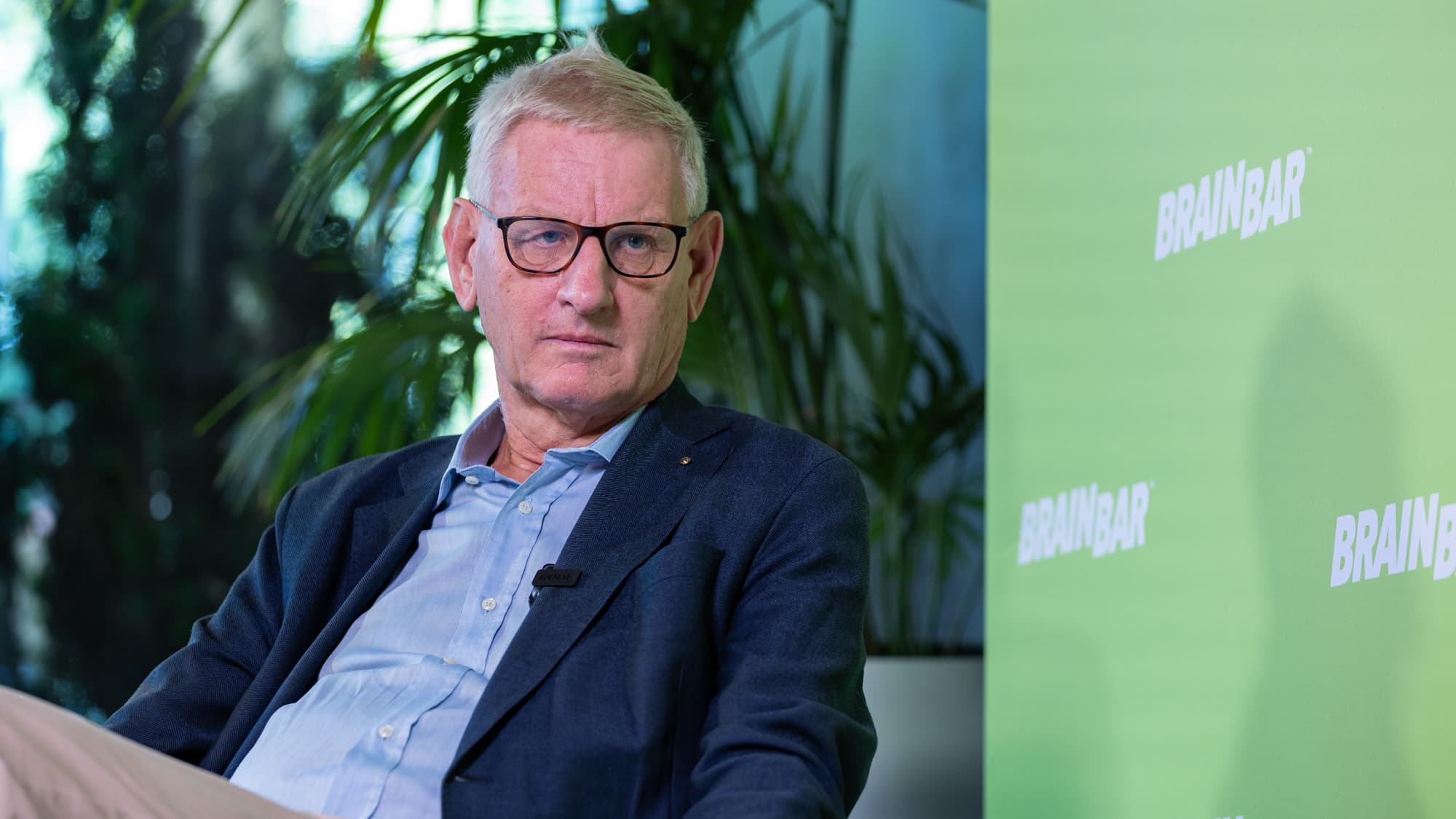
Nils Daniel Carl Bildt is a Swedish politician and diplomat who served as Prime Minister of Sweden from 1991 to 1994 and as Minister for Foreign Affairs from 2006 to 2014.
Born on 15 July 1949 in Halmstad, Halland County, he belongs to the noble Bildt family of Danish-Norwegian-Swedish origin; his great-great-grandfather, Baron Gillis Bildt, was Prime Minister of Sweden in the late nineteenth century.
He is the son of Daniel Bildt, a civil defence official and army reserve officer, and Kerstin Andersson-Alwå.
Bildt studied at Stockholm University and rose quickly through Moderate Party ranks, becoming one of Sweden’s most internationally recognised political figures through his work on European integration and Balkan peace processes.
Table of Contents
ToggleSiblings
Carl has one sibling, a younger brother named Nils Bildt, born in 1952.
The brothers grew up first in Halmstad and later in Stockholm.
Information about Nils’ adult life is limited, as he has remained largely outside the political and public spotlight occupied by his older brother.
Career
Bildt became active in student politics in the late 1960s, opposing left-wing occupations and later chairing the Confederation of Swedish Conservative and Liberal Students as well as the European Democrat Students organisation.
He entered the Riksdag in 1979 and served until 2001.
In 1986 he was elected leader of the Moderate Party, a position he held until 1999.
Following the 1991 election he formed a four-party centre-right coalition and became the first conservative prime minister in Sweden in more than sixty years.
His government pursued deregulation, privatisation, and fiscal consolidation, and successfully negotiated Sweden’s accession to the European Union, with membership taking effect in 1995.
After the coalition’s defeat in 1994 he served as the European Union’s Special Envoy to the former Yugoslavia, co-chairman of the Dayton Peace Conference, and High Representative for Bosnia and Herzegovina from 1995 to 1997.
From 1999 to 2001 he was the United Nations Secretary-General’s Special Envoy for the Balkans.
Returning to Swedish government in 2006, he served as Foreign Minister in the Reinfeldt administration until 2014, focusing on European and transatlantic relations, the Arctic, and global governance.
Since leaving office he has remained active as a writer, commentator, and international advisor, including roles with the European Council on Foreign Relations and as a WHO special envoy.
Accolades
Bildt has received numerous national and foreign decorations, including H.M. The King’s Medal, the Grand Cross of the Order of the White Rose of Finland, the Grand Cross of the Royal Norwegian Order of Merit, the Grand Cross of the Order of Merit of the Italian Republic, and appointment as an Honorary Knight Commander of the Order of St Michael and St George (KCMG).
He is a member of the Royal Swedish Academy of War Sciences and has held senior positions in international think tanks and organisations.
His roles in Sweden’s EU accession and in the Dayton peace process for Bosnia stand among his most widely recognised achievements.
Comments
No comments yet. Be the first to share your thoughts.