
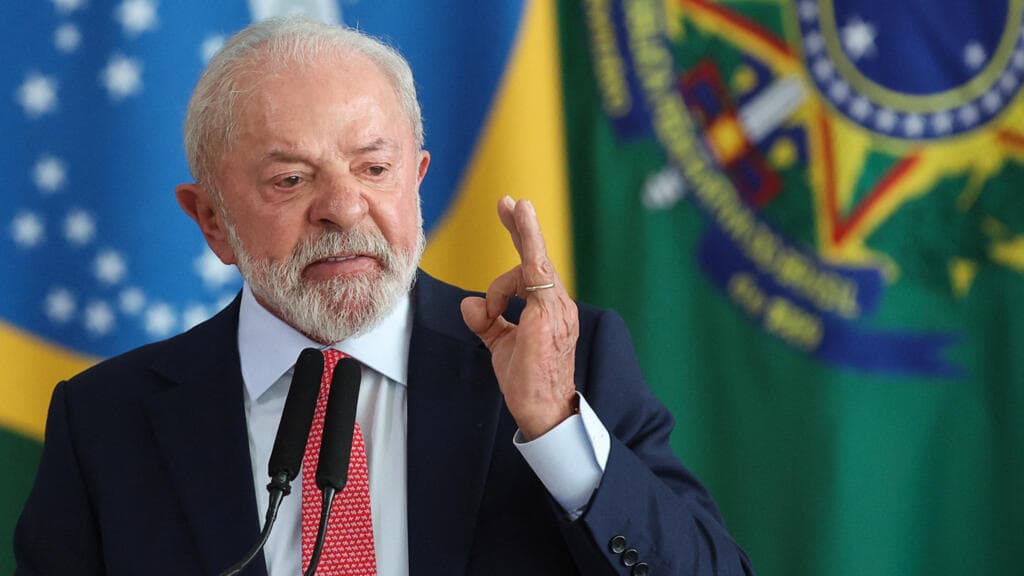
Luiz Inácio Lula da Silva, commonly known as Lula, is a Brazilian politician, former metalworker and trade unionist who has served as President of Brazil from 2003 to 2011 and again since 2023, with sources indicating a further electoral victory securing a fourth term beginning in 2027.
Born Luiz Inácio da Silva on 27 October 1945 in Caetés in the northeastern state of Pernambuco, he was the seventh of eight children of the illiterate peasant farmers Aristides Inácio da Silva and Eurídice Ferreira de Melo, known as Dona Lindu.
Raised in extreme poverty, he migrated with his mother and siblings to São Paulo state as a child, worked from a young age as a street vendor, shoeshine boy and factory hand, and trained as a lathe operator.
He rose through the metalworkers’ union movement, co-founded the Workers’ Party (Partido dos Trabalhadores, PT) in 1980, and became the first Brazilian president from a working-class background without a university degree.
Table of Contents
ToggleSiblings
Lula was the seventh of eight children born to Aristides and Dona Lindu.
His full siblings include José, Jaime, Marinete, Genival, José Ferreira da Silva (known as Frei Chico, a prominent trade unionist who influenced Lula’s entry into union activism), Maria and Ruth.
His father later formed a second family, resulting in additional half-siblings; accounts of the extended family sometimes refer to a total of around seventeen siblings and half-siblings.
Career
After limited formal schooling, Lula completed a mechanical turner course at SENAI and worked in the metalworking industry in the São Paulo industrial region known as the ABC Paulista.
He lost the little finger of his left hand in a workplace accident.
Inspired by his brother Frei Chico, he became active in the Metalworkers’ Union of São Bernardo do Campo and Diadema, rising to first secretary and then president in 1975.
He led major strikes between 1978 and 1980 that challenged the military regime’s wage policies and brought him national prominence; he was arrested and briefly imprisoned.
In 1980 he co-founded the Workers’ Party.
He was elected federal deputy in 1986 with a record vote and participated in the Constituent Assembly.
After unsuccessful presidential campaigns in 1989, 1994 and 1998, he won the presidency in 2002 and was re-elected in 2006.
His governments expanded social programmes such as Bolsa Família and Fome Zero, promoted economic growth, and increased Brazil’s international profile.
After leaving office he faced corruption investigations related to the Lava Jato operation, was convicted and imprisoned for 580 days; the convictions were later annulled by the Supreme Court.
He returned to win the presidency again in 2022 and, according to contemporary reports, secured a further term in the 2026 election.
Throughout his career he has remained the central figure of the Brazilian left and a prominent voice in international progressive politics.
Accolades
Lula has received numerous international honours recognising his social policies and leadership, including the World Food Prize, the Indira Gandhi Peace Prize and the Chatham House Prize.
He holds more honorary doctorates from universities worldwide than any other Brazilian president.
His administrations are widely credited with lifting tens of millions of Brazilians out of extreme poverty and removing Brazil from the United Nations hunger map during his first period in office.
Comments
No comments yet. Be the first to share your thoughts.