
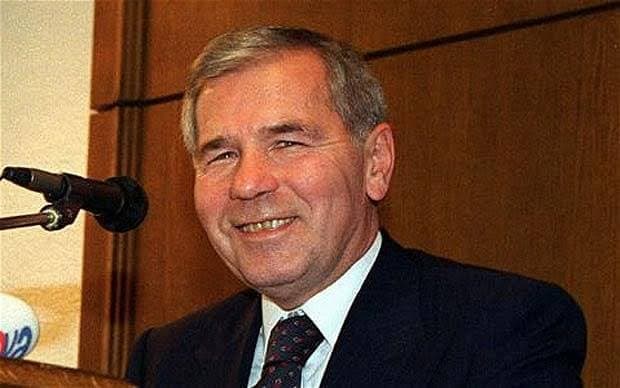
Gyula János Horn was a Hungarian politician and economist born on 5 July 1932 in Budapest and who died on 19 June 2013 in the same city.
He came from a poor working-class family of Jewish origin that had converted to Lutheranism.
His father, Géza Horn, worked as a transport and furniture worker and held left-wing views; he was arrested by the Gestapo in 1944 for communist activities and never returned.
His mother, Anna Csörnyei, was a factory worker who raised the family under difficult conditions in the so-called Barrack estate area of Budapest.
Horn studied economics and finance in Rostov-on-Don in the Soviet Union, graduating in 1954, and later completed political education within the Hungarian Socialist Workers’ Party.
Horn served as the last communist Foreign Minister of Hungary and later as Prime Minister from 1994 to 1998.
Table of Contents
ToggleSiblings
Gyula was the third of seven brothers in a large family.
The oldest was Géza Horn (1925–1956), a documentary filmmaker whose death during the 1956 Hungarian Revolution remains a matter of differing accounts.
Next was Károly Horn (1930–1946), who died young.
After Gyula came Tibor (born 1935), Sándor (1939–2014), Tamás (born 1942), and Dénes (born 1944).
All the younger brothers worked in ordinary occupations. Horn’s niece through his brother Géza is Szófia Havas, who later served as a Member of Parliament.
Career
Horn began working at a young age after limited formal schooling and trained as a technician before studying in the Soviet Union.
He joined the communist party structures in the 1950s and worked first in the Finance Ministry, then transferred to the Foreign Ministry in 1959.
He served as a diplomat in Bulgaria and Yugoslavia and steadily rose through the ranks of the party’s foreign affairs apparatus, becoming head of the relevant department in the Central Committee and later deputy foreign minister.
In 1989 he was appointed Foreign Minister in the reformist Németh government.
In that role he played a decisive part in Hungary’s decision to open its western border, symbolically cutting the barbed-wire fence with Austrian Foreign Minister Alois Mock in June 1989 and allowing East German refugees to pass through to the West.
This action helped accelerate the collapse of the Iron Curtain and contributed to German reunification.
After the transition he became a leading figure in the reformed Hungarian Socialist Party.
Following the party’s victory in the 1994 elections he served as Prime Minister until 1998, during which time his government introduced the austerity measures known as the Bokros package to stabilize the economy.
Accolades
Horn received international recognition especially for his role in 1989.
The most prominent honour was the International Charlemagne Prize of Aachen in 1990, awarded for his contribution to European unity.
He also received the gold medal of the German Stresemann Society and other distinctions linked to the opening of the border and support for German reunification.
Within Hungary he was decorated during the communist period with awards such as the Gold Grade of the Order of Labour and the Order for Socialist Hungary.
Later nominations for high Hungarian state honours were declined by successive presidents, citing his role in the suppression of the 1956 uprising.

Comments
No comments yet. Be the first to share your thoughts.