
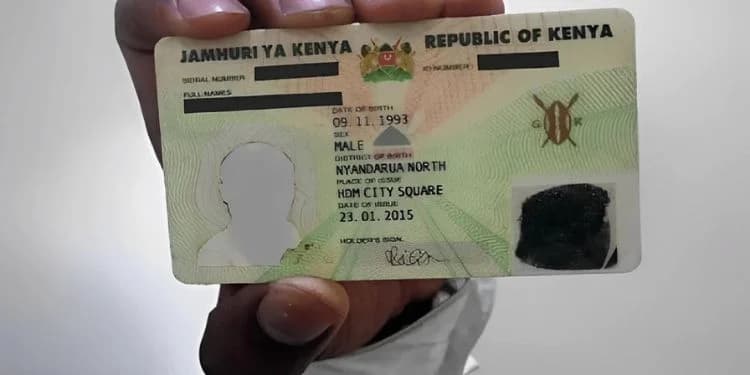
The government is stepping up efforts to make National Identity Card registration more accessible to Kenyans, as the document is a key requirement for accessing healthcare services, student loans, employment opportunities, and other government programmes.
National IDs verify identity when applying for services such as enrolment in the Social Health Authority (SHA), Higher Education Loans Board (HELB) funding, National Social Security Fund (NSSF) membership, affordable housing, and business registration.
The government has also been working to address barriers that have made it difficult for some communities, particularly those in remote and underserved areas, to obtain identification documents.
In a guide on the importance and benefits of National IDs, the State Department for Internal Security and National Administration, led by Principal Secretary Raymond Omollo, outlines efforts to bring registration services closer to communities through local administrators and grassroots registration drives.
These efforts aim to make ID registration cheaper and easier, helping more Kenyans qualify for government services and other opportunities.
How National IDs Help Kenyans Access Government Services
One of the key uses of a National ID is facilitating access to healthcare, education financing and social security programmes.
For healthcare, a National ID helps eligible Kenyans register with SHA and access covered medical services. Wider ID registration can also help improve records used to plan healthcare services and coverage.
In education, the document helps students meet identity verification requirements when applying for HELB loans and other eligible forms of education financing. It is also commonly required when verifying enrolment in colleges and technical and vocational education and training (TVET) institutions.
The ID also supports registration with NSSF, allowing eligible workers, including those in the informal sector, to join retirement savings schemes.
For farmers, identification can help them register through the Kenya Integrated Agriculture Management Information System (KIAMIS), which supports agricultural programmes, including subsidised fertiliser initiatives.
Kenyans seeking affordable housing can also use their identification details to register on the Boma Yangu platform and apply for available housing opportunities, subject to programme requirements.
National ID Requirements for Jobs and Financial Services
A National ID is also important when seeking formal employment, as employers commonly require identity documents for verification and payroll registration.
The document can also help jobseekers meet identification requirements when applying for eligible youth programmes, including the National Youth Opportunities Towards Advancement (NYOTA) programme.
Beyond employment, identification supports applications for bank accounts, Savings and Credit Cooperative Organisations (SACCOs), mobile phone registration and other financial services.
Entrepreneurs may also need an ID to register businesses, apply for permits, and seek financing.
The document is also used to apply for passports, driving licences, and other government services available through the eCitizen platform.
For property transactions, identification helps verify the identity of people involved in land registration, inheritance and property transfers, subject to the applicable legal requirements.
Government Moves to Reduce ID Registration Barriers
The government guide identifies financial costs, distance and administrative challenges as some of the barriers that have affected access to National IDs in certain communities.
It points to the removal of National ID application and replacement fees in March 2025 as one measure aimed at reducing the financial burden on applicants.
Local administrators, including chiefs and assistant chiefs, are also involved in efforts to bring registration and collection services closer to residents.
The initiatives target communities in remote areas and regions that have historically struggled to obtain identification documents, including parts of Northern Kenya.
The guide also refers to efforts to improve access for eligible members of the Pemba community in Kilifi following citizenship recognition, allowing them to pursue services that require identification.
How ID Registration Data Can Support Development Planning
Beyond individual benefits, access to National IDs can help government institutions improve the records they use to plan and deliver public services.
Registration and programme data can help authorities assess demand for subsidised agricultural inputs, identify gaps in healthcare coverage, and understand applications for affordable housing.
The information can also complement population and needs assessments used in planning infrastructure, social assistance and other development programmes.
At the county level, improved identification coverage can support beneficiary verification and coordination between national and county institutions delivering services.
A National ID helps establish identity and meet documentation requirements, but access to loans, healthcare benefits, subsidies, housing and other programmes remains subject to the relevant eligibility criteria and application procedures.
Follow our and X Account for real-time news updates.

PHOTO | Dr. Raymond Omollo | X


Comments
No comments yet. Be the first to share your thoughts.