
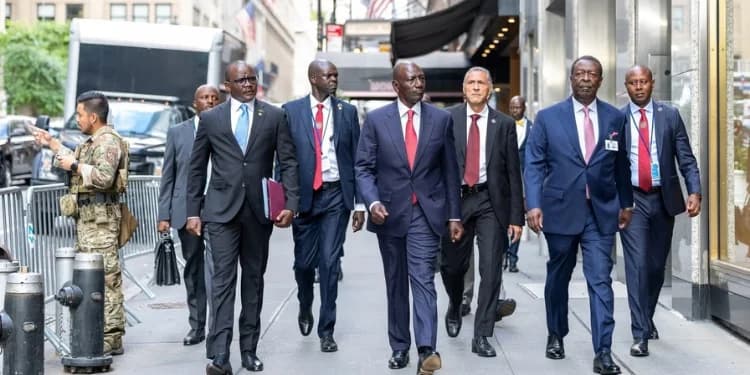
President William Ruto is in New York for the 81st session of the United Nations General Assembly (UNGA), where he is expected to participate in high-level discussions on UN reforms, climate finance, debt restructuring, regional peace and security, and diaspora engagement.
Kenyan officials have defended the trip as necessary because many of the negotiations taking place during the summit require direct participation by heads of state.
The security arrangements surrounding a visiting head of state in the United States involve coordination between Kenyan security personnel, American federal agencies, local law enforcement, and United Nations security structures.
Multi-Layer Security Around the President
When President Ruto travels abroad, members of Kenya’s presidential protection units accompany him and form the first layer of security.
However, once in the United States, the security framework expands. American security agencies coordinate protection for foreign heads of state attending UNGA, particularly the Diplomatic Security Service (DSS) of the U.S. Department of State, which protects visiting foreign dignitaries and coordinates security arrangements for international leaders.
The security operation also involves the New York Police Department (NYPD), federal agencies, and UN security personnel.
These agencies work together to secure hotels, event venues, transportation routes, and meeting locations used by visiting presidents and prime ministers during the annual General Assembly.
Advanced teams conduct site inspections, review travel routes, assess threats, and coordinate emergency response plans.
Access to areas visited by heads of state is strictly regulated, with accredited personnel undergoing screening procedures.
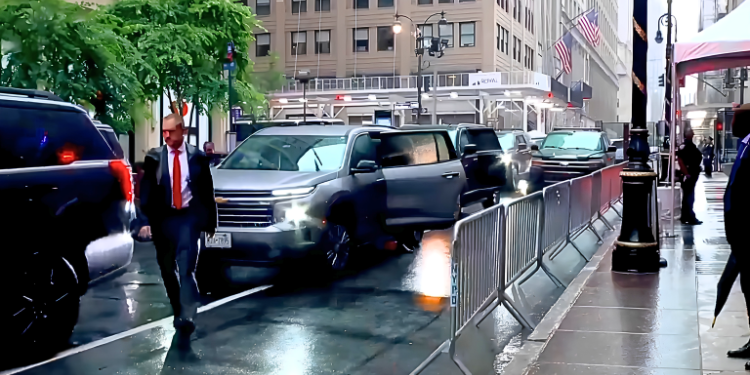
During the UNGA event, foreign leaders travel in controlled convoys consisting of security vehicles, escort units, communications teams, and emergency response personnel.
Road closures and traffic controls are implemented around movement corridors used by visiting dignitaries.
Kenyan security agencies maintain communication with their American counterparts throughout the visit to monitor potential threats and emerging security concerns.
Hotels hosting world leaders undergo security sweeps, surveillance monitoring, and controlled entry procedures.
The officers occupy multiple floors and maintain round-the-clock monitoring of movement within designated secure zones.
Cost of Security Operations on Taxpayers
Presidential visits abroad carry security-related costs that are rarely visible to the public.
These expenses include transport for security personnel, accommodation, communications, intelligence coordination, and support staff.
Spending covers securing the vehicles, medical, protocol arrangements, and operational allowances for officers accompanying the President.
The government finances the expenditure through allocations to State House and national security agencies, with Taxpayers funding these costs.
Presidential Escort Unit is responsible for providing security to identified VIPs. The unit is allocated KSh1.073 billion in the 2026/27 financial year, up from KSh1.064 billion in the previous financial year. Its budget documents set a target of 100 percent security coverage for identified VIPs.
Other National Police Service capabilities can also support presidential movements, including the Nairobi Region, K-9 Unit, Airwing and specialized security teams. In the 2026/27 financial year, a total of KSh563.8 million was allocated to the K-9 Unit and KSh724.2 million to the Police Airwing.
State House spent KSh1 billion on foreign travel between 2022/23 and 2025/26, while foreign travel expenditure in individual years ranged from KSh158.18 million to KSh361.79 million.
Follow our WhatsApp Channel and X Account for real-time news updates.
Comments
No comments yet. Be the first to share your thoughts.