
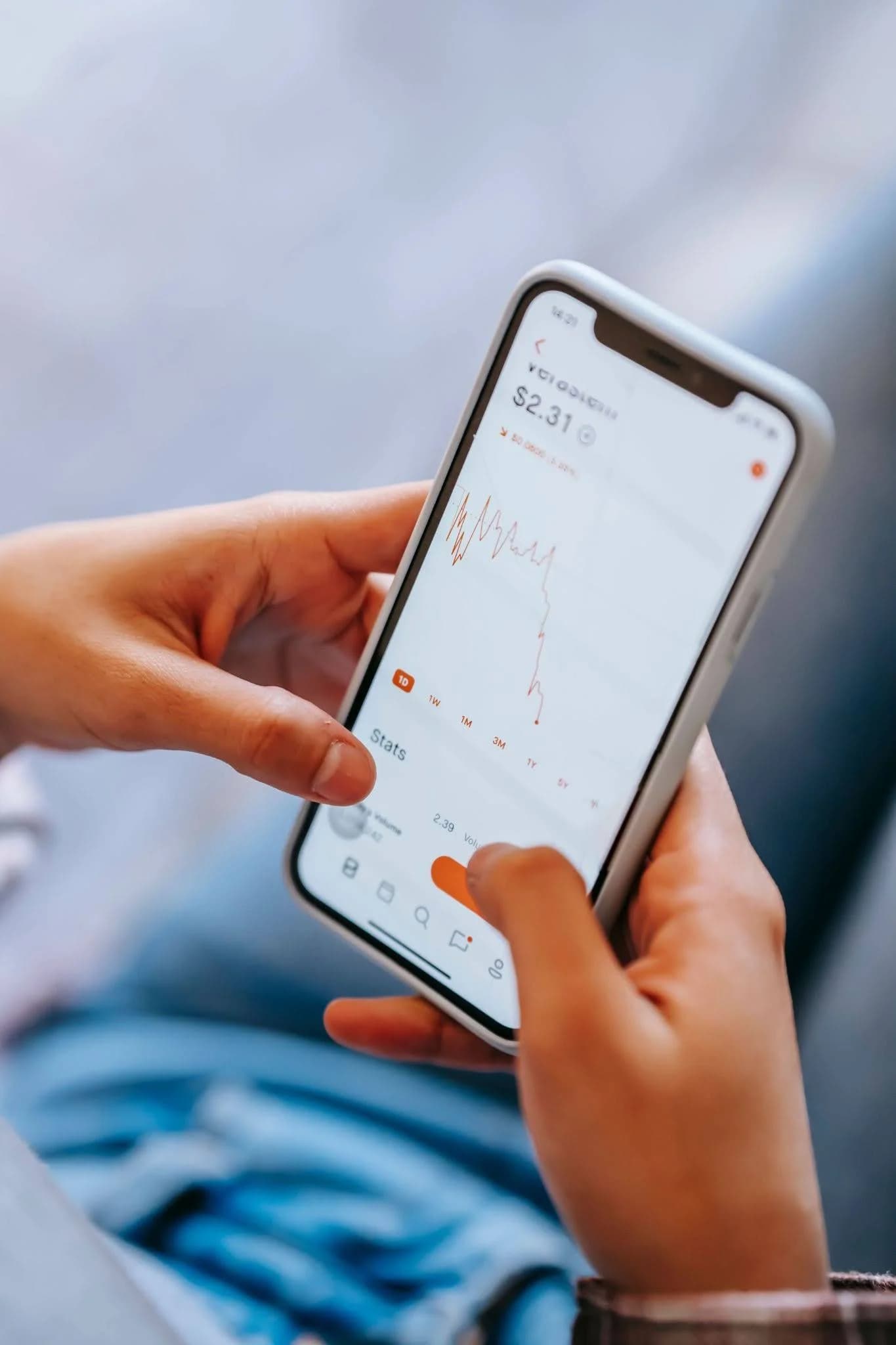
Kenya is already a phone-first market for many financial tasks, so a trading platform has to do more than squeeze a desktop terminal onto a smaller screen. Someone comparing the best trading app in Kenya should look at how comfortably the app works on an everyday phone, how clearly it presents risk, and whether basic actions remain easy when the market starts moving quickly.
That makes mobile design part of the financial experience rather than a cosmetic extra. A crowded screen, confusing order window, or hard-to-find account history can become a real problem when money is involved.
A polished interface on a new flagship phone says very little about how an app feels during normal daily use.
Kenyan users may check markets from home Wi-Fi, an office network, or mobile data during the day. A useful mobile trading app in Kenya therefore needs screens that load without unnecessary clutter and charts that remain readable without constant zooming.
The important actions should be easy to find. Opening a chart, checking an asset, reviewing an order, and finding the account balance should not require moving through several layers of menus.
This is one reason simpler layouts often work better on mobile. More buttons do not automatically mean more control. They can just make the action that matters harder to find.
New traders often focus on the number of assets or indicators offered by an app. A demo account can tell them much more about whether the platform actually fits.
Virtual funds give a beginner room to learn what happens after an order is placed, how prices move on the screen, and where trading history appears without putting real money at risk.
For anyone looking for a trading app for beginners in Kenya, the demo environment is also a practical way to test the interface itself. If basic actions remain confusing with virtual funds, they are unlikely to become clearer when real money is involved.
A demo does have limits. It can reproduce the mechanics of the platform, but it cannot reproduce the emotional pressure of losing personal funds. It should be treated as a practice environment rather than proof that live trading will produce the same results.
Trading apps can use different pricing models, and the cost is not always presented as one obvious fee.
Depending on the product, a user may encounter spreads, commissions, conversion charges, or other account-related costs. The important part is being able to find those details before opening a position.
| What to check | Why it matters | What a clear app should show |
| Spread or commission | Affects trading cost | Pricing before the order is confirmed |
| Minimum trade size | Determines position flexibility | Amount limits in the order window |
| Account funding | Affects how money moves in and out | Available methods and conditions |
| Trading history | Helps review previous activity | Orders, results, and timestamps |
| Risk controls | Helps manage open positions | Relevant tools close to the trade screen |
A trading app handles more than market prices. It may also hold identity information, payment details, account history, and access to deposited funds.
That makes basic account security worth checking before chart features.
Anyone deciding how to choose a trading app in Kenya should look at how login security works, whether account activity can be reviewed, and how the provider explains withdrawals and identity checks.
A practical review can include:
- Check who operates the service and read the account terms before depositing.
- Use a unique password rather than one already used for email or social media.
- Turn on stronger login protection when the platform provides it.
- Confirm funding and withdrawal rules before sending money.
- Test the interface with a demo account first.
- Keep trading funds separate from money needed for normal expenses.
Mobile charts have improved considerably, but a five- or six-inch display still has limits.
An app can offer dozens of indicators and drawing tools, yet most users will only need a small selection at one time. The better question is whether the chart remains readable once those tools are switched on.
Price scale, timeframe, order levels, and recent movement should still be visible without turning the screen into a wall of labels.
This is especially relevant for anyone searching for a forex trading app in Kenya, because currency prices can move quickly around economic announcements. A trader should be able to see the position and the market clearly instead of fighting the interface.
Notifications also deserve restraint. A useful price alert can save someone from watching a screen continuously. Constant promotional notifications do the opposite and make important alerts easier to miss.
Kenya’s wider fintech market has made people accustomed to handling money from a phone. That creates an understandable expectation that a trading account should also be manageable without a laptop.
Still, funding convenience should not become the only selection criterion.
A quick deposit does not improve an unclear fee structure, weak risk controls, or a confusing interface. The same applies to withdrawals: users should understand the method, conditions, and processing rules before they trade, rather than discovering them after a profitable or losing session.
The best online trading platform for Kenyan beginners is therefore not automatically the one with the longest payment-method list. Usability, transparency, practice tools, and security need to work together.
The strongest mobile finance products often feel simple because the difficult work has happened behind the interface.
Trading software should follow the same principle. A user should be able to open a chart, understand the cost, place or review an order, and find account information without guessing where the platform has hidden it.
That does not make trading easier in the financial sense. Prices can still move against a position, and no app removes the possibility of losing money.
What good design can do is remove unnecessary friction. For Kenyan users choosing between mobile trading platforms, that is a better starting point than counting features that may never be used.



Comments
No comments yet. Be the first to share your thoughts.