
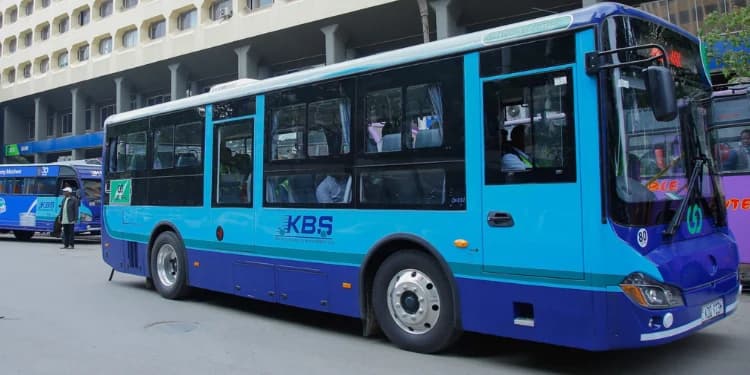
For decades, Kenya Bus Service (KBS) dominated Nairobi’s public transport, controlling key routes across the city.
The Beginning of Kenya Bus Service
The history of KBS dates back to 1934, when the Overseas Transport Company of London introduced organised bus transport in Nairobi.
The company began with 13 buses operating on 12 routes at a time when Nairobi’s population was about 50,000.
The routes connected residential areas with the city center and other important parts of the growing town.
The operation later became Kenya Bus Services Ltd. and came under United Transport Overseas Services (UTOS), a British transport company.
A major change came in 1966 when the City Council of Nairobi acquired a 25 percent stake in KBS and granted UTOS a monopoly franchise to operate bus services in the city.
During this period, KBS developed a large network of scheduled bus routes.
Its large buses operated on fixed routes and timetables, providing a structured alternative to taxis and the smaller vehicles that would later become the dominant form of public transport.
The Rise of Matatus and Growing Competition
KBS’s dominance began to weaken as Nairobi expanded and demand for cheaper and more flexible transport increased.
Matatus had begun operating in Nairobi decades earlier, initially outside the formal transport system.
They were eventually legalized in 1973, opening the way for rapid growth of privately owned minibusses and other small passenger vehicles.
Their ability to respond quickly to passenger demand gave them an important advantage over large buses operating fixed schedules.
The shift was gradual but significant.
In 1973, KBS carried an estimated 84 per cent of Nairobi’s public transport passengers while matatus carried about 16 per cent.
By 1985, KBS’s share had fallen to about 55 percent while matatus had risen to roughly 45 percent.
The government also attempted to compete with KBS.
In 1986, the government introduced the Nyayo Bus Service with a large fleet and subsidized fares.
The state-run operation was intended to provide affordable public transport, but operational and financial problems eventually weakened it.
Its decline left KBS competing against an increasingly powerful private matatu sector rather than facing another strong formal bus operator.
Stagecoach Takes Over KBS
Another major turning point came in 1991 when Stagecoach Holdings acquired United Transport’s shareholding in Kenya Bus Services.
Stagecoach introduced new investment and expanded the fleet, including express services and modern double-decker buses.
The company also sought to modernize KBS and make it more competitive in Nairobi’s changing transport market.
However, the matatu sector continued expanding while traffic congestion made scheduled large-bus operations increasingly difficult.
KBS’s market share fell sharply. Research cited by the World Bank shows that KBS had about 36 per cent of Nairobi’s public transport market in 1994. By 2000, its share had fallen to about 17 per cent across all routes and 29 per cent on routes it operated. The company had about 240 buses operating daily against almost 9,900 matatus.
In October 1998, Stagecoach sold its 95 percent stake in KBS to a consortium of Kenyan investors led by Karanja Kabage.
The company reverted to the Kenya Bus Services name.
Attempts to Save the Company
The new owners tried to restructure the business rather than rely entirely on the traditional large-bus model.
KBS separated some of its operations into different businesses, including Bus Track, which continued providing urban services, while KBS Express focused on inter-city transport.
In 2003, the company also introduced Metro Shuttle, a premium minibus service aimed mainly at middle- and higher-income Nairobi residents who were willing to pay more for scheduled, cleaner and more comfortable transport.
The Bus Track model also tried to reduce the burden of operating every bus directly.
Some former KBS supervisors were allowed to operate buses under lease and profit-sharing arrangements.
Despite these changes, the company’s financial position continued to deteriorate.
The Final Collapse
The final years of KBS were particularly difficult.
The company faced falling passenger numbers, competition from matatus, increasing operating costs and traffic congestion.
It also faced the financial burden of complying with new public transport safety regulations introduced in the early 2000s.
Legal Notice No. 161 of 2003 introduced requirements including seat belts, speed governors, restrictions on standing passengers and other safety measures.
For a large formal operator with hundreds of buses, meeting the requirements required substantial investment.
KBS later reported that fitting speed governors and seat belts to its fleet had cost about Ksh1.04 billion by February 2005.
The company was also heavily indebted.
By the time it collapsed, reports put its debts at about KSh1.2 billion, owed to suppliers and other creditors.
At its peak, KBS had 424 buses, about 3,400 employees and annual turnover estimated at Ksh3.3 billion.
Court records from 2005 show the seriousness of the crisis.
Kenya Bus Services, Bus Track and Msafiri Passenger Services were involved in litigation over the financial and regulatory pressures affecting their operations, while creditors moved against company assets.
A separate High Court case records the auctioning of KBS vehicles to enforce a judgment against the company.
The original Kenya Bus Services Ltd eventually collapsed in 2005, ending the company that had dominated Nairobi’s organized bus transport for more than seven decades.
However, the KBS name and its operational experience did not disappear completely.
The Birth of KBS Management
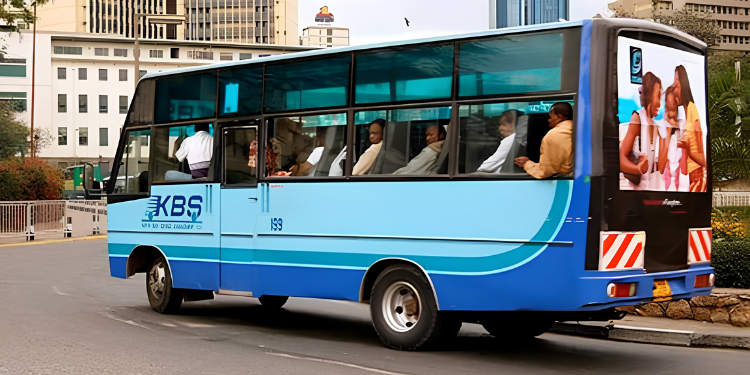
In 2006, Kenya Bus Service Management Ltd (KBSM) emerged from the collapse of the old KBS.
Unlike the original company, KBSM was structured primarily as a transport management and franchising company rather than a conventional bus owner.
Under the new model, individual investors could own buses while KBSM provided management, operational systems, training, branding, and other services.
The model let the company keep using the KBS brand and expertise without having to finance and own an entire fleet itself.
Follow our WhatsApp Channel and X Account for real-time news updates.



Comments
No comments yet. Be the first to share your thoughts.