

Building wealth is often presented as a matter of earning more, saving consistently, and investing wisely. But sometimes the biggest obstacle isn’t a lack of money or opportunity. It’s the habits, decisions and beliefs that quietly keep you from making financial progress.
You may have a good income but still live from one payday to the next. You may save diligently but keep withdrawing your savings whenever life gets uncomfortable. You may invest, but without understanding what you are investing in.
The good news? Financial self-sabotage can be recognised and changed.
Here are some of the ways you may be getting in your own way — and how to get back on track.
1. Spending to look wealthy instead of becoming wealthy
A new car, designer clothes, expensive holidays, and the latest phone can create the appearance of wealth without actually building it.
The problem isn’t enjoying your money. The problem is sacrificing your financial future to maintain an image today.
How to recover
Create a distinction between wealth-building spending and status spending.
Before making a major purchase, ask:
“Will this improve my financial position, my quality of life or simply make me look successful?”
You don’t have to live miserably to build wealth. You just need to make sure your lifestyle doesn’t consume everything your income produces.
2. Lifestyle inflation
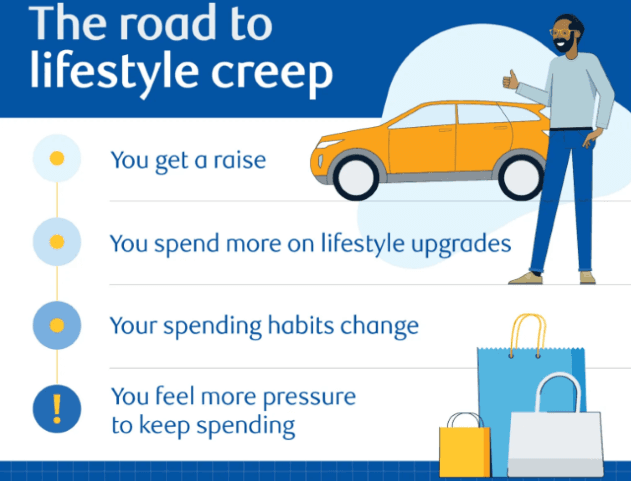
You get a salary increase and, instead of increasing your savings and investments, you upgrade everything. More expensive restaurants. A bigger house. More subscriptions. More shopping. More trips. Your income increases — but somehow you still don’t have enough money.
How to recover
When your income increases, increase your savings rate before increasing your lifestyle.
For example, if you receive a 20% income increase, decide in advance that a portion will go towards investments or long-term savings. Let your lifestyle improve — but don’t allow every increase in income to disappear into consumption.
3. Having no idea where your money goes
You earn enough. You aren’t particularly extravagant. Yet at the end of the month, you’re asking, “Where did all my money go?”
Small expenses can become significant when repeated.
How to recover
Track your spending for at least 30 days. Don’t judge yourself while doing it. Just collect the information.
Then divide your spending into:
- Needs
- Wants
- Debt
- Savings
- Investments
- Financial leaks
You can’t fix a problem you refuse to measure.
4. Waiting until you earn more to start investing
“I’ll start investing when I earn more.” Then your salary increases — and suddenly you have new expenses. There will probably never be a magical moment when you have “enough” money.
How to recover
Start with what you can afford. The objective initially isn’t necessarily to invest a huge amount. It is to develop the habit of regularly putting money towards your future. As your income grows, increase the amount.
5. Treating savings as your emergency fund
You save KSh 100,000 and feel proud of your progress. Then your car breaks down, you have an unexpected medical bill, or you need money for an urgent family expense — and you raid the savings. This can make it feel as though you are constantly starting over.
How to recover
Build an emergency fund separately from your long-term investments. Keep money for unexpected expenses somewhere accessible and appropriate for your circumstances.
Your emergency fund exists so that an emergency doesn’t force you to dismantle your long-term financial plan.
6. Carrying expensive debt
High-interest debt can work against your wealth-building efforts. You may be investing money while simultaneously paying significant interest on expensive debt.
How to recover
List every debt and record:
- Balance
- Interest rate
- Minimum payment
- Due date
Then develop a repayment strategy. Don’t simply focus on the size of the debt. Look at the cost of carrying it.
7. Investing in things you don’t understand
Someone tells you about an investment opportunity promising amazing returns. Everyone seems to be making money. You invest because you don’t want to miss out.
That’s not an investment strategy. That’s FOMO.
How to recover
Never invest money simply because someone says, “This is where everyone is making money.”
Understand:
- How the investment works
- How returns are generated
- The risks
- Fees and charges
- How easily you can access your money
- What could cause you to lose money
- Who regulates or supervises the product or provider
If you can’t explain the investment in simple language, consider learning more before putting your money into it.
8. Chasing quick money
The desire to become wealthy quickly can make people vulnerable to scams, risky investments and unrealistic promises. Real wealth-building is usually boring.
It often involves earning, saving, investing, managing risk, and repeating the process for years.
How to recover
Replace the question “How can I double my money quickly?” with “How can I consistently increase my net worth over the next 10 years?”
That shift can completely change your financial decisions.
9. Keeping up with other people’s financial lives
You see someone buying a house. Someone else starts a business. Another person is travelling every month. Someone has a new car. You start wondering why you’re “behind.” But you don’t know their income, debt, family support, inheritance or financial obligations.
How to recover
Stop measuring your financial progress against someone else’s highlight reel.
Track your own numbers:
- Net worth
- Savings rate
- Debt
- Investments
- Emergency fund
- Income
- Expenses
Your competition is yesterday’s version of you.
10. Supporting everyone except yourself
Family and community are important, particularly in cultures where supporting relatives is part of life. But constantly rescuing everyone financially can prevent you from building your own foundation. You cannot sustainably help everyone if your own finances are constantly in crisis.
How to recover
Create a specific family-support budget. This allows you to help without sacrificing rent, debt repayments, emergency savings or investments. And remember:
Saying “I can’t afford this right now” is not the same as saying “I don’t care about you.”
11. Emotional spending
You had a terrible day, so you shop. You are celebrating, so you spend. You’re stressed, so you order food. You’re bored, so you browse shopping apps. Money can become a coping mechanism.
How to recover
Identify your triggers. Before an unnecessary purchase, introduce a waiting period — perhaps 24 or 48 hours. Ask, “What am I actually trying to feel right now?” Sometimes the thing you want isn’t the item in your cart.
12. Ignoring insurance and risk protection
You may be focused so heavily on growing your wealth that you forget to protect it. One major illness, accident, death, or other financial shock can wipe out years of progress.
How to recover
Review appropriate protection for your circumstances, such as:
- Health insurance
- Life insurance
- Disability/income protection
- Property insurance
- Business insurance
The objective isn’t to buy every insurance product available. It is to identify the risks that could seriously damage your financial future and plan for them.
Using Insurance For Wealth Management: How Insurance Can Help You Build And Protect Wealth Over Time
13. Never increasing your financial knowledge
You don’t need to become a financial expert. But refusing to learn about money leaves you dependent on other people’s advice.
How to recover
Commit to learning something about personal finance every month. Read. Attend workshops. Ask questions. Compare products. Understand your investments. Financial literacy is an asset.
How to Recover From Financial Self-Sabotage
If you recognise yourself in several of these points, don’t panic. You don’t need to fix everything simultaneously.
Start with these five steps:
1. Face the numbers.
Calculate your income, expenses, debts, savings, investments and net worth.
2. Stop the biggest leaks.
Identify the two or three behaviours causing the greatest financial damage.
3. Build your financial safety net.
Work towards an emergency fund and appropriate insurance protection.
4. Automate good behaviour.
Automate savings, investments and important bill payments where practical.
5. Give yourself a long-term target.
Don’t only ask, “How much money do I have?” Ask, “What am I building towards?”
Your Past Financial Mistakes Don’t Have to Become Your Future
Perhaps you’ve spent too much. Maybe you have debt. Maybe you started investing late. Maybe you’ve made a bad investment or repeatedly dipped into your savings. That’s not the end of your wealth-building journey. The most important financial decision you can make may be the next one. You don’t need to become wealthy overnight.
You need to stop repeatedly undoing your progress — and start making more decisions that move you in the direction of the life you want.
Wealth is rarely built through one dramatic financial decision. It is built through hundreds of small decisions repeated over time.


Comments
No comments yet. Be the first to share your thoughts.