
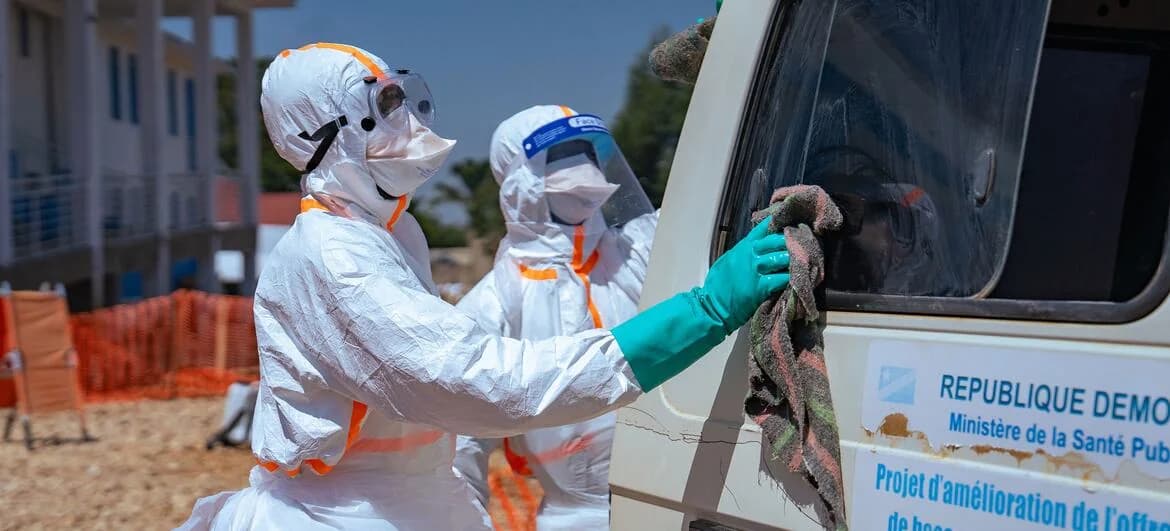
African health ministers agree to keep borders open despite Ebola spread, focus on surveillance

According to Africa CDC Director-General Jean Kaseya, the governments had agreed to prepare for further infections while maintaining movement across borders under closer monitoring.
African health ministers have resolved to keep their countries’ borders open amid the rapid spread of Ebola across the continent, instead prioritising stronger surveillance and coordination to contain the outbreak that has killed nearly 5,000 people in the Democratic Republic of Congo (DRC).
The decision followed an emergency virtual meeting convened by the Africa Centres for Disease Control and Prevention (Africa CDC) on Thursday, attended by more than 40 ministers to assess the outbreak caused by the Bundibugyo strain and coordinate the regional response.
According to Africa CDC Director-General Jean Kaseya, the governments had agreed to prepare for further infections while maintaining movement across borders under closer monitoring.
“I stood before more than 40 African Ministers and said what the data tells us: we are not winning so far. Together, we agreed to prepare every country, coordinate across our borders and keep those borders open while watching them closely. Our partners are standing behind Africa’s plan," he said.
The outbreak was declared in the DRC in May and has spread across eight provinces, with Kenya and Nigeria among the countries reporting imported infections. Uganda also experienced cases earlier in the outbreak, but was declared Ebola-free by the World Health Organisation (WHO) in August.
The DRC remains the hardest-hit country. By October 26, it had recorded 10,141 confirmed cases and 4,928 deaths, according to the European Centre for Disease Prevention and Control.
Latest Stories
- Sudan army aide, former spy chief among eight jailed for life by UAE over illegal arms deals
- Kenya's nuclear power ambitions threatened by funding, safety and skills gaps, KIPPRA warns
- Kenya secures Sh270 million grant to boost climate resilience in agriculture
- Obiri, Kipruto chase historic New York Marathon title defences on Sunday
In Kenya, health authorities had confirmed nine cases and two deaths by Monday, with all infections linked to one cluster originating from the country’s first imported case.
The first patient, a Kenyan man who had been living in the DRC, travelled through Uganda before arriving in Nairobi on October 3. He tested positive for the Bundibugyo virus and died at the Nairobi Hospital two days later.
Eight additional infections were subsequently confirmed among people linked to the patient, including family members and healthcare workers.
Kenya recorded its second death on October 23, involving a woman who was the third confirmed case in the cluster.
There has also been progress in monitoring people who may have been exposed to the virus. On Monday, 20 contacts completed the mandatory 21-day quarantine period and were cleared to return home after remaining symptom-free. A further 98 contacts remain in quarantine following the release of the first group, according to WHO.



Comments
No comments yet. Be the first to share your thoughts.