
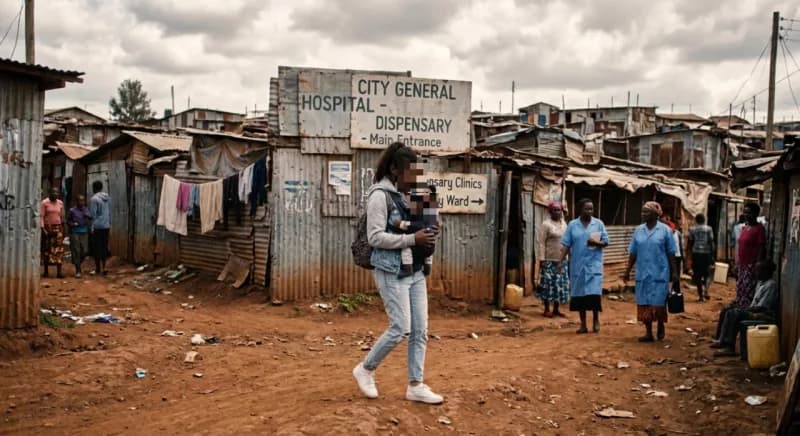
AI-generated image of a teen mum

Kenya's overall prevalence of teenage pregnancy among adolescent girls aged 15 to 19 stands at 15 per cent, according to the 2022 Kenya Demographic and Health Survey (KDHS). However, behind these statistics are young mothers navigating stigma, financial hardship and barriers to accessing sexual and reproductive health (SRH) services. In Kibera, a 19-year-old mother who is studying beauty and hairdressing in college remembers taking her child to hospital because pus was coming out of his ears.
She expected medical attention but says she was instead confronted with a remark that left her questioning her place in society. “Even you, young girl, gave birth? Children nowadays birth children,” she recalls a health worker telling her. “I started questioning myself: where is my place in society?” she says. The experience changed how she viewed hospitals, which she had previously considered safe spaces for everyone. After giving birth, she sought family planning services because she did not want another pregnancy. However, she says the doctor in charge nearly forced her to accept a contraceptive method lasting five years. When she questioned the recommendation because she had never used the method before, she says she was told to go home. “In hospitals that I have gone to, my opinions did not matter,” she says. Her experience raises concerns about whether young women receive adequate counselling and are allowed to make informed decisions about their reproductive health. Sharon Omolo, team lead at Imarisha Dada, a community-based organisation in Kibera, says young mothers often struggle to find their place in society while carrying responsibilities beyond their years. “You are a kid, but you are to perform parental duties,” Omolo says, describing the challenges they face. She is concerned that contraceptive services sometimes prioritise availability over individual needs. “Contraceptives should be compatible with one's body. Not just issuing them around,” she says. Omolo says some young mothers continue using contraceptives despite experiencing side effects because they fear becoming pregnant again and have limited access to alternatives. She argues that healthcare workers should assess patients, explain available methods and provide appropriate counselling before recommending contraception. The consequences of inadequate support can be even more serious during childbirth. Another young mother, who became pregnant after completing high school, says she lacked sufficient information about what to expect during labour. She recalls arriving at hospital in severe pain but receiving inadequate assistance because she had not paid. “The midwives, after measuring the centimetres apart severally, they stopped and told me to be calm as I had paid nothing,” she says. According to her account, the midwives only returned to assist her when her baby's head was crowning. “In these hospitals, most teen moms could easily lose their child's life or even their life,” she says. Her testimony highlights the potential dangers when financial hardship and poor treatment undermine access to timely maternity care. Erick Mundia, a lawyer and policy manager at IPAS, says Kenya's Constitution guarantees everyone the right to the highest attainable standard of health, including reproductive healthcare.
Erick Mundia, lawyer and Policy Manager at (IPAS) // TIMON OTIENO

Article 43 of the Constitution protects this right, while sections 5 and 6 of the Health Act contain provisions relevant to accessing healthcare services. Mundia says parental or guardian consent requirements under the Children Act can complicate access for minors. However, he argues that healthcare workers must also consider the best interests of the child, particularly when delaying treatment could cause harm. “There is no limitation to the provision of information. You don't need parental consent to pass information,” he says. He adds that minors in child marriages may need antenatal, maternity and postnatal care despite being unable to access their parents or guardians. Such circumstances, he says, should not automatically result in denial of essential services. Mundia also emphasises that minors are entitled to privacy and confidentiality. He urges facilities to strengthen youth-friendly services and encourages young people who experience denial of care to report cases to county health management teams. The KDHS 2022 also shows significant disparities in teenage pregnancy, with girls from poorer households and those with limited education experiencing higher rates. These inequalities underscore the need for accessible healthcare, reliable reproductive health information and social support. For the young mother from Kibera, the issue is personal. She sought help for her sick child and later returned for family planning, but says both experiences left her feeling unheard. Her story raises a critical question: how can adolescents be encouraged to seek reproductive healthcare if the institutions meant to protect them leave them feeling unwelcome? For Omolo, the answer begins with listening to young mothers and respecting their choices. For Mundia, it requires protecting adolescents' health, dignity and privacy. Ultimately, reducing teenage pregnancy requires more than making services available. Young people must be able to access care without fear of stigma, discrimination or humiliation.


Comments
No comments yet. Be the first to share your thoughts.