
Kenyans used 933,875,953 GB of mobile data between April and June 2026. That’s 50.6% more than in the same three months of 2025, when they used 620,189,223 GB. The figures are in the Communications Authority of Kenya’s sector statistics report for April to June 2026.
5G connections are a small part of the market but a big part of the traffic. Kenya had 2,103,217 of them on 30th June 2026, up 68.6% from 1,247,713 a year earlier. They were 3.8% of mobile broadband connections, and they used 135,380,087 GB in the quarter, 14.5% of all mobile data.
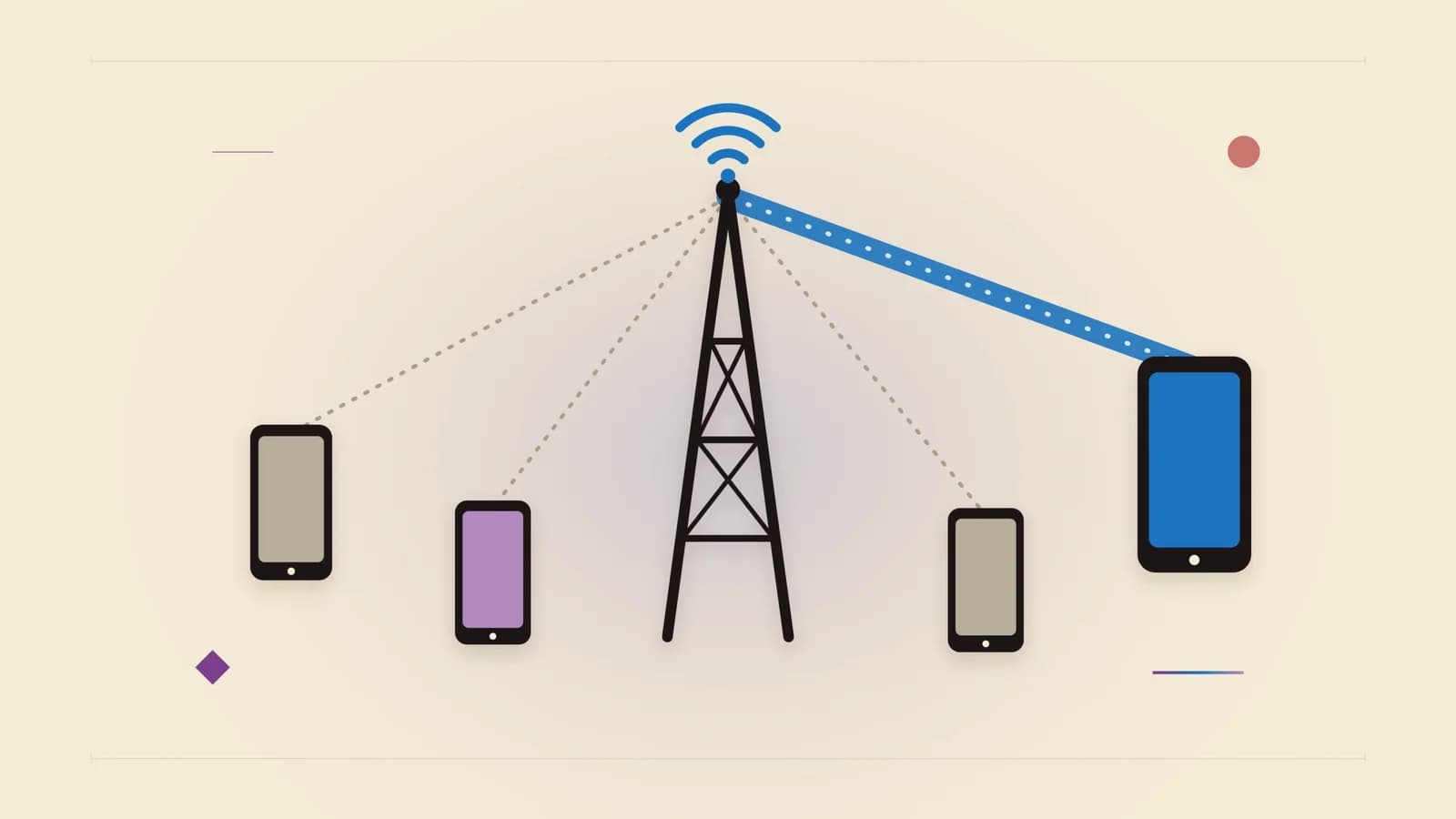
These are generations of mobile network technology, and each newer one is faster. 2G handles calls, texts and very slow data. 3G brought usable mobile internet. 4G is what most Kenyans use now for video, maps and social media. 5G is the newest and fastest, and it needs both a 5G phone and a 5G signal where you are.
The Communications Authority (CA), Kenya’s telecoms regulator, counts a data connection against the technology it runs on. Its 2G, 3G, 4G and 5G numbers are data subscriptions, not people.
The CA gives an average for each technology. Those averages are for the three-month quarter. Dividing the quarter’s data by the number of connections gives the same figures, so we’ve also shown them per month.
| Technology | Connections, June 2026 | Data per connection, April to June | About per month |
|---|---|---|---|
| 5G | 2,103,217 | 64.4 GB | 21.5 GB |
| 4G | 48,312,139 | 15.8 GB | 5.3 GB |
| 3G | 4,509,901 | 8.3 GB | 2.8 GB |
| All mobile broadband | 54,925,257 | 17.0 GB | 5.7 GB |
So the average 5G connection used about four times as much data as the average 4G one. A year earlier, the 5G average was 35.2 GB a quarter, or about 12 GB a month.
Safaricom’s own figures point the same way. Its annual report for the year to March 2026 puts monthly use per user at 12.9 GB on 5G, 5.7 GB on 4G, 2.0 GB on 3G and 0.3 GB on 2G.
Kenya had 48,312,139 4G data connections in June, up 29.9% in a year, and they carried 761,085,466 GB in the quarter, 81.5% of all mobile data. Of the 313.7 million GB of extra data Kenyans used compared with a year earlier, 76.0% came through 4G and 29.2% through 5G.
The older networks are shrinking. 3G data connections fell 38.8% to 4,509,901, and 3G traffic fell 30.4%. That’s why the two shares of growth add up to more than 100%. 2G still had 9,338,437 data connections, down 27.0%.
Altogether Kenya had 64,263,694 mobile data subscriptions in June, up 9.7%. Of those, 54,925,257 were broadband, meaning 3G, 4G or 5G.
More Kenyans now have smartphones. There were 52,262,565 smartphones connected to Kenyan networks in June, against 27,420,856 feature phones. Smartphones are 65.6% of connected devices.
By March 2026 Safaricom had 1,879 5G base stations, against 7,524 on 4G, and 5G devices on its network had grown 55.5% in a year to 1.6 million. It also sells 5G as home internet, which we covered when it passed a million fixed internet subscriptions. Airtel also sells 5G, and we compared the two networks’ mobile performance in April.
So if you’re moving to a 5G phone, keep an eye on your bundle for the first month or two. The average 5G connection uses about four times what a 4G one does.

Comments
No comments yet. Be the first to share your thoughts.