
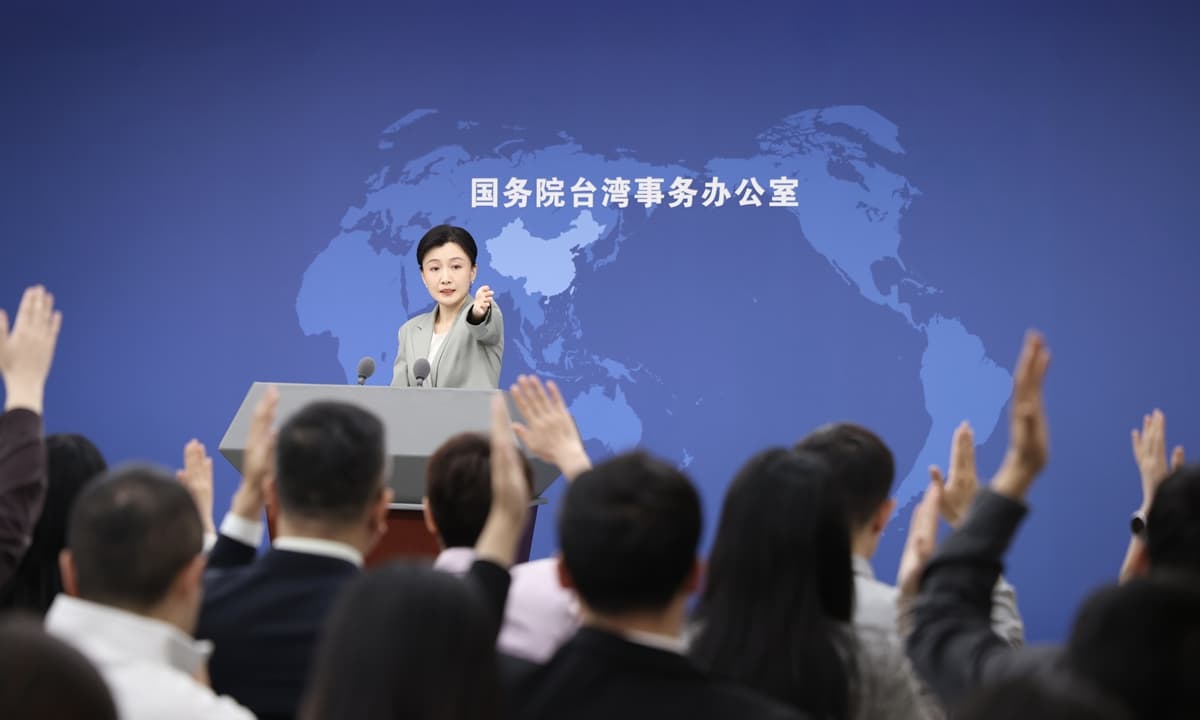
China has cautioned that tensions over the Taiwan issue could become a major point of contention between Beijing and Washington, saying opposing “Taiwan independence” and preserving peace across the Taiwan Strait are in both nations’ common interests.
Speaking at a press briefing on Wednesday, Zhang Han, a spokesperson for China’s Taiwan Affairs Office, described the Taiwan question as “the core of China’s core interests” and “the most important issue in China-US relations.”
Her remarks followed media inquiries about a People’s Daily article that argued the one-China principle provides the political foundation for China-US relations and that opposing “Taiwan independence” is crucial to maintaining strategic stability between the two countries.
“There is only one China in the world, and Taiwan is part of China,” Zhang stated, adding that adherence to the one-China principle represents “a basic norm of international relations and the universal consensus of the international community.”
Zhang explained that the Taiwan issue has implications beyond cross-Strait relations due to its potential impact on the broader China-US relationship.
“The Taiwan question lies at the very core of China’s core interests and is the most important issue in China-US relations. Proper handling of this issue will maintain the overall stability of bilateral ties. Mismanagement may lead to friction or even conflicts between the two countries, pushing China-US relations to an extremely dangerous position,” she warned.
Beijing has consistently identified the one-China principle as the basis of its stance on Taiwan. Washington, while maintaining diplomatic relations with Beijing, also sustains unofficial relations with the leadership in Taiwan.
Zhang also criticised the administration of Taiwan leader Lai Ching-te, accusing the island’s authorities of pursuing a “Taiwan independence” position and rejecting the 1992 Consensus, which Beijing claims embodies the one-China principle.
“The Lai Ching-te authorities on the island of Taiwan stubbornly adhere to the ‘Taiwan independence’ separatist stance, refuse to recognise the 1992 Consensus which embodies the one-China principle, and keep provoking for ‘independence.’ They are the chief culprit undermining peace and stability across the Taiwan Strait,” Zhang asserted.
She stated that Beijing views opposition to Taiwan independence and the preservation of cross-Strait stability as interests shared by both China and the United States.
“Firmly opposing ‘Taiwan independence’ separatism and safeguarding cross-Strait peace and stability serve the common interests of both China and the US,” she affirmed.
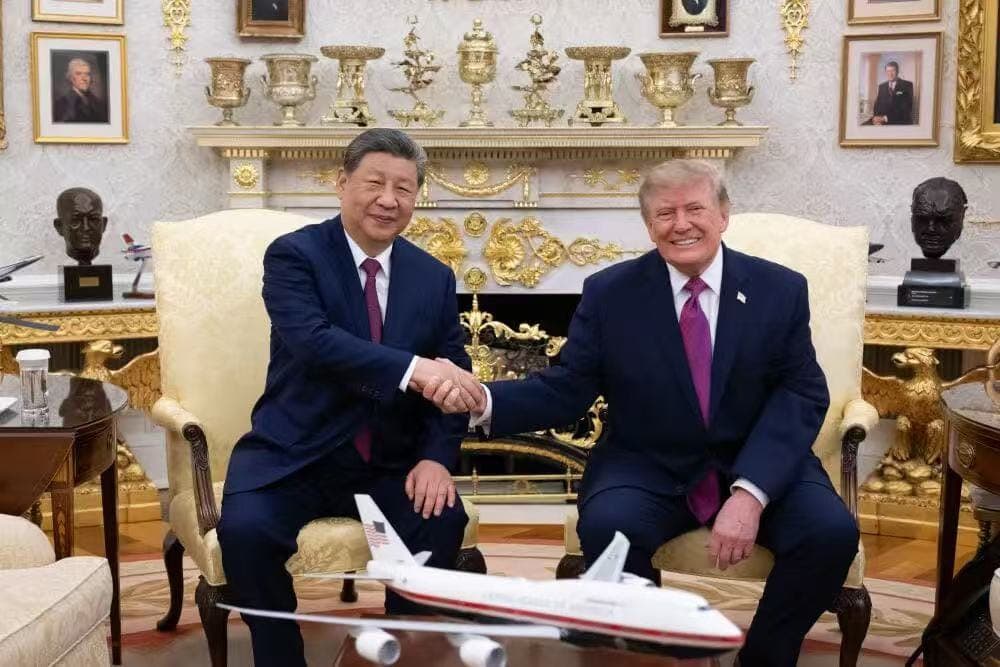
Zhang was also questioned about Chinese President Xi Jinping’s recent meeting with US President Donald Trump, during which Xi outlined China’s position on the Taiwan question.
Reiterating Beijing’s stance, Zhang affirmed that the Taiwan question remains the most important issue in China-US relations.
She stated that Taiwan independence and peace across the Taiwan Strait are fundamentally incompatible, describing cross-Strait peace as the area of greatest shared interest between Beijing and Washington.
“Safeguarding peace and stability across the Taiwan Strait is the biggest common denominator between China and the US and is inherent to a constructive relationship of strategic stability between the two countries,” Zhang said.
Beijing called on Washington to uphold its commitments under the framework governing bilateral relations and to avoid actions that could further intensify tensions around Taiwan.
Zhang urged the United States to “abide by the one-China principle and the three China-US joint communiqués, adhere to the correct position of opposing ‘Taiwan independence,’ handle the Taiwan question with utmost prudence, refrain from sending wrong signals to the ‘Taiwan independence’ separatist forces, and take concrete actions to uphold the constructive China-US relationship of strategic stability.”
Comments
No comments yet. Be the first to share your thoughts.