
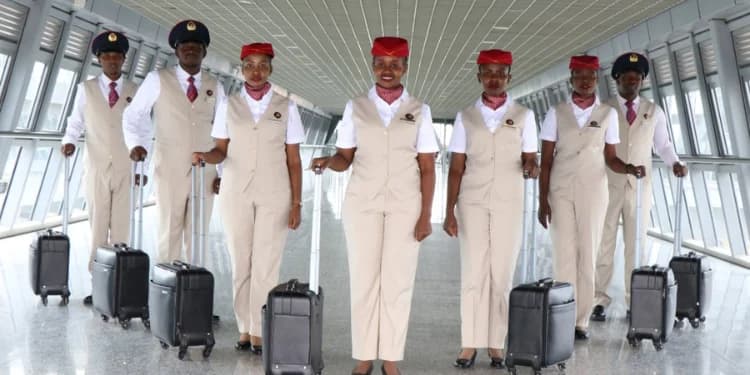
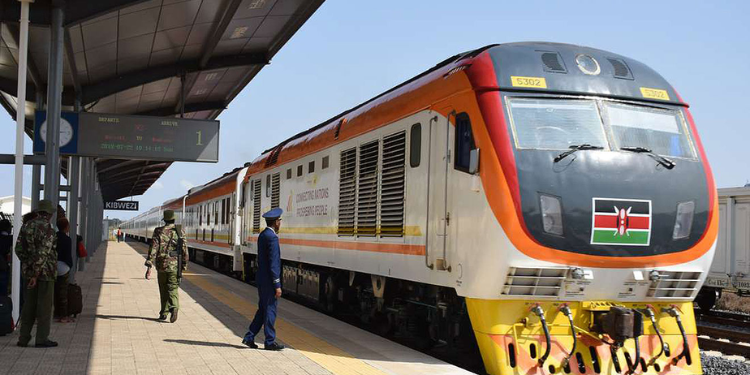
The launch of the Madaraka Express transformed passenger rail transport in Kenya, creating hundreds of jobs in customer service, hospitality, operations, and safety management.
Among the most sought-after positions are onboard attendants and passenger service staff, usually referred to as SGR cabin crew.
Employees working on the train are responsible for passenger comfort, ticket verification, safety procedures, and customer service throughout the journey.
Salary and Benefits for SGR Cabin Crew
Kenya Railways and Africa Star Railway Operation Company (Afristar) do not publicly disclose salary scales for onboard attendants. Entry-level passenger service staff and train attendants earn between KSh30,000 and KSh60,000 per month depending on experience, responsibilities, and employment terms.
Higher-ranking supervisors and managers receive additional compensation and allowances.
In addition to their monthly pay, crew members also receive medical insurance, uniforms, refresher training programs, and other employment benefits offered by their employer.
Onboard attendants operate on shifts that correspond with train schedules, requiring them to report to duty before passenger boarding and remain on duty until the completion of the journey.
This means employees may work early-morning, daytime, evening, or weekend shifts depending on operational needs.
Qualifications to Become SGR Cabin Crew in Kenya
According to Africa Star Railway Operation Company, the firm mandated to operate and maintain Kenya’s SGR, candidates for passenger-facing and station-related roles usually need at least a diploma or relevant professional training.
Fields such as transport management, hospitality, tourism, customer service and logistics are considered advantageous.
Applicants are also expected to demonstrate strong communication skills, teamwork abilities and a customer-oriented approach.
Previous experience in the transport, hospitality, or service industry can boost an applicant’s chances of securing a position.
Because onboard attendants interact directly with passengers throughout the journey, SGR emphasizes professionalism, grooming standards, and interpersonal skills. Fluency in English and Kiswahili is considered an advantage, particularly for customer-facing positions that require handling passenger inquiries and complaints.
Training, Duties and Colleges to Study in Kenya
Successful candidates receive in-house training after recruitment. The training covers passenger service, railway safety, emergency response, customer care, and operational protocols.
The staff also train in ticket verification, passenger management, and maintaining onboard service standards.
Crew members are expected to understand evacuation procedures, onboard safety protocols, and emergency communication channels.
Railway Training Institute (RTI) in Nairobi remains one of the most relevant institutions because of its long-standing association with the railway industry in Kenya.
The institute offers transport and logistics-related programs that can provide a pathway into railway careers.
Other institutions that offer courses relevant to SGR jobs include Kenya Utalii College, which specializes in hospitality and tourism training, as well as various accredited Technical and Vocational Education and Training (TVET) institutions offering programs in hospitality management, travel and tourism, customer service, logistics and front-office operations.
SGR Technical Operations in Kenya
In 2025, Kenya Railways opened applications for specialized railway training programs at the Railway Training Institute (RTI)
Train Driver and Technical Railway Careers
Train drivers’ responsibilities include operating the locomotives and monitoring train systems
Locomotive maintenance technicians, rolling stock inspectors, and machinists conduct inspections, repairs, and maintenance on railway equipment.
According to Kenya Railways, the technical programs currently offered at RTI include Locomotive Driving, Rolling Stock Inspection, Locomotive Maintenance and Machinist training.
Professionals in these fields inspect engines, diagnose faults, repair railway systems, maintain mechanical and electrical equipment, and ensure trains comply with operational safety standards.
For the Locomotive Driving program, applicants must have either a diploma in Mechanical Engineering, Electrical and Electronics Engineering, or Mechatronics Engineering from a recognized institution.
The course lasts 12 months and costs KSh212,000.
Candidates seeking admission to the Locomotive Maintenance program are also required to hold a diploma in Mechanical Engineering, Electrical and Electronics Engineering, Mechatronics Engineering or a related discipline. The course runs for nine months and costs KSh112,000.
For Rolling Stock Inspection, applicants need a craft certificate in Mechanical Engineering, Electrical and Electronics Engineering or a related technical field. The training takes nine months and costs KSh112,000. Similarly, the Machinist course requires a craft certificate in Mechanical Engineering or a related profession and runs for nine months at the same fee.
Follow our WhatsApp Channel and X Account for real-time news updates.

Comments
No comments yet. Be the first to share your thoughts.