

NAIROBI,Kenya,Sep 13 — A Somali conglomerate’s win of two awards at Mogadishu’s SOBA Awards has put fresh attention on a trend Kenyan exporters and investors have watched closely for years.
Somalia’s shift from pure import-trading toward local manufacturing could reshape one of Kenya’s most important, if under-reported, regional export markets.
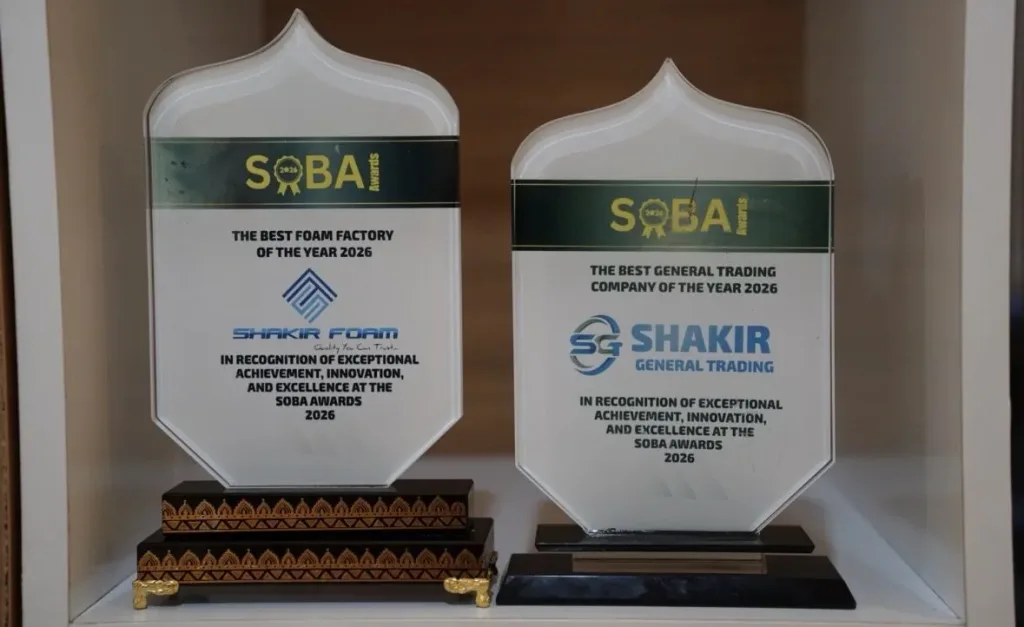
Shakir Group, whose general trading and foam manufacturing arms both trade actively in goods that move through the Kenya–Somalia corridor, saw Shakir General Trading named Best General Trading Company of the Year at the 7th Somali Business Awards, while Shakir Foam Factory was named Best Foam Factory of the Year.
Kenya remains one of Somalia’s largest trading partners, exporting everything from cereals, cement, plastics and foam products to Mogadishu, Kismayo and other Somali markets, largely via the port of Mombasa and cross-border road routes through Mandera and Garissa.
Kenyan manufacturers in sectors such as foam, plastics and construction materials have historically supplied a significant share of Somali demand, given the near-total absence of heavy industry inside Somalia itself.
The rise of local Somali manufacturers such as Shakir Foam Factory signals a market that is growing and formalising;good news for Kenyan trading houses and freight and logistics firms plugged into that corridor.
It also points to the gradual emergence of import-substitution competition in a market Kenyan producers have long supplied largely unchallenged.
Shakir General Trading’s award, in a business built on moving imported goods into Somali markets, reflects a segment where Kenyan exporters, clearing agents and shipping lines remain deeply embedded as suppliers and logistics partners.
Its recognition alongside a manufacturing unit is a reminder to Kenyan businesses trading into Somalia that some of their counterparts on the receiving end are diversifying beyond distribution into production.
Abdiaziz Ali Ahmed, CEO of Shakir Group, described the awards as a marker of progress rather than an end point.
“We are honored to receive these two national recognitions. They reflect the dedication of our teams, the trust of our customers and the support of our partners.”
He added that the group viewed the recognition as an obligation to keep investing rather than a moment to pause.
“For us, these awards are not simply a celebration of what we have achieved; they are a responsibility to continue improving, investing and building businesses that create lasting value for Somalia.”
The SOBA Awards, now in their seventh edition, are organised to recognise Somali businesses across sectors including trade, manufacturing, technology and services.
As with most industry award schemes, winners are selected by an organising panel rather than through independently audited financial performance, and the recognition should be read as a reputational marker within Somalia’s business community rather than a verified ranking of revenue or market share.
Neither award discloses turnover, production volumes or headcount for either Shakir unit.
For Kenyan businesses, the more relevant question is what a maturing Somali manufacturing base means for the Kenya–Somalia trade relationship over the medium term.
Kenya’s exports to Somalia have grown steadily over the past decade, and Kenyan firms;from Mombasa-based freight forwarders to foam, plastics and steel manufacturers with a Somali export book have benefited from Somalia’s reliance on imported industrial goods.
Local production by groups such as Shakir could, over time, chip away at demand for some of those imports.
Equally, Somalia’s private sector remains constrained by unreliable power supply, limited access to formal financing and security-related logistics costs, all of which make a rapid substitution of Kenyan and other regional imports unlikely in the near term.



Comments
No comments yet. Be the first to share your thoughts.