
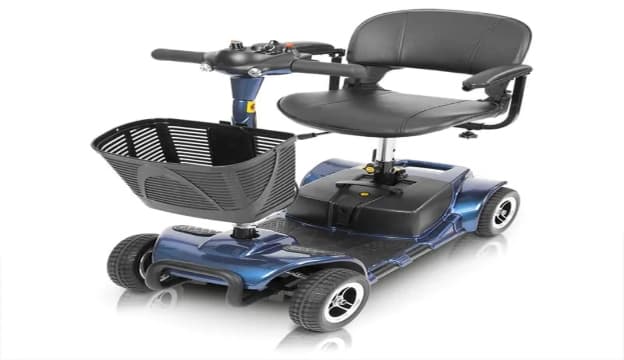
Travelling around should feel easy, whether you are running errands, visiting family, or exploring a new place. However, choosing a mobility scooter can be challenging when you need something portable without sacrificing comfort or stability.
A large model cannot be easily stored, and a small one might not provide the range or support you need for daily use. A folding scooter can help save space, but the key is to identify a scooter that suits your everyday routine, commuting, and physical needs.
By comparing practical features before purchasing, you will be able to prevent simple problems and make a more confident decision. That said, let’s explore five key factors to help you choose a folding scooter that suits your travel plans and daily routine.
1. Check the Folding Design and Weight
A folding scooter can provide a convenient option for transportation, as it can be folded up and stored when not in use. But the folding designs differ across models. A few scooters fold up into a compact shape, while some need to be disassembled to be transported.
First, consider how often you will be traveling with your scooter. When you intend to transport it in your car, measure its folded dimensions and ensure that it will fit in your trunk. Before purchasing, thoroughly investigate the space you have available to prevent storage issues. Then, check the weight of the scooter.
A light scooter may be easier to transport, but some scooters are still heavy when folded. If you can’t lift the scooter safely, find one with removable components or a loading aid that suits you.
Moreover, the folding process can be tested. Be sure that the scooter folds and unfolds easily. When loading a vehicle or getting ready to travel, a simple design may save time.
2. Compare Battery Range and Charging Time
Battery range is the distance you can drive before you need to recharge. A scooter that has a short range could be good for running errands but not for longer trips.
Start by making an estimate of how far you travel in one day. Add places such as stores, parks, appointments, etc. that you visit regularly. Next, compare those needs to the advertised range of the scooter.
Keep in mind, though, that the range may be less than the advertised one. Hills, bumpy roads, riders, and frequent stops can cause the battery to drain rapidly. Select a scooter that has a battery range sufficient to handle your normal riding distance without running out of power.
Charging time is another factor. See how long it takes to charge the battery and if it can be removed from the scooter. It is also helpful to have a removable battery that can be charged when the scooter is stored in the garage or another place.
3. Choose a Comfortable Seat and Easy Controls
The portable scooter should also be comfortable to use in everyday life. If the seat is too narrow or the controls are hard to reach, even short trips may become tiring.
Begin by checking the seat width, padding, and height. The space must be enough to comfortably sit and position your legs naturally. Adjustable armrests or a swivel seat may also make it easier to get on and off.
Next, look at the tiller. This is the steering column you use to control the scooter. It must be at a comfortable height so that you can steer without straining your arms or bending forward.
The controls should also be easy to use. Check whether you can reach the speed settings and other buttons without changing your sitting position. When you have limited hand strength, select a model with controls that feel simple and manageable.
Finally, try the scooter before buying it, if possible. Practice starting, stopping, and turning at a slow speed. Familiar and comfortable seats and simple controls can make daily travel less tiring.
4. Consider Stability and Turning Space
Your scooter should work well in the places you visit most. You may need to move through shop aisles, pass through doorways, or travel along pavements. Therefore, check how easily the scooter handles these settings.
Three-wheel scooters often have a smaller turning radius. This may simplify their movement in narrow corridors. Four-wheel models can be more stable on suitable outdoor surfaces. The right option depends on where and how you plan to ride.
Ground clearance is also worth checking. When you have uneven pavements or small changes in surface height, ensure that the scooter is capable of handling them safely. A small travel scooter may not be suitable for rough paths or steep slopes.
Next, check the scooter’s weight limit. Make sure it can support your weight and the personal items you carry. Staying within the stated limit helps the scooter perform as intended.
Consider your daily paths before selecting a model. A small scooter can be used around shopping malls and on smooth paths. However, when you spend a lot of time outside on rough ground, compare its limits with a larger mobility scooter.
5. Plan for Storage, Transport, and Maintenance
Before buying a scooter, consider how it will fit into your daily life. A model may look compact online but still be hard to lift, load, or store.
Start by measuring your car’s trunk and opening. Compare these measurements with the scooter’s folded size. Also, check the height of the trunk floor. A scooter that can fit inside may not be easily lifted.
Then, select an appropriate storage area at home. In case of limited space, a compact folding model can be easier to put away. Make sure you also have a safe place to charge the battery and store the charger.
When taking buses, trains, or planes, make sure to check their rules. The size, weight, and battery restrictions may differ among transport providers. It is better to check these details before you travel to avoid inconveniences.
Lastly, consider the expenses and effort of regular care. Ask about battery changes, tires, availability of chargers, and spare parts. Maintenance can be easier in the long run through easy access to these items.
Conclusion
The process of making the right choice of folding scooter begins by first knowing your daily life and where you travel. Before making your choice, compare the folding design, weight, battery range, comfort, and stability.
Also, check your storage space and transport requirements. Take time to review the specifications and test suitable models when possible. By focusing on the features that matter most, you can choose a scooter that makes everyday trips and travel easier to manage.



Comments
No comments yet. Be the first to share your thoughts.