
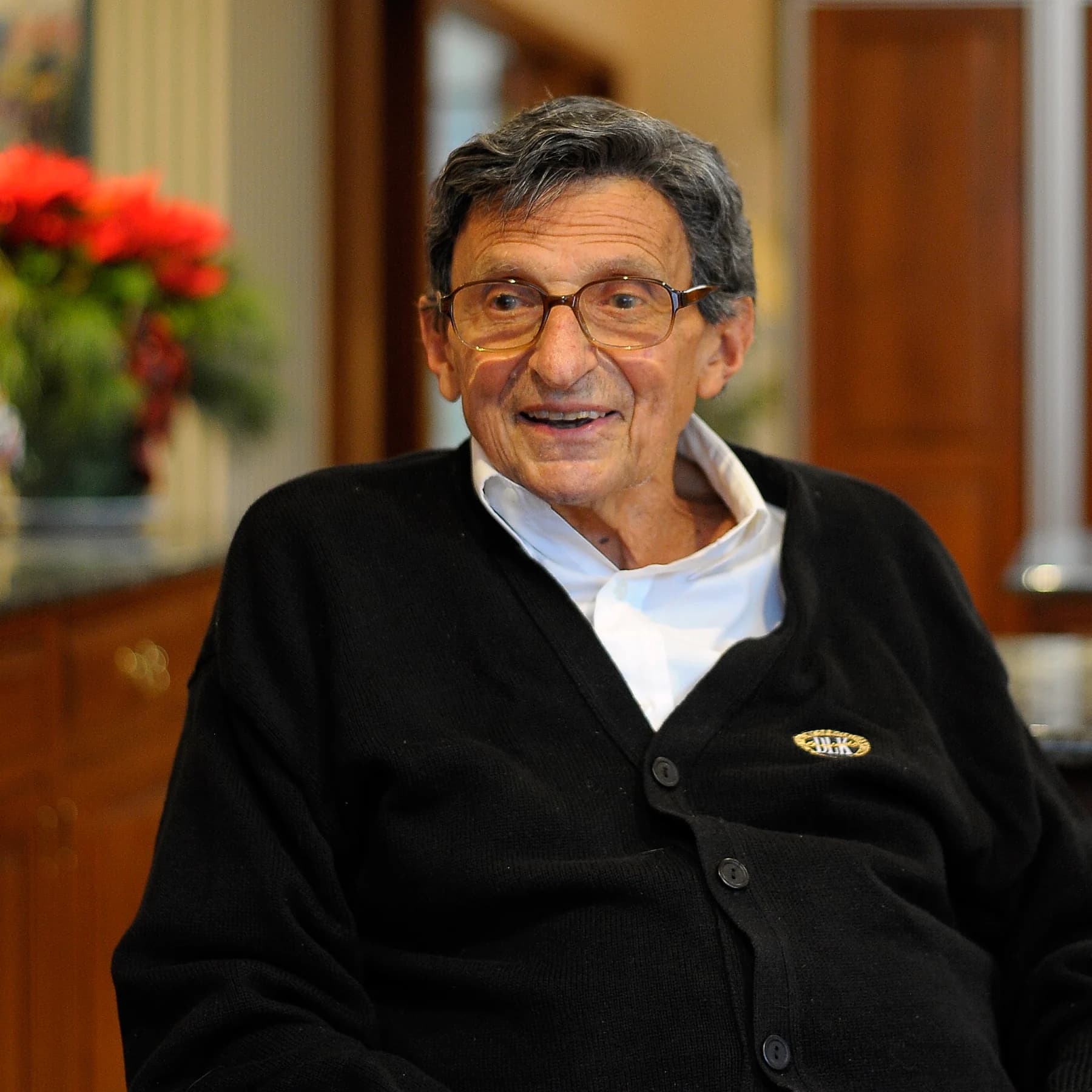
Joe Paterno was an American college football coach who had a net worth of $10 million at the time of his death in 2012. He was best known for his six-decade association with Penn State University and his extraordinary tenure as head coach of the Penn State Nittany Lions.
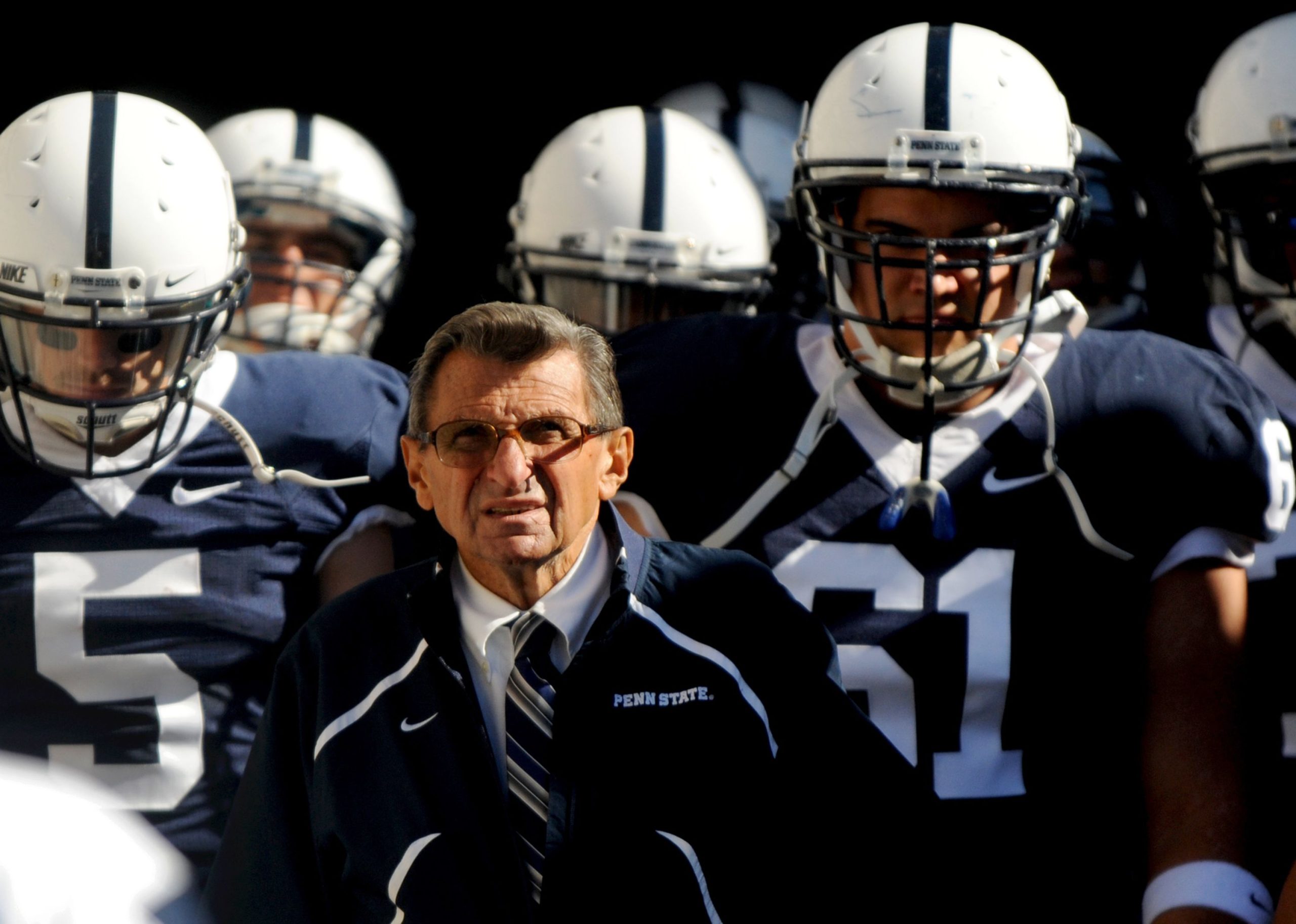
Paterno served as Penn State’s head football coach from 1966 until 2011. During his career, he led the Nittany Lions to two national championships, numerous major bowl victories and hundreds of wins. His career total eventually reached 409 victories, making him the winningest coach in NCAA Division I FBS history at the time.
Paterno’s career and reputation were dramatically altered in 2011 when he was fired amid the Penn State child sexual abuse scandal involving former assistant coach Jerry Sandusky. Paterno died just 74 days after his dismissal.
| Joe Paterno Net Worth | $10 Million |
| Date of Birth | December 21, 1926 |
| Place of Birth | Brooklyn, New York |
Table of Contents
ToggleJoe Paterno Salary
Joe Paterno’s coaching salary reached approximately $568,000 per year at the height of his career.
His compensation was supplemented by endorsement agreements and other income associated with his status as one of the most prominent figures in college football.
Paterno also had a substantial pension benefit. According to the Pennsylvania State Employees’ Retirement System, his decades of service to Penn State entitled him to a pension based on the average of his three highest salary years. That benefit was estimated at approximately $550,000 per year.
Paterno had spent about six decades at Penn State by the time his coaching career ended, making his employment history one of the longest in major college athletics.
Early Life
Joseph Vincent Paterno was born on December 21, 1926, in Brooklyn, New York.
He was the son of Angelo Paterno, a law clerk, and Florence Paterno, a homemaker.
Paterno attended Brooklyn Preparatory School and graduated in 1944. He subsequently served in the U.S. Army before enrolling at Brown University.
At Brown, Paterno played football for the Bears. He initially played quarterback before moving to cornerback.
He graduated from Brown in 1950 with a degree in English literature.
Paterno had initially planned to attend Boston University School of Law, but his career took a different direction after he accepted a coaching position at Penn State.
Beginning at Penn State
Paterno joined Penn State in 1950 as an assistant coach under head coach Rip Engle.
He spent more than a decade as an assistant before being promoted to associate coach in 1964.
Two years later, Engle retired and Paterno became the head coach.
The promotion marked the beginning of one of the longest and most successful coaching careers in college football history.
Penn State Coaching Career
Paterno quickly established Penn State as a national football power.
His teams went undefeated in 1968 and 1969, winning the Orange Bowl in both seasons.
In 1973, the Nittany Lions again completed an undefeated season and won the Orange Bowl.
Over the following decades, Paterno’s teams appeared regularly in major bowl games. Penn State won the Cotton, Fiesta, Citrus, Outback and Alamo Bowls during his tenure, along with the Liberty, Sugar, Aloha, Holiday and Rose Bowls.
The program’s success reached its peak with national championships in 1982 and 1986.
Penn State joined the Big Ten Conference in 1993, and Paterno subsequently led the Nittany Lions to three Big Ten championships.
His longevity was remarkable. He remained Penn State’s head coach for 46 seasons, from 1966 through 2011.
Coaching Record
Paterno finished his career with 409 victories, a record that made him the winningest coach in major college football history at the time.
The NCAA later vacated 112 Penn State victories from 1998 through 2011 as part of its punishment following the Sandusky scandal. That temporarily reduced Paterno’s official win total.
The NCAA eventually restored those victories in 2015 after an agreement with Penn State.
Paterno’s career record remains one of the most remarkable achievements in college football, although his legacy has been inseparable from the events surrounding the Sandusky scandal.
Child Sexual Abuse Scandal
Paterno’s career ended in November 2011 amid the Penn State child sexual abuse scandal.
The scandal centered on Jerry Sandusky, Paterno’s former defensive coordinator, who was accused of sexually abusing boys over a period of years.
A key incident occurred in 2001, when Penn State assistant coach Mike McQueary reported seeing Sandusky in a shower with a young boy inside the Lasch Football Building.
McQueary later said he informed Paterno about what he had witnessed.
Paterno subsequently told university athletic director Tim Curley about the incident. The matter was not reported directly to police at that time, and Sandusky continued to have access to Penn State facilities.
Paterno later maintained that he had followed what he understood to be the appropriate reporting procedure by informing his superiors.
However, an investigation led by former FBI director Louis Freeh concluded that senior university officials, including Paterno, had failed to take sufficient action to protect children from Sandusky.
The report said Paterno had been aware of concerns about Sandusky’s conduct as early as 1998 and had failed to prevent him from accessing university facilities.
Paterno disputed aspects of the findings and maintained that he had not known the full extent of Sandusky’s conduct.
Jerry Sandusky Conviction
Sandusky was eventually arrested and charged with numerous counts of child sexual abuse.
He was convicted on 45 of 48 counts and sentenced to 60 years in prison.
The investigation found that Sandusky had used his charity, Second Mile, which served at-risk children, to meet some of his victims.
The scandal resulted in criminal cases against several Penn State officials and generated intense scrutiny of the university’s handling of allegations involving Sandusky.
Joe Paterno’s Firing
Paterno announced in November 2011 that he intended to retire at the end of the season.
Before he could retire, however, Penn State’s Board of Trustees terminated his employment.
His firing came after decades as the face of the university’s football program.
Paterno released a statement saying he had been devastated by the events and accepted responsibility for not doing more after learning about the 2001 incident.
He also said he believed he had acted appropriately by reporting what he had been told to his superiors.
Scandal Aftermath
The scandal had significant consequences for Penn State and Paterno’s legacy.
The NCAA imposed a $60 million fine on Penn State and initially vacated 112 of the football program’s victories from 1998 through 2011. The university was also banned from postseason competition for four years.
Paterno’s name was removed from the Joe Paterno Child Development Center at Nike’s headquarters in Oregon.
His statue outside Penn State’s Beaver Stadium was also removed.
The NCAA later restored the vacated victories in 2015, meaning the wins were returned to Paterno’s official record.
The scandal nevertheless permanently changed the way Paterno’s career was viewed.
Charity and Philanthropy
Paterno and his wife, Suzanne, were major donors to Penn State.
The couple donated more than $4 million to academic programs and various colleges within the university.
Paterno also helped raise more than $13.5 million for the expansion of Penn State’s Pattee Library. The library was later renamed Paterno Library.
His philanthropic activities reflected his long-standing emphasis on education and the university’s academic programs.
Personal Life
Joe Paterno married Suzanne Pohland in 1962.
The couple had five children: Joseph, Diana, Mary Kay, Scott and David. All five attended Penn State.
Their son Joseph, commonly known as Jay Paterno, later worked as a football coach at Penn State, including a lengthy period as the team’s quarterbacks coach.
Another son, Scott Paterno, became a lawyer and later ran as a Republican candidate for Congress in Pennsylvania.
Health and Death
Paterno experienced several health problems during the final years of his life.
In 2006, he suffered a leg injury and damaged his knee after colliding with a player on the sideline during a game.
He later underwent hip replacement surgery after suffering another leg injury.
In 2011, Paterno was injured again after colliding with a player during practice.
Later that year, he was diagnosed with lung cancer.
Paterno died from complications related to his treatment on January 22, 2012. He was 85 years old.
His death came only 74 days after Penn State fired him.
Comments
No comments yet. Be the first to share your thoughts.