
Floods could displace 874,000 people in Somalia over next three months, IOM warns

Signs of flooding are already emerging in the country; for instance, in Dollow, the Jubba River is approaching flood levels, while the Shabelle River is rising towards the top of its banks in Jowhar.
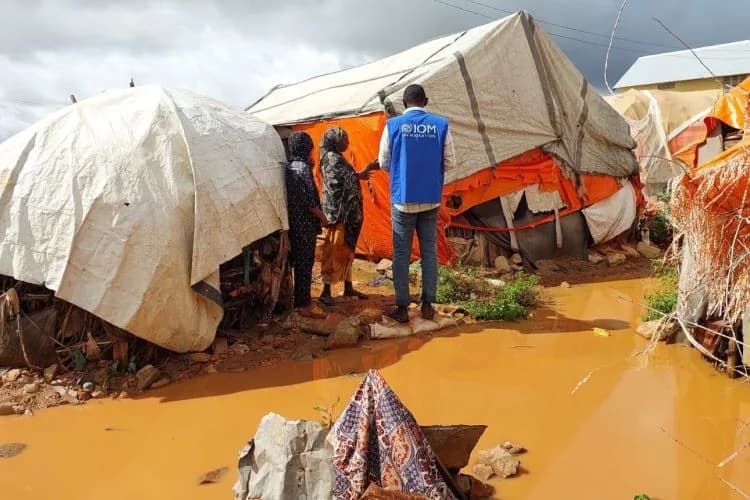
Flooding could displace nearly 874,000 people in Somalia between October and December 2026 as heavy rainfall and rising river levels threaten communities already grappling with drought and repeated displacement, the International Organisation for Migration (IOM) has warned.
The warning came after IOM and the Danish Refugee Council projected that flooding could account for 92 per cent of the anticipated displacement, and warned that funding shortfalls are hampering preparations ahead of a rainy season expected to bring above-normal rainfall amid strengthening El Niño conditions.
The flooding situation threatened to worsen the conditions of communities already struggling with drought and repeated displacement.
“We are looking at the possibility of hundreds of thousands of people losing their homes in just a matter of weeks. Many of these families have already been displaced before and have very little left to fall back on,” said Manuel Marques Pereira, IOM Somalia Chief of Mission.
Signs of flooding are already emerging in the country; for instance, in Dollow, the Jubba River is approaching flood levels, while the Shabelle River is rising towards the top of its banks in Jowhar.
Heavy rainfall in Baidoa has already damaged homes and forced families to flee several neighbourhoods.
Latest Stories
- Court clears way for challenge to Senior Counsel titles awarded since 2013
- Traffic alert: Major Nairobi roads to close for Standard Chartered Marathon
- Sudan conflict: Peace efforts resume to end ‘drone war’ fuelling humanitarian crisis
- Kenya’s Coast seeks more Ugandan tourists through joint holiday packages
Beletweyne and Gaalkacyo are among the areas facing the greatest threat, with approximately 229,000 and 82,000 people respectively at risk of displacement, according to IOM.
Families living in overcrowded displacement sites are particularly vulnerable, with assessments identifying inadequate access to safe water and sanitation, raising concerns about disease outbreaks if flooding intensifies.
The organisation said it is working with Somali authorities and local communities to strengthen early warning systems, identify safer evacuation routes and prepare emergency assistance.
However, funding shortages are limiting efforts to establish safe relocation areas and provide essential shelter, clean water, sanitation and healthcare.
As such, Manuel noted that there is still time to reduce the impact, but that window is closing.
“We urgently need funding to help people protect their homes and livelihoods, reach safer ground where necessary, and avoid another cycle of displacement,” he said.
On its part, the UN migration agency, IOM, said it has secured only about 14.4 per cent of the required $16.62 million needed to prepare for and respond to El Niño-related flooding, which is intended to support more than 517,000 people in flood-prone communities across Somalia.
The organisation called for urgent international support to scale up preparedness and early action before rising floodwaters force more families from their homes.

Comments
No comments yet. Be the first to share your thoughts.