
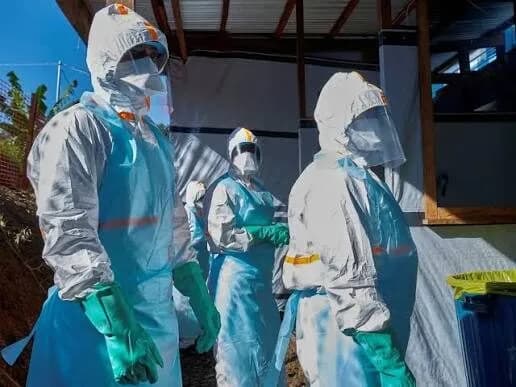
NAIROBI, Kenya, Oct 26 — Kenya has released the first 20 contacts of its imported Ebola case after they completed the mandatory 21-day monitoring period in good health, as 98 others remain under quarantine pending phased clearance from November 3.
In a statement on Monday, Director-General for Health Dr Patrick Amoth said the 20 contacts had completed monitoring without developing symptoms and were returning to their families.
The Ministry of Health said the remaining 98 contacts would be released in four waves beginning November 3, depending on individual health assessments.
The milestone comes three weeks after Kenya confirmed its first imported case of Ebola (Bundibugyo virus disease) on October 6, 2026.
“This is a milestone worth celebrating, and a clear sign that early identification, quarantine and close monitoring are working,” Amoth said, while cautioning that the response was not yet complete.
The Ministry reported that the number of confirmed cases remained at nine, including two deaths, translating to a case fatality rate of 22.2 per cent.
The seven surviving patients remained stable in treatment units and continued receiving care from a multidisciplinary team.
Genomic sequencing of three of the nine case samples showed a genetic link to the first case and to the Bundibugyo virus lineage in the Democratic Republic of Congo, MoH noted with sequencing of the remaining six samples ongoing.
Amoth said the 20 contacts had been assessed against the criteria for release, including completing 21 days without symptoms since their last exposure.
He said they posed no risk to their families, colleagues or neighbours and urged communities to welcome them home without stigma.
The Ministry is also providing mental health and psychosocial support through trained counsellors and mental health professionals to people in quarantine, those returning home, patients and their families, as well as frontline health workers.
Despite the release of the first group, the Ministry said surveillance and infection prevention measures would continue in health facilities, communities and points of entry.
Amoth said health facilities had undergone assessments, infection prevention and control focal persons had been appointed, and health workers trained on the correct use of personal protective equipment.
The Ministry said it was applying the “7-1-7” approach to outbreak response: detecting outbreaks within seven days, notifying them within one day and responding within seven days.
The government warned that the outbreak could only be declared over after 42 days had elapsed since the last confirmed patient tested negative twice at least 48 hours apart and was discharged or safely buried.
“We cannot afford to drop our vigilance until we reach that point,” Amoth said.
The Ministry said travel, trade and public gatherings remained unrestricted.
Members of the public experiencing fever, unusual tiredness, muscle or joint pains, sore throat, vomiting, diarrhoea or unexplained bleeding were urged to seek medical care promptly, particularly if they had contact with a suspected case or travelled to the Democratic Republic of Congo.
The Ministry advised people seeking assistance or wishing to report a suspected case to call the toll-free number 719 or use the Jali WhatsApp chatbot on 0700 719 719.
Amoth thanked national and county response teams, healthcare workers, development partners and community leaders for supporting efforts to contain the outbreak.

Comments
No comments yet. Be the first to share your thoughts.