
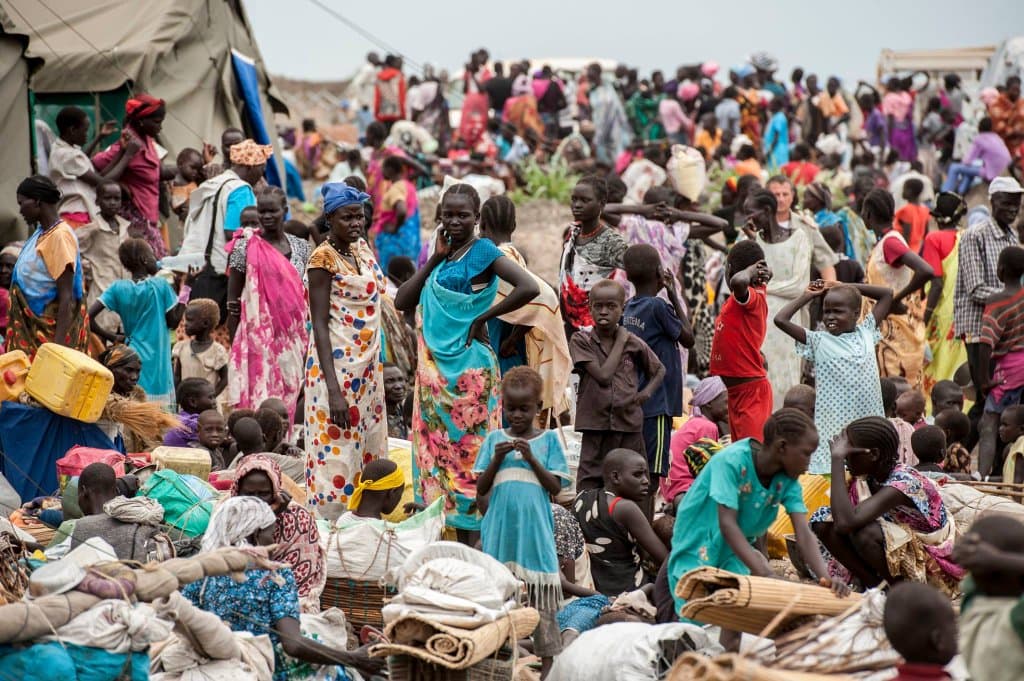
Kenya has long earned regional and international acclaim for its progressive humanitarian and development leadership. With landmark milestones such as the Refugees Act 2021, the Refugees (General) Regulations 2024, and the pioneering Shirika Plan, the nation has clearly signalled a strategic shift from traditional encampment toward sustainable socioeconomic inclusion for refugees and host communities. Shedding light on this, a recent comprehensive Legislative and Policy Indexing study, conducted by the Refugee Consortium of Kenya through the Danida Inclusive Refugee Response Programme, subjects to test the critical question of whether good policies on paper translate into better lives for the people they are intended to serve.
In Kakuma refugee camp and the Kalobeyei Integrated Settlement located in Turkana county, the real measure of refugee and host inclusion is not found in policy documents or speeches. It is experienced on the ground at the local water points, inside hospital queues and within a classroom.
It is measured by whether a family can access sufficient water, whether a sick person can receive timely treatment, and whether a child can attend school without being held back by documentation or financial barriers.
Having engaged national and county officials, service providers, refugees and host communities, the policy index study highlights a vital takeaway that is, Kenya’s policy framework has moved forward admirably, and the primary focus must now turn to strengthening implementation, financing and institutional coordination by, for instance, aligning sector specific laws and county level implementation plans to keep pace with the primary refugee frameworks such as the Refugees Act 2021 and the Shirika Plan.
To ensure these visionary frameworks deliver their intended impact, we have to ask ourselves fundamental questions stemming from Kenya’s primary law which disapproves undermining the promise of inclusion.
Access to clean and safe water is a fundamental right guaranteed by the 2010 Constitution, yet operational hurdles occasionally test this guarantee in the refugee settlements. In the refugee camps some households reportedly go for months without piped water. In some cases, residents resort to informal payments to water operators to obtain a service that should be accessible fairly and affordably.
For refugees, water may be free, but free does not necessarily mean adequate. A household of seven people could receive only three jerricans expected to last three days. Meanwhile, members of the host community complain about inadequate access and the financial burden associated with obtaining water.
The problem is compounded by vandalism of water infrastructure, reduced donor funding, and declining pumping hours. The report notes that pumping has fallen from 18 hours to 12 hours a day, further reducing availability.
This exposes the danger of Kenya’s transition from humanitarian funded services to government-led systems. If the transition is not properly financed, regulated and coordinated, communities that have depended on humanitarian support could find themselves caught between a declining humanitarian system and a government system that is not yet ready to take over.
Healthcare presents an equally serious warning.
Only eight health facilities serve about 310,000 refugees and the host population in both camps. Some facilities operate only between 8 am and 3 pm, while long queues and delays in laboratory results can prevent patients from receiving medical services.
For refugees to access health services outside the camps, they need to have a manifest. In the event, they lack documentation; the only option they have is the health facilities at the reception center.
Therefore, refugees have the perception that host communities have better access to health care since they can move freely to seek specialized services which is not the case for refugees.
Turkana county is in phase 3 of Taifacare in alignment with the Social Health Authority as they adopted Kenya's digital health system. SHA registration rates were reported to be low among both refugee and host communities in Turkana, and those registered struggle to pay premiums due to the high poverty index.
Low awareness of the registration process is another factor resulting in low SHA registration rates. It was noted that there are a significant large number of host communities with lack of national identification cards.
The low SHA registration was compounding the under-financing of health services at the facility level with the research indicating that there is little information to locals as to why they need to register.
The information gap is a foreseeable challenge in integrating refugees into the county’s health system, as many refugees lack awareness of key policies, including Social Health Insurance.
Moreover, due to insufficient funding to the health programs and systems, the refugee populations put strain on the health system. Regulation 19 of the Social Health Insurance General Regulations does not explicitly direct the inclusion of non-citizen residents in government-paid indigent household premiums.
UNHCR continues to finance health bills for refugees who lack documentation and have the need to access specialised services providing a backstop against exclusion. However, this inclusivity is contingent on continued humanitarian financing rather than legal entitlement, creating fragility in service continuity.
In the refugee camps, the doctor to patient consultation ratio is 1:130 and in cases, the surge of malaria infections, the ratio is 1:150. In addition, there is an implementation gap in attracting and retaining the right and qualified workforce.
The Mental Health (Amendment) Act 2022, requiring written consent from a refugee country of origin before psychiatric admission, imposes an administrative impossibility for conflict-displaced or stateless persons.
The education sector presents both progress and a warning.
There has been significant movement towards converting refugee schools into public schools, with the Teachers Service Commission already posting head teachers to some institutions. Yet refugee teachers remain largely excluded from formal employment because they are not recognized by the TSC.
In both Kakuma and Kalobeyei, 55 learning centers serve approximately 73,901 learners, while 673 of the 770 teachers are refugee teachers who are not registered by TSC.
The numbers tell a story of a system under enormous pressure. Teacher-to-student ratios can reach 1:100 to 1:150 in refugee schools and as high as 1:300 in some Kalobeyei primary schools.
This is not merely an administrative problem. It is a question of the quality of education that Kenya is providing to children who have already experienced displacement and disruption.
The report therefore raises a bigger question: What does refugee inclusion actually mean if refugees are included in policy but excluded from the institutions responsible for delivering services?
The answer must go beyond legislation.
The report recommends that the national government amend sector-specific laws to explicitly recognize refugees, while strengthening coordination between national and county governments, humanitarian agencies and development partners.
It also calls for Turkana county to integrate refugee populations into community health units and establish clear accountability mechanisms for the transition to government-led services.
These recommendations should not be treated as another policy document to gather dust.
Kenya’s refugee policy experiment will ultimately be judged not by the sophistication of its laws, but by what happens to the ordinary refugee and host-community resident in Kakuma and Kalobeyei.
If a child can sit in a classroom but receives little attention because one teacher serves hundreds of pupils, inclusion remains incomplete. If a family has a constitutional right to water but can go months without a reliable supply, inclusion remains theoretical. And if a sick refugee cannot access specialized treatment because of documentation or administrative barriers, then the promise of universal healthcare has not reached everyone.
The report therefore offers Kenya an opportunity to rethink the meaning of inclusion.
The next phase should be implementation, financing and accountability. Donor money should increasingly strengthen public systems rather than sustain parallel structures indefinitely. National and county governments must close legal gaps, while communities themselves must be involved in designing and monitoring services.
Kakuma and Kalobeyei represent more than refugee settlements, they are a testament to Kenya’s enduring commitment to human dignity, equality, and robust public service delivery, where aligning policy architecture with everyday realities can turn these challenges into a resounding model of successful inclusion. The study offers Kenya a constructive roadmap to refine its inclusion agenda by translating policy into everyday impact through collaborative pathways.


Comments
No comments yet. Be the first to share your thoughts.