
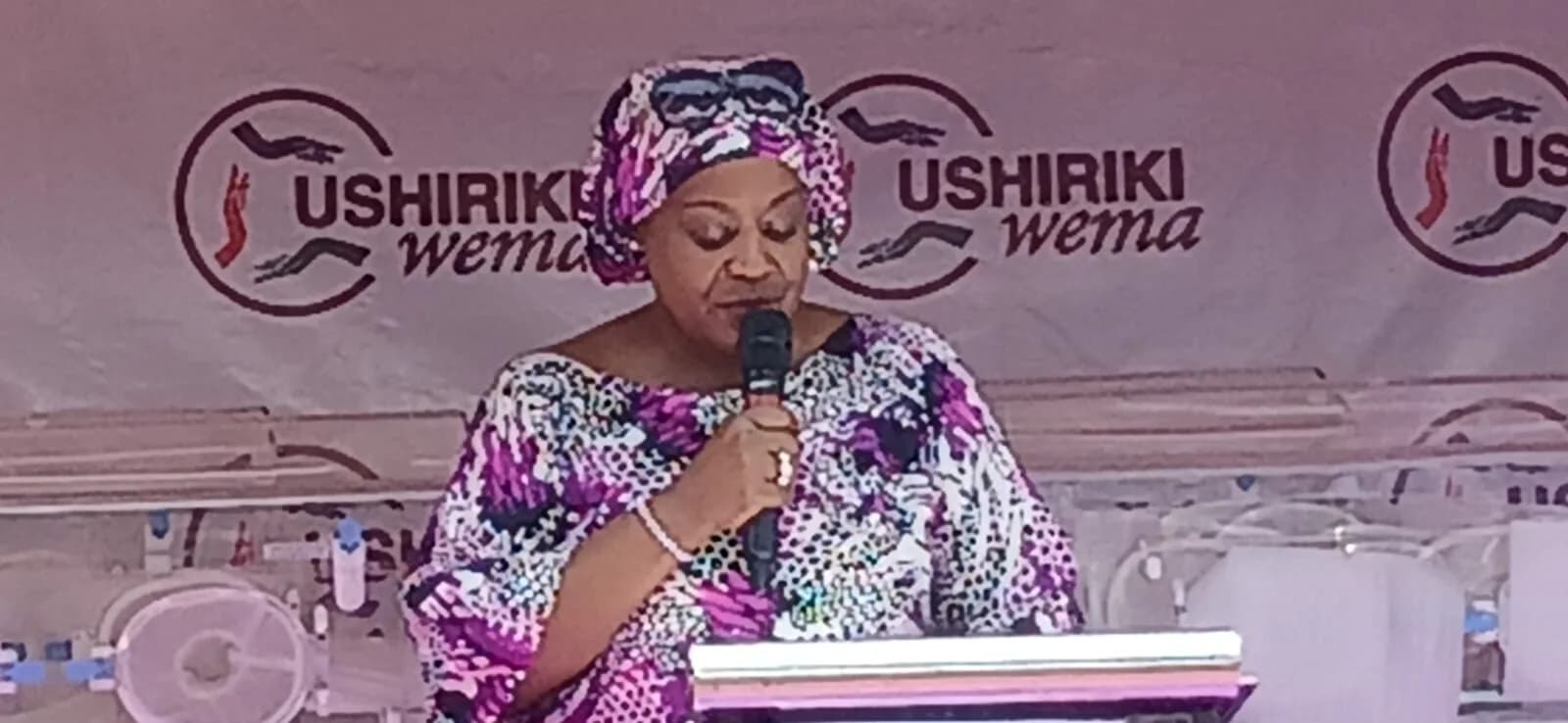
KISUMU, Kenya, Sep 30 – Prime Cabinet Secretary Musalia Mudavadi’s wife, Tessie Mudavadi, has urged county governments and health facilities to ensure donated incubators are properly installed and maintained to help reduce preventable newborn deaths.
Speaking at Lumumba Sub-County Hospital in Kisumu during the ninth phase of the Okoa Malaika initiative, Ms Mudavadi said inadequate access to essential equipment continues to undermine efforts by health workers to save premature babies.
“Behind every preterm baby fighting for life is a mother and her family waiting, praying and hoping that their child will survive,” she said.
The initiative has donated incubators to health facilities as part of efforts to strengthen newborn care and improve survival chances for babies born prematurely.
Ms Mudavadi said the incubators represented more than medical equipment, describing them as providing vulnerable newborns with protection and a vital chance of survival.
She said one of the challenges facing newborn care was the gap between the skills and commitment of health workers and the resources available in health facilities.
“A health care worker may have the knowledge and the skill and the commitment to save a life, but lack the essential equipment to do so,” she said.
Ms Mudavadi linked the initiative to the government’s Every Woman, Every Newborn, Everywhere (EWENE) Acceleration Plan 2026–2028, launched by President William Ruto in May.
The plan seeks to accelerate efforts to end preventable maternal and newborn deaths through measures including increased antenatal care attendance, skilled deliveries, postnatal care within two days of delivery and access to emergency obstetric and newborn care within two hours.
She said her Ushiriki Wema Foundation had worked with the Ministry of Health and other partners to support the development of the national EWENE plan and was now helping translate its framework into county and health facility priorities.
“Our responsibility did not end with the launch of the plan. We are now supporting the translation of its national framework into county-specific priorities,” she said.
Through the Okoa Malaika programme, she said the foundation was seeking to demonstrate how national commitments on maternal and newborn health could be translated into practical improvements at health facilities.
Ms Mudavadi called for closer collaboration between the national and county governments, civil society organisations, development partners and communities to strengthen maternal and newborn healthcare.
“Government cannot do this alone. Neither can civil society, development partners, or communities working separately,” she said.
She urged beneficiary counties and health facilities to ensure the donated incubators remain functional and available to newborns for years to come.
“I therefore call upon the beneficiary counties and facilities to ensure that these incubators are properly installed and maintained,” she said.
Ms Mudavadi said sustained investment in medical equipment, trained health workers and functional health facilities would be critical to ensuring mothers and newborns receive quality care regardless of where they live.



Comments
No comments yet. Be the first to share your thoughts.