
The United Nations (UN) has announced plans to end its transitional mission in Somalia after more than three decades of involvement in the country's peacebuilding efforts, even as the threat of Al-Shabaab attacks persists along Kenya's border.
In a statement issued on Monday, October 26, UN Secretary-General António Guterres confirmed that the United Nations Transitional Assistance Mission in Somalia (UNTMIS) would officially cease operations on October 31, 2026.
The decision follows resolutions adopted by the UN Security Council in 2024 and 2025, alongside a request by Somalia's federal government to transfer greater responsibility for the country's political and security affairs to its own institutions.
According to the UN, the mission's responsibilities have already been transferred to Somali institutions and other UN agencies, ending a period of international involvement in peacebuilding, governance and reconciliation that began more than 30 years ago.
However, Guterres acknowledged that Somalia continues to face significant security challenges, particularly the threat posed by Al-Shabaab, and called for continued international support to prevent the country from losing gains made over the years .
The development comes as Kenya continues to experience attacks linked to the militant group, particularly in Mandera County, where security officers have repeatedly confronted suspected Al-Shabaab fighters operating near the Kenya-Somalia border.
On September 6, Kenyan security personnel reportedly repelled an attack by suspected Al-Shabaab militants in Arabia Town, Mandera County, following a nighttime assault that triggered hours of gunfire between the attackers and security forces.
The incident followed several other attacks reported in the county, including one near Wantey Dam on July 28 and 29, which left five Special Operations Group officers dead. A vehicle carrying reinforcements was also reportedly targeted by an explosive device.
Earlier, on July 25, police reportedly foiled coordinated attacks targeting Fino camp and Arabia village, while a separate operation on July 13 resulted in the deaths of 11 suspected militants accused of planning an assault on a nearby village.
The persistent insecurity has also complicated plans to reopen the Kenya-Somalia border, which has remained officially closed for more than 13 years, with President William Ruto previously citing security concerns despite repeated commitments to restore cross-border movement.
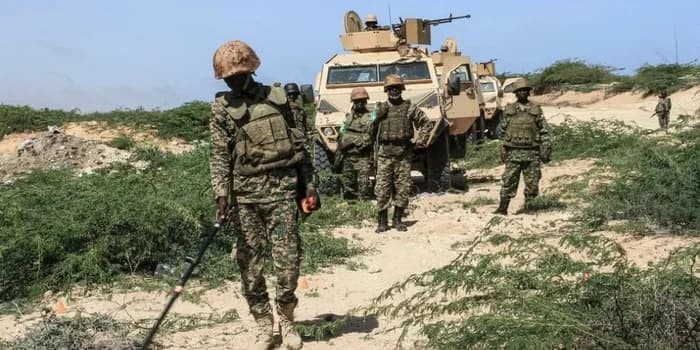
Kenya has also maintained a military presence in Somalia since 2011, when its troops entered the country under Operation Linda Nchi before joining African Union-led security operations against Al-Shabaab.
However, the closure of UNTMIS does not affect the separate African Union Support and Stabilisation Mission in Somalia (AUSSOM), which includes Kenyan troops and whose current mandate is set to expire on December 31, 2026, unless extended.



Comments
No comments yet. Be the first to share your thoughts.