
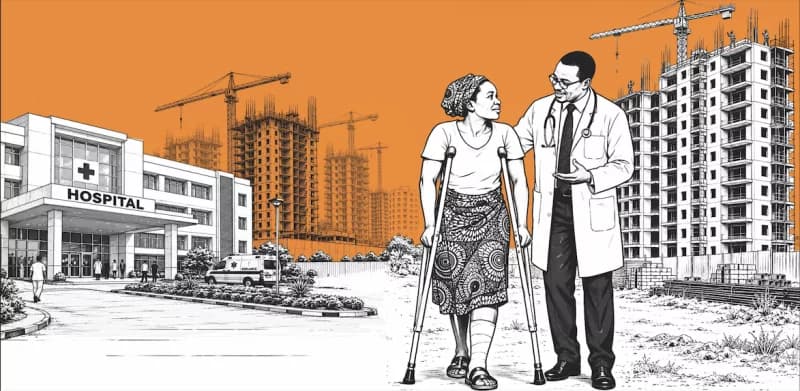
Before I discharge a patient, I ask a question that has nothing to do with surgery. Where are you going home to?
Some months ago I asked it of a woman I will call Mama Achieng. She sells vegetables from a roadside stall. We had operated on her leg. The wound had to be kept clean and dry, and she would need a walking frame for six weeks. She described her home to me. One room. A path that floods when it rains. A latrine shared by the whole plot, on the far side of an open drain.
I kept her on the ward nine days longer than her leg required. The ward was the cleanest place she had.
On the morning she left, she asked a question of her own. Daktari, those new houses on the news, are they for people like me? She had registered for one. She had heard nothing since.
I thought of her when I heard someone sum up the affordable housing programme like this: nyumba zinajengwa na slums zinapotea. Houses are being built and slums are disappearing.
In my work, an operation is not counted when it starts. It is counted when the patient goes home. A house deserves the same rule. It is counted when a family lives in it.
Start with what is true. Houses are being built. By the government's own figures, nearly 200,000 units are under construction across the country. That is concrete, steel and wages, and the people who made it happen deserve the credit. The money is moving too. Two years ago, most of the levy sat unspent, and last financial year the Controller of Budget found almost all of the housing budget was used.
Now count the way theatre counts. Since 2022, about 10,000 homes have been completed. For every one finished, about 20 have been started and are not yet done.
Theatre has a rule that nobody needs to write down. We finish what we start. We never leave one patient open to go and operate on another. Never. Even when a patient dies on the table, we close them before we leave the room.
Building is harder to hold to that rule than surgery is. In September, the Parliamentary Budget Office reported that 176 projects in the programme, from flats to student hostels, had stalled by the end of June. A half-built block left to the rain does not hold still.
The same office found that this year's allocation covers less than half of what the projects already underway require. Its advice is the theatre rule in other words: finish what is nearly done first, and start new work only when the money to complete it is there.
Before we close, the nurses count every swab, needle and instrument aloud, and we do not close until the count agrees. Between June and September, three official figures for completed homes were given in public. No two agreed. The likeliest reason is innocent. One figure may count homes finished, another homes handed over, a third older projects. That is exactly why theatre keeps a single count.
Then there are the people in the queue. At one Nairobi project, the Affordable Housing Board's figures show nearly five people applied for every social housing unit. Three in four had not yet secured one. Each of them is somebody's Mama Achieng.
And there is follow-up. No figures have been published on how many completed homes have a family inside. The latest estimate of how many urban Kenyans live in slum households dates from 2022, before most of these homes existed. It is too early to say slums are disappearing, because the scan has not been taken.
In parts of Kibera, residents were asked in April to move so that building could begin, with a promise of priority in the new units. A published list of who is owed a unit would make that promise easy to keep.
A fair reader will object that buildings take years, and that a state can run many sites at once, as a hospital runs many theatres. I agree. But no theatre starts an operation it is not equipped to finish.
Three things would help, and none needs a new law. The State Department for Housing can publish one quarterly table with four columns: started, completed, handed over, occupied. Parliament and the National Treasury can take the Budget Office's advice and fund completion first. And the Affordable Housing Board can tell every applicant for a named project, in writing, where they stand.
Nyumba zinajengwa. Good. Mama Achieng is still waiting for hers.


Comments
No comments yet. Be the first to share your thoughts.