
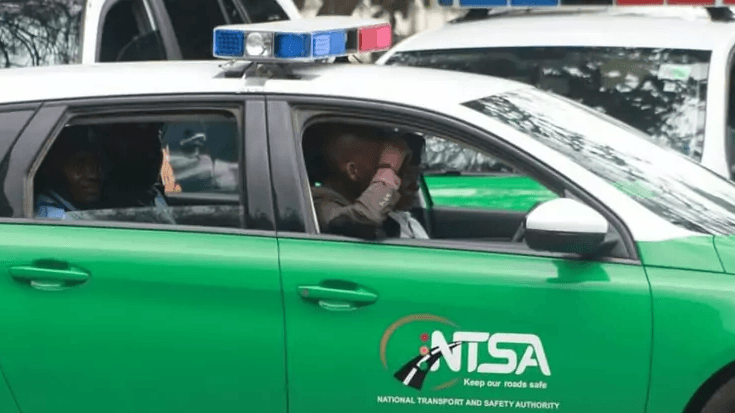
13 vehicles impounded on Southern Bypass over road safety violations

The operation was conducted by an inter-agency team as part of ongoing efforts to enforce road safety rules under the Msimu Bila Ajali, Usalama Barabarani campaign.
Thirteen vehicles were detained along the Southern Bypass after a night inspection exposed several road safety violations, including drivers operating under the influence of alcohol and using expired driving licences.
According to the National Transport and Safety Authority (NTSA), the operation also found vehicles with expired inspection stickers, no insurance, broken headlights and cracked windscreens, as authorities stepped up checks to prevent road crashes and save lives.
The operation was conducted by an inter-agency team as part of ongoing efforts to enforce road safety rules under the Msimu Bila Ajali, Usalama Barabarani campaign.
The campaign seeks to stop risky road use through public awareness activities and safety inspections carried out during the day and at night along major transport routes.
The authority identified several concerns involving both drivers and vehicles during the Southern Bypass operation. Apart from drink-driving and expired driving licences, some vehicles had invalid inspection stickers, lacked insurance or breached the terms of their insurance cover.
Other faults included broken headlights and cracked windscreens, which raised further concerns about the condition of vehicles using the road.
Latest Stories
- UN human rights chief urges better protection of civilians in conflicts
- 710,000 heat deaths recorded globally in 2023 amid climate crisis -report
- Dr Ahmed Kalebi questions Ministry of Health's two-day silence on Kenya's Ebola outbreak
- ODM’s 50-50 power-sharing demand threatens to complicate Ruto’s re-election bid
NTSA said night inspections have been given priority because evening and late-night hours are among the deadliest periods on the roads.
The authority explained that “deploying more resources during these hours would help officers identify and stop risky behaviour linked to preventable road crashes.”
The campaign includes checks on vehicle speeds, speed limiter systems, driver documents, passenger numbers and the documents required by long-distance public transport operators.
Officers are also checking whether speed limiters work properly and continuously send information to the Intelligent Road Safety Management System (IRSMS).
NTSA also reminded motorists that speed violation notifications are sent only through SMS ID: NTSA. Drivers have been urged not to respond to suspicious messages from numbers claiming to represent the authority and to report them promptly.
The inspections also cover documents required by long-distance public transport operators, including passenger manifests, driver logs used to monitor driving hours, compliance with licensed routes, Road Service Licences (RSLs) and valid inspection stickers.
Officers are also checking whether vehicles carry passengers or loads within their authorised limits, as well as confirming the validity of driving licences and public service vehicle (PSV) badges.
NTSA further urged passengers to wear seatbelts throughout their journeys, warning that failure to do so can increase the risk of serious injuries or death during a crash.
“Seatbelts keep occupants secure, prevent ejection, and reduce fatal and serious injuries in the event of a crash,” it said.
Breathalyser tests remain part of the checks to identify drivers operating under the influence of alcohol.
The authority said day and night inspections follow strict operating procedures intended to protect motorists, control traffic flow and ensure officers' safety.
Drivers approaching checkpoints have been asked to slow down and cooperate with law enforcement officers.
NTSA also urged people planning night journeys to take extra care because darkness reduces visibility. Motorists were advised to reduce speed, maintain greater distances from vehicles ahead and remain focused on the road.

Comments
No comments yet. Be the first to share your thoughts.