
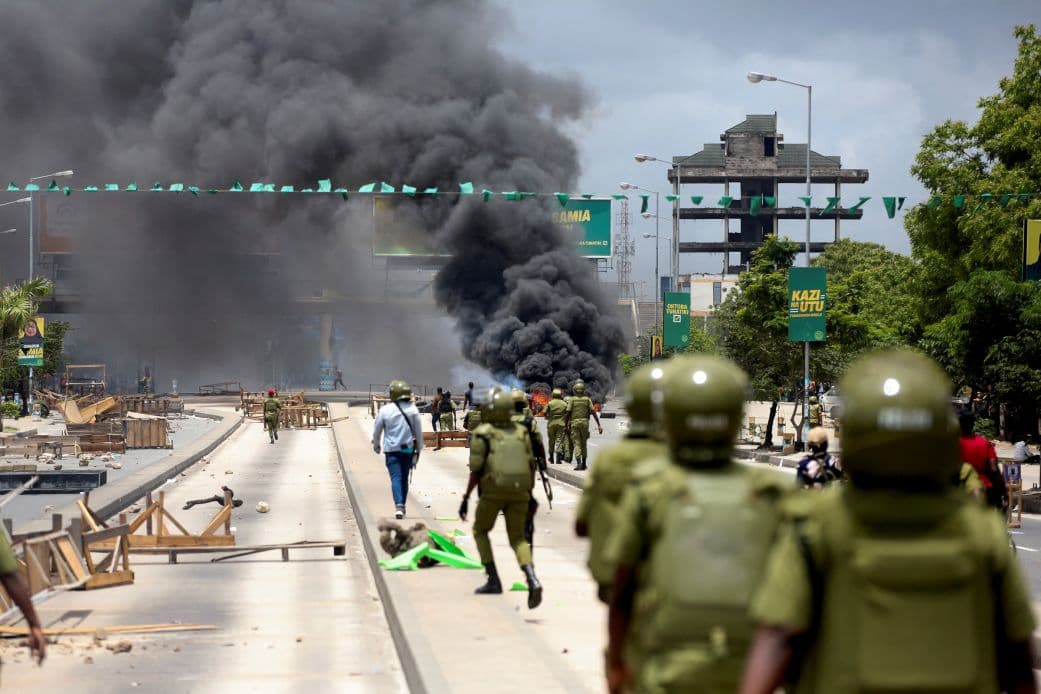
Amnesty International has accused Tanzanian authorities of using counterterrorism laws to silence government critics and suppress civic freedoms, a year after a deadly crackdown on post-election protests that left hundreds dead and thousands injured.
The human rights organisation said on Wednesday that no official had been criminally investigated or prosecuted over the excessive force used by security agencies during the October 2025 election-related protests.
Instead, it said the government has intensified restrictions on freedom of expression and peaceful assembly, while victims of alleged abuses continue to face arbitrary arrests, abductions, enforced disappearances and torture or other ill-treatment.
“Not a single official has been criminally investigated, let alone prosecuted and punished for the excessive force that Tanzanian security forces used against protesters,” said Tigere Chagutah, Amnesty International’s Regional Director for East and Southern Africa.
In a statement, Amnesty added that authorities had also withheld from the public a Commission of Inquiry report into the election-related killings, despite it having been handed to President Samia Suluhu in April 2026.
In August, Samia inaugurated another commission tasked with identifying those who planned, funded, coordinated or carried out the violence, investigating the use of excessive force and establishing the whereabouts of missing persons.
Amnesty urged the new commission to conduct independent, impartial and transparent investigations, including into the role of security forces, and to publish its findings immediately upon completing its work.
The rights organisation further said its investigations between September 3 and 17, 2026, involving 17 people, including victims, journalists, opposition officials, lawyers and relatives of victims, documented a worsening human rights situation.
According to verified charge sheets relating to people arrested and charged with terrorism offences in different parts of the country, one case involved Ibrahim Myovella, a youth leader from the opposition CHADEMA party, who disappeared alongside two friends on April 18 after reporting to Central Iringa Police Station in compliance with their bail conditions.
The organisation said the three had faced allegations of involvement in the October 2025 protests; however, authorities denied holding them.
The statement further cites the abduction of Mashaka Nestory Kindikwa, a former official of the ruling Chama cha Mapinduzi (CCM) party, who was allegedly taken from his home by seven men believed to be security officers on June 25. Police again denied holding him.
In another case, David Djumbe, an aide to opposition leader Tundu Lissu, was allegedly abducted near his Dar es Salaam home on May 20 and severely beaten by people believed to be state security officers.
He is reported to have escaped, with Amnesty noting that there had been no update on a police investigation announced after the incident.
The organisation also documented alleged torture of a protest supporter who was detained for 47 days without charge. The man, identified as Stefano Patrick, said interrogators beat him, denied him food and water, and threatened to kill him while demanding information about those funding the protests.
According to the organisation, the alleged misuse of counterterrorism legislation to target opposition supporters and other government critics was reflected in an announcement by police spokesman David Misime that 130 people had been arrested over alleged plans to organise meetings and circulate messages encouraging criminal acts intended to destabilise the country.
At least 64 were subsequently charged under the Prevention of Terrorism Act, according to Amnesty.
On July 9, other cases involved CHADEMA members, university students and a University of Dodoma lecturer who was arrested over alleged incitement to participate in protests marking Saba Saba Day. Although the lecturer was released on September 10 after terrorism-related charges were dropped, he was required to report to police monthly for a year.
“By resorting to terrorism-related charges against its perceived critics, the Tanzanian government is sending a chilling message that it won’t stop at anything in its effort to repress all dissenting opinions,” Chagutah said.
The rights organisation also cited restrictions on social media platforms, a ban on political rallies and mass gatherings, and increased security deployments ahead of planned demonstrations as evidence of shrinking civic space.
Media organisations have also faced sanctions in Tanzania. One example is the Tanzania Communications Regulatory Authority's decision to suspend the online broadcasting licence of Jambo Online TV for 90 days in April over content concerning the election-related inquiry. The station resumed broadcasting in July after the suspension lapsed.
Additionally, in August, the Information Services Department suspended Mwanahalisi newspaper’s publishing and distribution licence for six months over a report concerning Vice-President Emmanuel Nchimbi.
Amnesty has called on the Tanzanian government to lift the newspaper’s suspension, restore access to banned social media platforms, end online censorship and allow journalists to work independently without fear of reprisals.
It also urged authorities to drop terrorism charges against people unjustly detained and end the harassment of individuals exercising their rights to freedom of expression and peaceful assembly.
Comments
No comments yet. Be the first to share your thoughts.