
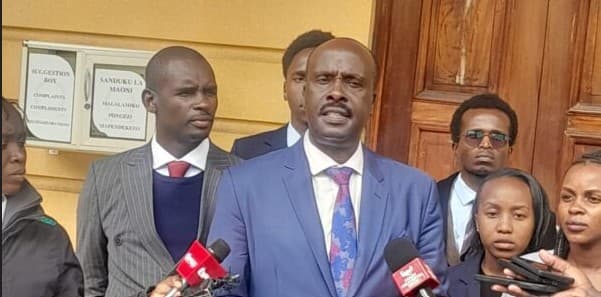
High Court declares personal branding of taxpayer-funded projects unconstitutional

The ruling reinforces the principle that public projects are funded for the benefit of citizens and should not be presented in a manner that suggests ownership by individual political leaders.
The High Court in Kajiado has declared that branding public projects with politicians’ names and images violates constitutional principles governing the use of public resources, ordering the removal of personal name branding from taxpayer-funded developments in Kajiado North.
The ruling followed a petition filed by Shadrack Wambui through Sheria Mtaani against Kajiado North MP Onesmus Ngogoyo over allegations that roads, schools and dispensaries funded by public resources had been turned into platforms for personal political promotion.
The court held that attaching individual politicians’ identities to publicly financed projects contravenes the constitutional principles that guide governance and the management of public resources.
Wambui argued that the practice undermines accountability by allowing elected leaders to portray public investments as personal achievements, despite the projects being financed using taxpayers’ money.
He further questioned the attribution of some developments to Ngogoyo, claiming that certain projects bearing the legislator’s branding had been initiated before he assumed office.
The petitioner maintained that public infrastructure should serve the interests of citizens rather than be used for political self-promotion.
Latest Stories
In its determination, the court directed the removal of personal name branding from publicly funded projects in Kajiado North, affirming that public resources should not be used to advance individual political identities.
However, the court drew a distinction between declaring the practice unconstitutional and establishing who was responsible for the disputed signage.
It said the petitioner had not presented sufficient evidence to prove that Ngogoyo personally authorised the branding or directed his agents or servants to put up the signs.
“I am not satisfied that the petitioner has discharged the burden of proof that he, whether by himself or through his agents or servants, allowed the signage to be put on taxpayer-funded projects,” the court stated.
The court’s finding on responsibility meant that the allegations linking the MP to the placement of the signage were not established to the required standard.
Nevertheless, the declaration against personal branding of projects financed through public funds stands as the central outcome of the case.
The decision raises questions about the practice of politicians placing their names, portraits and political slogans on public infrastructure, particularly where the developments are financed through government allocations rather than personal contributions.
The ruling reinforces the principle that public projects are funded for the benefit of citizens and should not be presented in a manner that suggests ownership by individual political leaders.


Comments
No comments yet. Be the first to share your thoughts.