
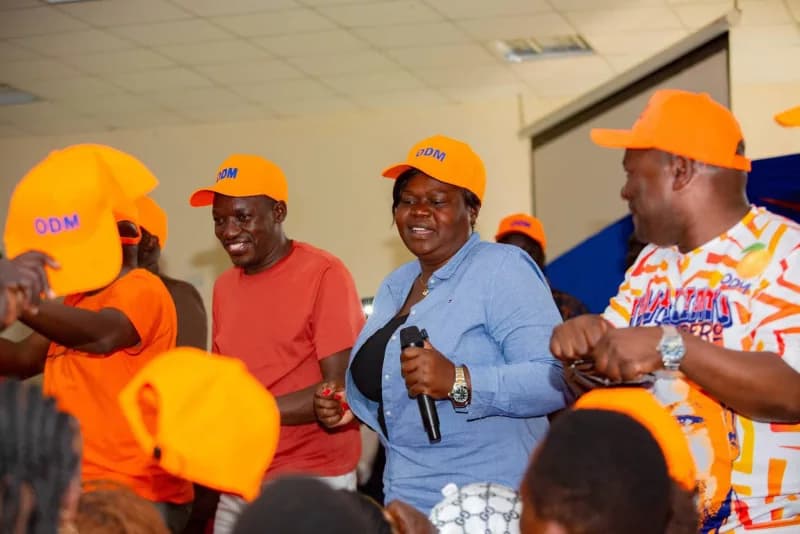
ODM deputy party leader Simba Arati and party chairperson Gladys Wanga at a past event/HANDOUT

ODM has outlined a raft of demands for President William Ruto and his UDA party as negotiations over a possible pre-election coalition ahead of the 2027 General Election gather pace.
From the Deputy President's position to an equal share of government, a written coalition agreement and the release of billions of shillings in party funding, ODM is seeking guarantees that its political support will translate into tangible benefits.
The demands reflect the party's determination to negotiate as an equal partner rather than mobilise its supporters for Ruto's re-election only to find itself with limited influence should Ruto win the election.
Political commentator Caleb Burudi said ODM's position was largely driven by the need to secure a meaningful share of power, protect its traditional strongholds and preserve its political identity.
“The party is also trying to protect its political interests following the death of its former leader Raila Odinga, whose influence shaped its relationship with successive administrations,” Burudi said.
One of the biggest sticking points is the Deputy President's position, which ODM leaders have declared non-negotiable.
Party chairperson Gladys Wanga, Mombasa governor Abdulswamad Nassir and deputy party leader Simba Arati have argued that ODM must produce Ruto's running mate if it agrees to support his re-election.
Wanga has maintained that ODM's political strength and contribution to the proposed coalition must be reflected in the sharing of senior government positions.
However, the demand has encountered resistance from UDA, whose Secretary-General Hassan Omar has maintained that current Deputy President Kithure Kindiki remains the party's preferred running mate for the 2027 election.
The disagreement presents a major hurdle in the negotiations, with UDA unwilling to surrender a position it considers central to its own political arrangements.
Beyond the running mate position, ODM wants a formal, written pre-election coalition agreement that spells out the responsibilities and benefits of each party.
National Assembly Minority Leader Junet Mohamed has argued that ODM cannot offer unconditional support based on verbal assurances or political goodwill.
“There is nothing like goodwill. There is nothing like unconditional support. It must be written,” he said, outlining the party's position.
The party also wants an equal partnership in government, with Wanga previously calling for a 50-50 power-sharing arrangement.
The push is informed by fears that ODM could be reduced to a junior partner despite contributing its political machinery and voter base to Ruto's re-election campaign.
Another factor seen to be driving the demands is the growing concern over UDA's grassroots mobilisation in areas traditionally considered ODM strongholds, including Nyanza, Western and Coast.
The concerns have been heightened by UDA's growing grassroots mobilisation in regions where ODM has traditionally enjoyed considerable political support.
ODM leaders fear that allowing UDA to establish independent political structures in Nyanza, Western and Coast could weaken the party's influence and complicate its efforts to retain elective seats in the 2027 elections.
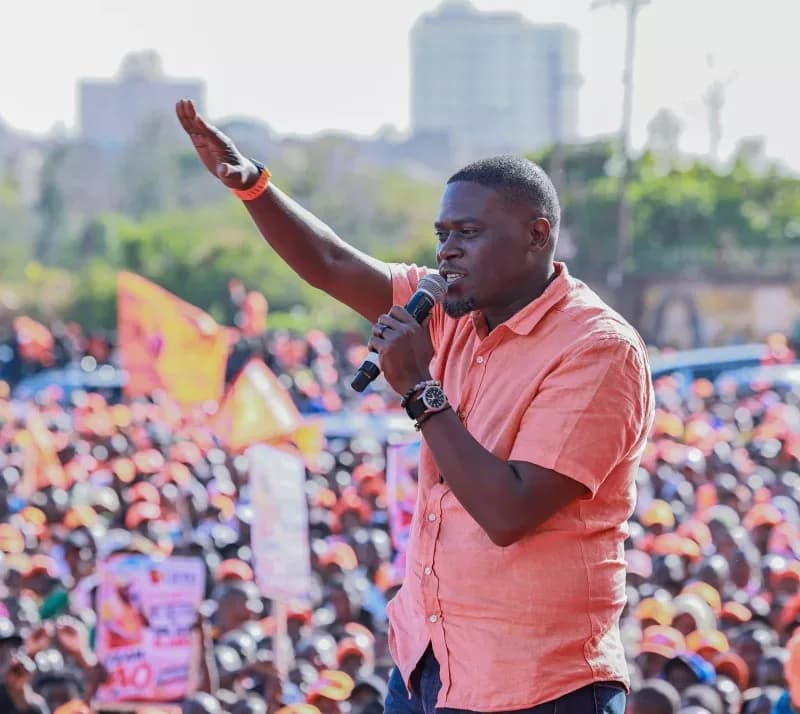
Arati has been among the vocal proponents of protecting ODM's political bases, warning against what he considers competition from its coalition partner.
“Even the friendly fire burns. Here in Nyanza it is ODM; we don't want mix-up. The only party is ODM,” Arati said.
Alego Usonga MP Samuel Atandi has also supported zoning, insisting that ODM should retain control of its traditional strongholds.
“We are ready to die for zoning. There is no negotiation when it comes to zoning,” Atandi said.
The party's concerns also extend to its financial position, with ODM demanding approximately Sh12 billion it says is owed to it through the Political Parties Fund.
During a party retreat in Mombasa in May 2026, ODM leaders insisted that the outstanding funds be released, arguing that the money was necessary to finance party operations, grassroots mobilisation and preparations for the next election.
Arati maintained that the party could not proceed with coalition negotiations while its outstanding dues remained unsettled.
The demand is also tied to ODM's desire to maintain financial independence and strengthen its organisational structures rather than depend on its relationship with UDA.
However, the push for conditions has attracted resistance from some government officials and politicians who argue that Ruto should be supported based on his development record rather than subjected to pre-election demands.
Interior Principal Secretary Raymond Omollo has cautioned ODM leaders against issuing ultimatums, arguing that the President should not be forced into signing agreements to secure political support.
“The President has worked for the people, and he will continue to deliver. We must not put conditions on him,” Omollo said.
Although ODM and UDA have made progress towards a joint campaign structure, the question of power-sharing remains unresolved.
Comments
No comments yet. Be the first to share your thoughts.