
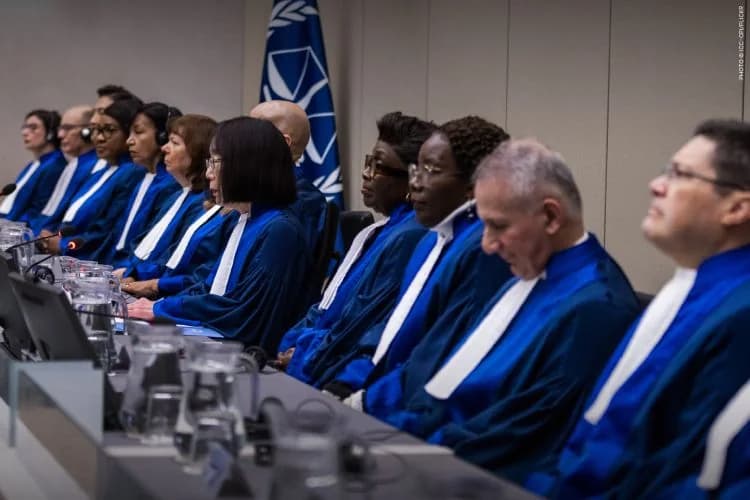
International Criminal Court wins top European human rights award amid growing threats and sanctions

The award recognises the Court’s efforts to uphold international law and prosecute grave crimes as its judges, prosecutors and staff face growing threats and sanctions, particularly from the United States.
The International Criminal Court (ICC) has won the European Parliament’s 2026 Sakharov Prize for Freedom of Thought, a major recognition of its fight against impunity for genocide, war crimes and crimes against humanity as its officials face growing threats and sanctions over their pursuit of international justice.
European Parliament President Roberta Metsola announced the laureates on Thursday, saying the award recognised the Court’s contribution to international justice at a time when its judges, prosecutors, staff and partners face growing threats and sanctions.
“The European Union is built on respect for multilateralism and international institutions. With the award of the Sakharov Prize to the International Criminal Court and its officials, the European Parliament recognises the Court’s important work in upholding international law and justice,” Metsola said.
The ICC investigates and, where warranted, prosecutes individuals accused of the gravest crimes of concern to the international community.
As a court of last resort, it complements national judicial systems, seeking to hold perpetrators accountable and help prevent future atrocities.
Governed by the Rome Statute, an international treaty, the ICC is the world’s first permanent international criminal court.
Latest Stories
- South African police probe mob killing of foreign national in Durban amid anti-immigrant unrest
- Somalia president congratulates Liban Ahmed Hassan on election as new Galmudug State leader
- KRA to block clearance of imports without valid digital marine cargo insurance starting November 1
- No new Ebola infections detected in past 24 hours as Kenya prepares to release first contacts from quarantine
The award recognises the Court’s work in investigations, prosecutions and trials, as well as the issuance or authorisation of arrest warrants.
Established in 1988, the Sakharov Prize is awarded annually to individuals and organisations for outstanding contributions to human rights, fundamental freedoms, democracy and the rule of law. Past laureates include journalists, political leaders, filmmakers and human rights activists, several of whom have also received the Nobel Peace Prize.
Last year, the prize went to Belarusian journalist Andrzej Poczobut and Georgian journalist Mzia Amaglobeli in recognition of their efforts to defend freedom of expression and democracy.
Both have been detained in their respective countries and have become symbols of the struggle for press freedom and democratic rights.
The European Parliament said this year’s award came at a critical time for international justice, citing growing threats and sanctions imposed on the ICC since 2025, particularly by the United States.
Members of the European Parliament (MEPs) have described the measures targeting the Court, its officials and partners as serious attacks on the international justice system.
In response, MEPs have repeatedly urged the European Commission to activate the EU’s so-called blocking statute to shield ICC officials from the extraterritorial effects of foreign laws and sanctions, allowing the Court to operate independently.
The statute can protect European operators by nullifying within the EU the effects of certain foreign legal decisions based on foreign laws. It also allows affected parties to seek compensation for damages resulting from the extraterritorial application of those laws.
The Parliament also welcomed continued EU financial support for the ICC, noting that all EU member states are parties to the Rome Statute and are therefore obliged to cooperate with the Court under their treaty commitments.
MEPs further warned that the growing disregard for international law and the politicisation of international justice institutions posed an existential threat to the rules-based international order.
The 2026 Sakharov Prize award ceremony will take place in December in Strasbourg during the European Parliament’s plenary session.
In a statement acknowledging the award, the ICC said the recognition came at a time when the Court and its officials were facing unprecedented challenges, including sanctions aimed at disrupting its judicial mandate.
The Court said the award underscored the importance of continued international cooperation and support to enable it to carry out its mandate independently and impartially in the service of justice and victims of the gravest crimes.
"While this prize recognises the work of the Court in combating impunity and ensuring fair trials, it is also an important recognition of the role of international justice as a cornerstone of lasting peace. In a world marked by rising conflicts, there is no peace without justice and no security without law," the court added.


Comments
No comments yet. Be the first to share your thoughts.