
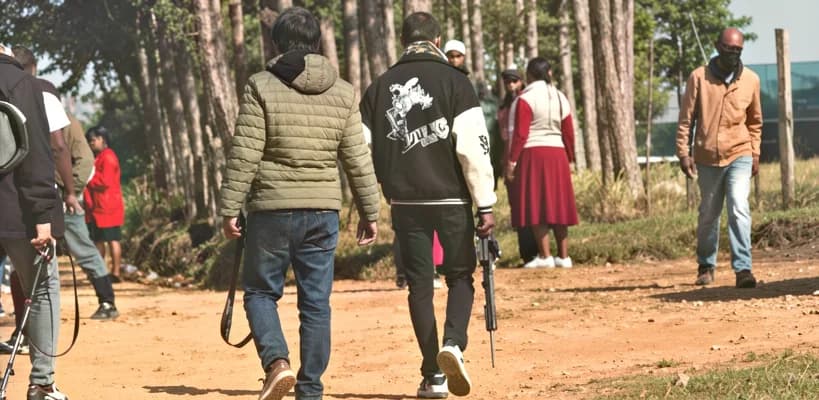
Nairobi tops election violence as 284 cases recorded nationwide

Nationally, the 284 incidents affected 3,222 people and included physical assaults, arbitrary arrests, enforced disappearances, suppression of protests, attacks on journalists and interference with political activities.
Nairobi recorded the highest number of election-related violence and human rights violations in Kenya in the first seven months of 2026, accounting for 106 incidents as concerns grow over the safety and credibility of the August 10, 2027 General Election.
According to the newly released Kenya Human Rights Commission (KHRC) report, the incidents form part of 284 cases documented nationwide between January 1 and July 31, with 150 identified as carrying a risk of recurrence or escalation, pointing to a potentially volatile election period.
The report’s county breakdown, which covered 242 incidents, showed that Nairobi accounted for 43.8 per cent of the cases analysed. Nyandarua recorded 19 incidents, Kajiado 11, while Kiambu and Nyeri each reported 10.
KHRC warned that the areas at risk of election violence could be changing, with more counties in central Kenya emerging in its monitoring. It cited the Ol Kalou by-election as an example of reported physical violence intended to suppress votes, alongside alleged economic inducements to buy votes.
Nationally, the 284 incidents affected 3,222 people and included physical assaults, arbitrary arrests, enforced disappearances, suppression of protests, attacks on journalists and interference with political activities.
The Commission recorded 82 incidents of physical violence and assaults, 39 involving the suppression of peaceful assembly and protests, and 32 involving arbitrary detention, abductions and disappearances. Another 35 cases involved electoral interference and intimidation, while 31 concerned media freedom.
Latest Stories
- Updated Israeli exit polls show Netanyahu's bloc gaining ground, no clear majority
- Court stops government from building car park inside Nairobi Animal Orphanage
- Rabai elders warn of cultural extinction as sacred Kaya forests in Kilifi face destruction
- GSU officers seek more funds as they face poor housing, unpaid allowances
KHRC Senior Communications Manager Ernest Cornel questioned the identity and accountability of police units allegedly linked to some of the violations, warning that the claims needed to be addressed before the election.
“Most of the incidents involved people who are said to be police officers. The National Police Service (NPS), however, said they are not involved, leaving questions as to who these police units are and what has been done about them, especially given that we are headed to the elections,” Cornel said.
The report linked the National Police Service (NPS) and specialised units to 162 incidents, including killings, assaults, arrests, the use of lethal crowd-control weapons and enforced disappearances. It suggested that some specialised units could be operating outside the formal command structure, raising concerns over possible political interference in policing.
Deputy Inspector General of Police Gilbert Masengeli defended the service, saying officers were working with the public to maintain security. He challenged the commission to provide evidence of cases it believed had not been addressed.
“We have dedicated officers working in coordination with the public to ensure your safety. We have tracked and acted upon 162 cases pointed out by my colleague from the KHRC, but the rest are just illusions. If you have the facts, bring us the evidence, and we’ll act,” Masengeli said.
He added that officers found to have committed crimes should face the law regardless of their position.
The report also documented 39 incidents associated with goons, 31 linked to political party officials and 23 involving party-affiliated youth groups. Another 22 incidents concerned political gang violence, while 22 related to electoral integrity and political competition.
KHRC warned that such groups could be used to disrupt rallies, attack opponents and intimidate voters, limiting citizens’ freedom to participate in elections.
The commission also recorded seven incidents involving technology and digital electoral integrity, including reported digital surveillance, four concerning electoral administration, five involving hate speech and ethnic incitement, and three categorised as gender-based political violence. Other cases raised concerns over bribery and the misuse of public resources during campaigns.
Attacks on journalists also featured in the findings. During the July 16 Ol Kalou by-election, masked and armed men assaulted Nation Media Group/NTV and Star journalists in Nyandarua County, taking their cameras and equipment.
In August, armed youths attacked journalists covering a political rally in Homa Bay County, injuring at least eight journalists and two drivers. Equipment was destroyed or stolen, and a Mediamax vehicle was burned.
On October 20, plainclothes police officers assaulted and arrested Citizen TV journalist Odee Francis while he covered anti-fuel-price protests along Kimathi Street in Nairobi. In September, armed men said to be police officers seized Standard Group Editor Alex Kiprotich.
The Independent Electoral and Boundaries Commission (IEBC) Deputy CEO Obadiah Keitany said preparations must include measures to protect voters and candidates from violence.
“We recognise that election preparedness goes beyond logistics, technology, and vote administration. It must happen in a peaceful environment. A credible election should be free of violence,” Keitany said.
He warned that violence could discourage voters from turning out, affecting the credibility of the results. Political Parties Liaison Committee chairperson Peter Misati urged Kenyans to challenge leaders promoting hate speech and division.
The National Cohesion and Integration Commission (NCIC) also raised concerns over rising hate speech, particularly on digital platforms, while pointing to difficulties in prosecuting political leaders because of the high level of evidence required in court.
KHRC said its findings were based on monitoring television broadcasts, newspaper reports and digital platforms, with incidents cross-checked across different media outlets to identify patterns and risks of escalation.
The report comes after a separate Kofi Annan Foundation assessment released in July estimated an 81.6 per cent probability of election-related violence during the 2027 General Election. It cited political divisions, economic hardship, youth frustration, ethnic mobilisation, declining public trust and organised gangs as factors that could heighten tensions.
The findings have increased calls for accountability, professional crowd management, political neutrality among security agencies and transparent election preparations to protect citizens and ensure a peaceful vote.
Comments
No comments yet. Be the first to share your thoughts.