
ODM’s 50-50 power-sharing demand threatens to complicate Ruto’s re-election bid

In a bid to cool the flaring temperatures, Ruto’s UDA Party announced that its broad-based coalition has formed a joint committee to develop a manifesto in preparation for the 2027 General Election.
President William Ruto’s bid for a second term could suffer a blow after the Orange Democratic Movement (ODM) insisted that any pact must be clearly spelt out to include a 50-50 power-sharing arrangement.
The party’s insistence that it is entitled to the deputy president’s position, despite Ruto's repeated indication that he has faith in his current deputy, Kithure Kindiki, is piling pressure on the Head of State as he seeks to consolidate support and secure a second term.
If the standoff persists, Ruto’s 2027 re-election bid could face turbulence from demands by the Oburu Oginga-led outfit, whose support may prove pivotal in electoral calculations dominated by the ruling United Democratic Alliance (UDA), despite ODM’s fractured internal leadership.
The storm was triggered by Interior Principal Secretary (PS) Raymond Omollo, who, while speaking at a function in Nyanza, said support for Ruto from the region should be unconditional.
Internal Security PS Raymond Omollo and Homa Bay Governor Gladys Wanga. (Photo: MINA)PS Omollo's remarks raised political temperatures, drawing a response from ODM deputy chairperson Abdulswamad Sharrif Nassir, who, during an interview on a local television station on Wednesday night, said the party is clear about its quest for the DP position.
Latest Stories
“I feel the time is not right for me to be the DP of this country. Leadership is a calling. I never knew I was going to be an MP; I got elected to be the governor of Mombasa against all odds. I had people who were louder than me, people who abused me, people who were richer than me, vied against me, and guess what?” said Abdulswamad.
In a bid to cool the flaring temperatures, Ruto’s UDA Party announced that its broad-based coalition has formed a joint committee to develop a manifesto in preparation for the 2027 General Election.
In a statement on Tuesday, October 27, the party revealed key details of the upcoming manifesto, stating that the coalition intends to use Ruto's Bottom-Up Economic Transformation Agenda (BETA) as its foundation.
The joint committee will identify areas where the existing policies have not fully delivered and accelerate national transformation.
"The Broad-Based Committee on Manifesto Development, constituted by the Joint Parliamentary Group of the UDA and ODM parties, has made significant progress in drafting the joint coalition's commitments," UDA stated.
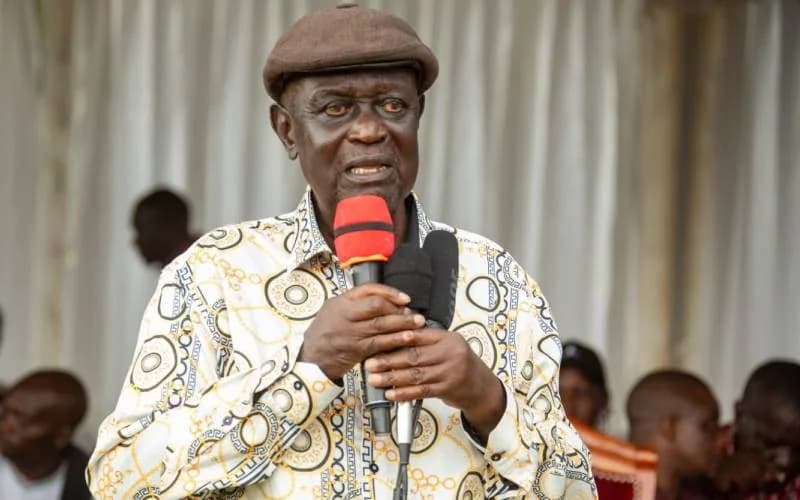
ODM supporters in Kakamega on October 9, 2026. (Photo: Gladys Wanga/X)However, the demand for a 50-50 power-sharing arrangement publicly articulated by Oburu in June 2026 extends beyond Cabinet appointments to senior government positions, parliamentary leadership, electoral nominations and broader decision-making authority.
“When we form a coalition agreement with UDA, it will be based on a 50-50 share, making us stronger. We will even negotiate on the presidency; we will not leave any seat unnegotiated,” Oburu said.
According to ODM chairperson Gladys Wanga, ODM's preferred 2027 arrangement with Ruto includes securing the deputy president position and retaining the party's strongholds through zoning arrangements, insisting that “The broad-based political arrangement with the United Democratic Alliance (UDA) to ensure the re-election of President William Ruto will not result in ODM ceding its strongholds.”
UDA has, however, publicly resisted zoning, according to reports on the negotiations.
Wanga further argues that through zoning, ODM and UDA can safeguard their strongholds by leveraging strong grassroots support and structures to secure the highest number of governors, senators, Members of Parliament (MPs) and Members of County Assemblies (MCAs).

Comments
No comments yet. Be the first to share your thoughts.