
Raymond Omollo’s Political Bridge to Luo Nyanza: How Ruto and Raila Found Common Ground and Why UDA–ODM Engagement Must Come Without Conditions

Raila Odinga’s decision to close ranks with President William Ruto before his death was a defining moment in Kenya’s political history. The groundwork for that partnership had been laid through the growing relationship between the Ruto administration and Luo Nyanza, with Interior Principal Secretary Dr Raymond Omollo playing a significant role in opening channels of engagement.
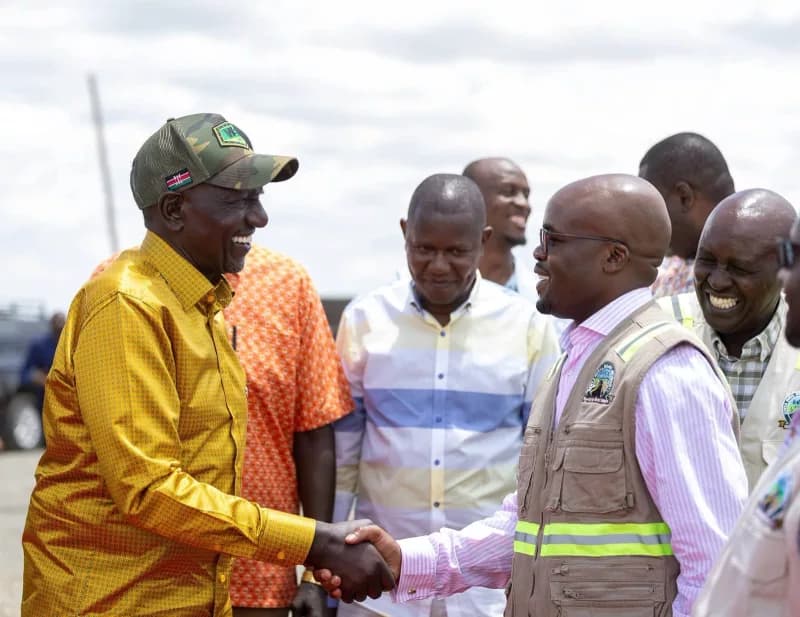
The process became visible in July 2023, when Ruto attended Omollo’s homecoming in Homa Bay following his appointment as Principal Secretary. The President’s presence sent a powerful message to a region that had overwhelmingly voted for Raila in 2022. Ruto was determined to build a direct relationship with Luo Nyanza, moving beyond the traditional division between the government and its political opponents.
Omollo became an important link in this engagement. A number of ODM-affiliated MPs began associating openly with the Ruto administration, seeking cooperation on development and constituency priorities. Among them were Sam Atandi, Tom Ojienda, Phelix Odiwuor, popularly known as Jalang’o, John Walter Owino, Eddy Oketch and Mark Nyamita. Their engagement demonstrated that ODM membership did not prevent elected representatives from pursuing direct working relationships with the President.
Meanwhile, Ruto intensified his visits to Luo Nyanza, and national government projects gained prominence across the region. The growing engagement gave local leaders opportunities to advance development priorities while enabling the President to cultivate relationships beyond ODM’s national leadership. Omollo’s role in facilitating government engagement helped strengthen these connections.
The political realignment extended beyond Parliament. Silas Jakakimba, Raila’s former personal assistant, moved from ODM towards UDA. His departure was significant because it involved a figure with close ties to Raila’s political establishment. Other leaders and supporters began reassessing their relationship with Ruto, with some recalling his association with Raila following the disputed 2007 presidential election as part of the history behind their renewed engagement.
By the time Raila and Ruto formalized their cooperation on 7 March 2025, Luo Nyanza had already experienced a period of direct engagement with the President and his administration. Raila’s decision therefore reinforced an existing process rather than initiating an entirely new relationship. Their agreement addressed governance, inclusivity, devolution and the implementation of recommendations arising from the National Dialogue Committee process.
Raila’s death on 15 October 2025 gave this relationship another dimension. Ruto accorded him a State Funeral with full military honours, and a 17-gun salute was fired at his burial in Bondo on 19 October. The ceremony recognized Raila’s place in Kenya’s political history and the stature of a leader whose influence extended across generations. For many of his supporters, the respect shown by Ruto reinforced the significance of the cooperation Raila had embraced before his death.
During my visit to Luo Nyanza two weeks ago, I observed strong appreciation for the development initiatives and government engagement the region had experienced under Ruto. Conversations reflected an interest in projects, public investment and the government’s continued presence. The relationship between the President and the region is increasingly being shaped by these practical considerations alongside historical political loyalties.
This is the context in which demands by some ODM leaders for conditions before engaging with UDA must be understood. ODM is entitled to negotiate and defend its political interests, but the party cannot assume that its leadership alone determines how Luo Nyanza relates to the President. Ruto has established direct channels of engagement with elected representatives and voters, while Raila himself demonstrated that cooperation with the government could serve political and national interests.
The emerging distinction is between negotiating a pact with political leaders and building a relationship with voters. A party agreement can define commitments between political organizations, but it cannot substitute for public trust or determine the political choices of citizens. Ruto’s engagement with Luo Nyanza suggests that he is interested in cultivating support through government performance and direct interaction with the electorate, rather than making the relationship entirely dependent on negotiations over positions.
Those who say they are ready to work with Ruto without conditions understand this political reality. Their position reflects a belief that cooperation and development should not be held hostage to negotiations among political elites. ODM leaders who insist that the President must first accept their conditions risk overlooking the relationships already established between the administration and sections of their own political base.
The challenge for ODM is made more difficult by Raila’s absence. For decades, he supplied the party with its principal mobilizing force and negotiating authority. His death has left a vacuum that cannot be filled by invoking his legacy alone. The party must now establish a political direction that recognizes his final decision to cooperate with Ruto while defining its own purpose beyond his personal leadership.
In that sense, ODM is drawing political oxygen from the accommodation Raila reached with Ruto. The relationship provided a channel for continued engagement with the government during Raila’s final months. Without that opening, the party would have faced a more difficult transition after his death. Its survival is not predetermined, but its future relevance will depend on whether it can build leadership and political purpose beyond its founding leader.
For Ruto, the opportunity comes with a responsibility to sustain engagement through development, inclusion and accountable governance. For Omollo, the importance of his role lies in the relationships he has helped facilitate between the administration and Luo Nyanza. Government projects remain the responsibility of public institutions, but the political significance of the engagement that accompanied them is evident.
Luo Nyanza’s relationship with the national government has changed since 2022. Omollo helped open channels of engagement, Ruto cultivated direct relationships with regional leaders, and Raila ultimately chose cooperation with the President. After Raila’s death, those developments have become central to the debate over ODM’s future and the region’s political direction.
The question confronting ODM is whether its leaders will adapt to this changed reality or continue approaching the President as though the political circumstances of 2022 remain intact. Ruto’s relationship with Luo Nyanza is no longer confined to the party’s national leadership; it now rests on a wider combination of political engagement, development priorities and the choices of individual voters.
Comments
No comments yet. Be the first to share your thoughts.