
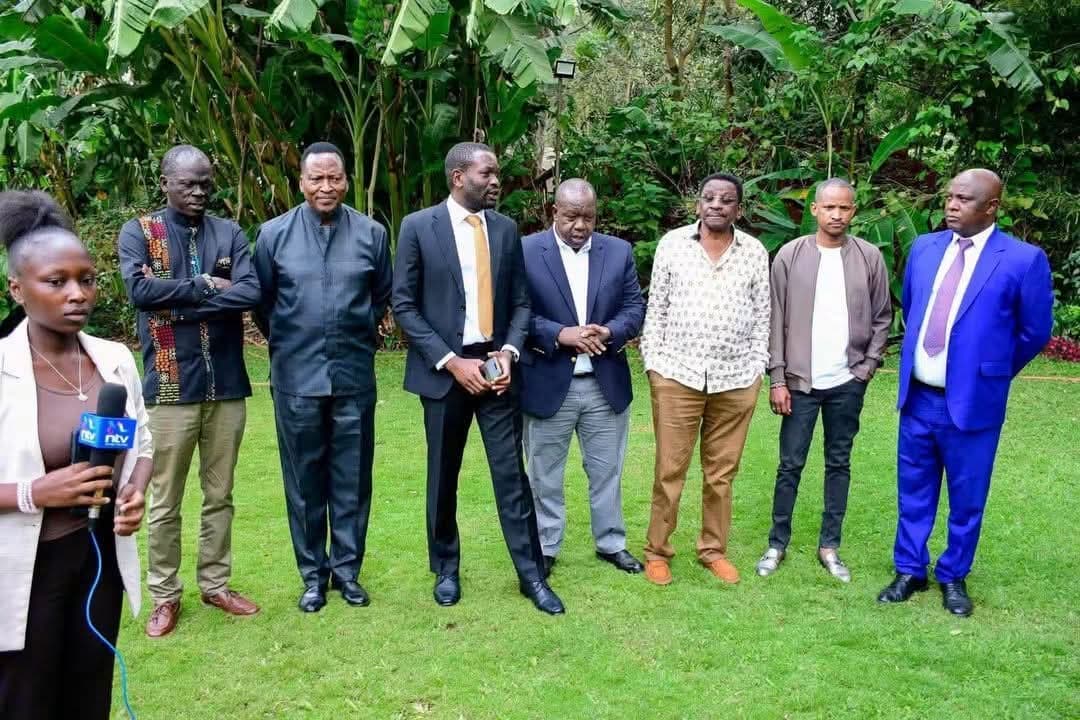
Kisii Senator Richard Onyonka has defended his decision to abandon former Interior Cabinet Secretary Fred Matiang’i’s presidential camp, arguing that the opposition must prioritise building broad national alliances if it hopes to defeat President William Ruto in the 2027 General Election.
Onyonka dismissed criticism from sections of the Gusii community over his political realignment, saying the quest to remove Ruto from power should not be driven by ethnic loyalty or attempts by individual leaders to establish regional political dominance.
In a strongly worded statement, the senator argued that the opposition needed at least eight million votes to win the presidency, questioning how such numbers could be achieved through political arrangements that alienated other communities and influential leaders.
“For those of us who are short-sighted to be throwing insults at me because of my political decisions, I will remind you that we are on a national discourse of removing William Ruto from office and not on an agenda of trying to be tribal kingpins,” he said.
Onyonka maintained that partnerships beyond the Gusii community were necessary to assemble a formidable national coalition capable of challenging the Kenya Kwanza administration.
“We need partnerships from other communities and leaders for us to be able to marshal numbers to send the enemy home,” he said.
“We are looking at eight million votes at the lower side. Where are we getting the votes when we want to continuously discriminate against communities and leaders who have the numbers?”
The senator said political decisions should be guided by electoral realities rather than regional sentiments, insisting that leaders must be prepared to make difficult choices if they are serious about capturing power.
“We must be selfishly deliberate on what we want or we perish,” he said.
Onyonka further invoked his more than 25 years in active politics to defend his political judgment, arguing that his experience had taught him to make decisions based on prevailing political circumstances rather than remain attached to familiar political alliances.
“More than 25 years in active politics gives me all the reasons to make the RIGHT decisions today and not to live in a denial comfort,” he added.
His remarks come amid his growing association with Nairobi Senator Edwin Sifuna’s Linda Mwananchi political movement, marking a departure from the Matiang’i presidential project that he had previously supported.
Onyonka was among prominent Gusii politicians who rallied behind Matiang’i, presenting the former Interior CS as a potential presidential candidate capable of consolidating the region’s political influence ahead of the 2027 elections.
His departure has triggered debate within the Gusii political establishment over the future of Matiang’i’s regional support base and whether the community should rally behind one presidential candidate or pursue broader opposition alliances.
The senator’s political shift also featured prominently in remarks by lawyer Danstan Omari during a public engagement in Kisii on Sunday.
Omari criticised Matiang’i’s presidential ambitions, urging him to reconsider his bid and instead support President Ruto.
The lawyer questioned the former CS’s national political appeal and predicted that more politicians associated with his camp could abandon him as the 2027 election approaches.
He cited Onyonka’s departure as an indication of possible cracks within Matiang’i’s political network.
Omari also questioned Matiang’i’s ability to secure support from other opposition leaders, arguing that his presidential ambitions faced significant political hurdles.
He further cited the former CS’s absence from the launch of the Linda Mwananchi movement as part of his argument about Matiang’i’s position in emerging opposition formations.
The developments expose competing political calculations within the Gusii region, where some leaders continue to support Matiang’i’s presidential ambitions while others are increasingly advocating for wider national alliances.
At the centre of the disagreement is whether the region should consolidate behind a homegrown presidential candidate or participate in a broader opposition coalition built around leaders and voting blocs from across the country.
Onyonka maintains that national partnerships, rather than ethnic political loyalty, should determine the opposition’s strategy ahead of the 2027 presidential contest.


Comments
No comments yet. Be the first to share your thoughts.