
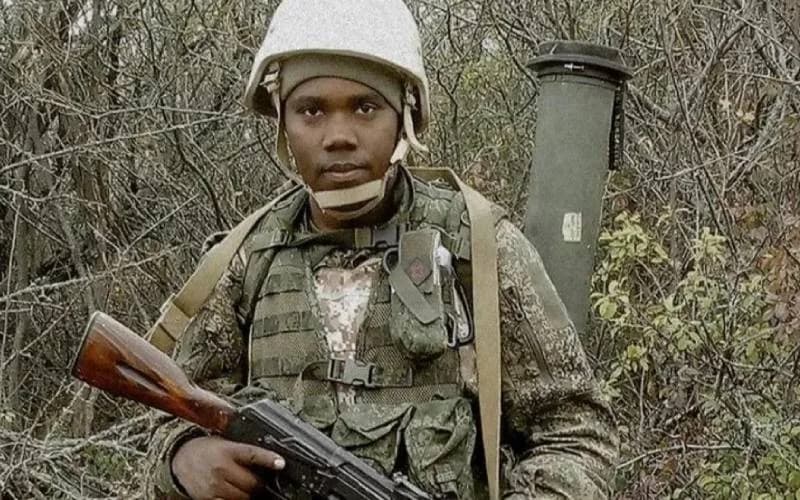
Presidents Ruto, Putin agree to stop recruitment of Kenyans into Russian military

As such, the landmark agreement effectively closes the recruitment channels through which several Kenyans had been illegally enlisted to fight in the Russia-Ukraine war.
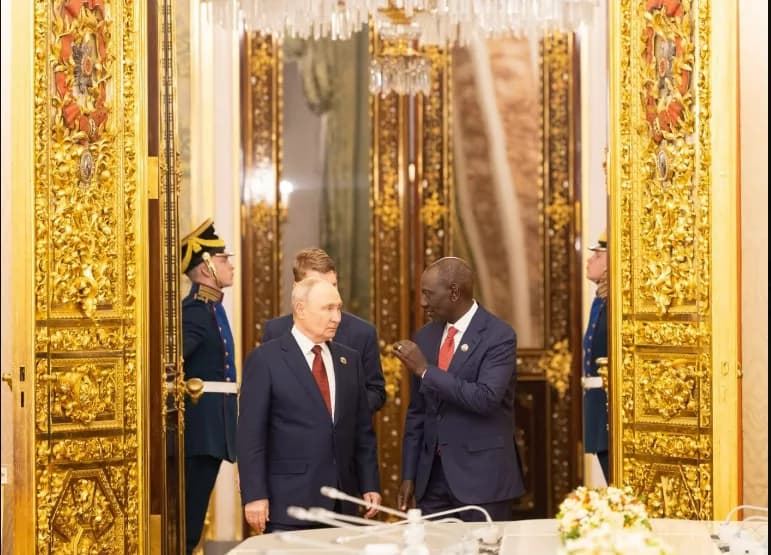
Kenyans will no longer be recruited into the Russian military following an agreement reached between President William Ruto and his Russian counterpart, President Vladimir Putin, at the Kremlin in Moscow.
This agreement was reached during a bilateral meeting between the two Heads of State and their delegations after the conclusion of the Third Russia-Africa Economic and Humanitarian Forum on Thursday.
According to State House, the two leaders agreed to designate Kenya as a non-source country for recruitment into the Russian military.
As such, the landmark agreement effectively closes the recruitment channels through which several Kenyans had been illegally enlisted to fight in the Russia-Ukraine war.
“I informed President Putin that I have appointed a Defence Attaché at the Kenyan Embassy in Moscow, who will liaise with the Russian Ministry of Defence to facilitate the repatriation of Kenyans who had travelled to Russia for military purposes,” President Ruto said.
The President explained that the Defence Attaché would work closely with the Russian Ministry of Defence to facilitate compensation for affected Kenyans and coordinate their safe return home.
Latest Stories
- State closes in on developer for Mrima Hill mineral deposit in Kwale
- Kenyatta University student charged over Sh140,000 iPhone 17 robbery at Roysambu hostel
- Dakar Rally to return to Africa in January with Morocco hosting 11 stages
- South Africa preparing for any eventuality over AGOA - foreign minister
During the meeting, the two leaders also underscored the need for deeper economic partnership between the two countries given their historical ties.
President Ruto acknowledged the longstanding diplomatic relations between Kenya and Russia, recalling that Russia was the second country to recognise Kenya’s independence in 1963.
He added that the historical relationship between the two countries provides a strong foundation for expanding cooperation in trade, investment and other areas of mutual interest.
He, however, pointed out the existing imbalance, which is in favour of Russia and called for the diversification of trade opportunities and expansion of Kenyan exports, particularly tea and flowers, to the Russian market.
“I recognise there is a trade imbalance in favour of Russia, but there is an opportunity to look at what other trade avenues we can explore,” he said.
President Ruto further invited Russian investors to explore investment opportunities arising from Kenya’s National Infrastructure Fund, noting that the initiative would provide commercially viable avenues for private sector participation in infrastructure development.
“These are commercially viable opportunities that can be looked at,” he said.
On his part, President Putin reaffirmed Russia’s commitment to strengthening trade, economic, cultural and humanitarian cooperation with Kenya in recognition that Russia remains one of Kenya’s leading suppliers of fertiliser and expressed his country’s desire to sustain and expand the existing trade relationship.
“Russia is one of the top fertiliser exporters to Kenya. I reiterate that we need to preserve this trend. We maintain fruitful cultural and humanitarian ties between our countries,” he said.
Additionally, President Putin announced that the Russian Government had increased the quota for Kenyan students pursuing higher education in Russia revealing that an additional scholarships would be made available to Kenyan students from the current 70 to 300 annually.
The visit culminated in the signing of five Memorandums of Understanding (MoUs), aimed at enhancing bilateral partnership between the two countries across key sectors, including economic cooperation, employment, transport, and diplomacy.
State House said the agreements establish a strong foundation for expanding bilateral cooperation, translating the longstanding relationship between the two countries into tangible economic and development gains.
Comments
No comments yet. Be the first to share your thoughts.