
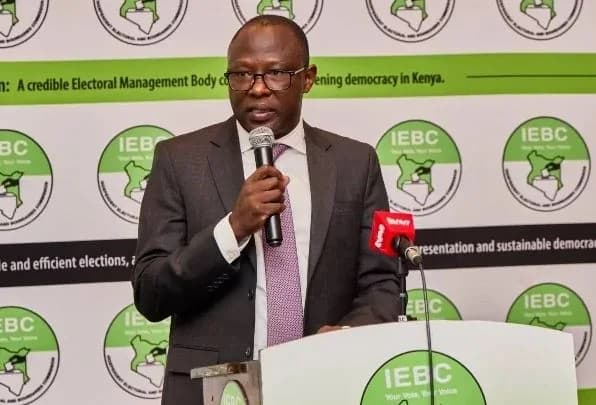
Public Procurement Administrative Review Board dismisses challenge to IEBC’s polls technology tender

The IEBC opposed the application, maintaining that the requirements were necessary to address the operational, technical and security demands of an integrated elections management system.
The Public Procurement Administrative Review Board (PPARB) has dismissed a challenge to the Independent Electoral and Boundaries Commission’s (IEBC) elections technology tender, allowing the procurement process to proceed as the country prepares for the 2027 General Election.
The board also ordered Leading Edge Limited to pay the electoral commission Sh2 million in costs after ruling that the company had failed to establish violations of the Constitution or procurement law warranting intervention.
In a decision dated October 14, 2026, the board "directed the IEBC accounting officer to proceed with Tender No. IEBC/OIT/001A/2026-2027 for the supply, installation, testing, commissioning, support and maintenance of the Integrated Elections Management System (IEMS), including hardware equipment and accessories."
The ruling removes the latest legal hurdle facing the procurement after Leading Edge Limited challenged the tender requirements, arguing that some qualification criteria were unclear, restrictive and inconsistent with procurement laws.
The company had asked the board to compel the IEBC to revise the tender document, clarify the experience required of bidders, allow joint ventures and consortia, and recognise experience gained through subcontractors.
It also challenged the restriction of relevant experience largely to election technology deployed by election management bodies, arguing that comparable national identity, biometric registration, passport and civil registration systems should be considered.
Latest Stories
- African countries could save billions by cutting air pollution and greenhouse gases at the same time
- Nominated Senator Crystal Asige joins Winnie Odinga and Jalang’o in Nairobi Senate race
- Tusker FC suffer home defeat as Singida strike puts CAF Confederation Cup hopes at risk
- Ecuadorian priest dies after giant wooden crucifix crashes down on him during live-streamed Mass
Leading Edge further questioned the financial and technical qualification thresholds, local content requirements and the timing of clarifications issued shortly before the tender submission deadline of October 2, 2026.
The IEBC opposed the application, maintaining that the requirements were necessary to address the operational, technical and security demands of an integrated elections management system.
The commission argued that experience in election technology was essential because similar systems used in other sectors did not necessarily demonstrate the capacity to deploy and support technology in an electoral environment.
It also defended its decision to prohibit joint venture participation, citing the need for unified contractual responsibility and accountability in implementing the system.
The board considered whether the tender document, together with an addendum issued on September 18 and clarifications published on September 25, complied with the Constitution and the Public Procurement and Asset Disposal Act.
It ultimately found that Leading Edge had not demonstrated sufficient grounds to justify the remedies it sought.
The board emphasised the public importance of the procurement, noting that the integrated elections management system was directly linked to preparations for the forthcoming General Election.
It said the process had to be concluded lawfully and without avoidable delay, while acknowledging that bidders retained the right to seek administrative review.
The board consequently dismissed the application and directed the IEBC to take the procurement through its lawful and logical conclusion.
The decision followed an earlier review that had required the commission to correct and clarify aspects of the initial tender document before re-advertising the procurement in September 2026


Comments
No comments yet. Be the first to share your thoughts.