
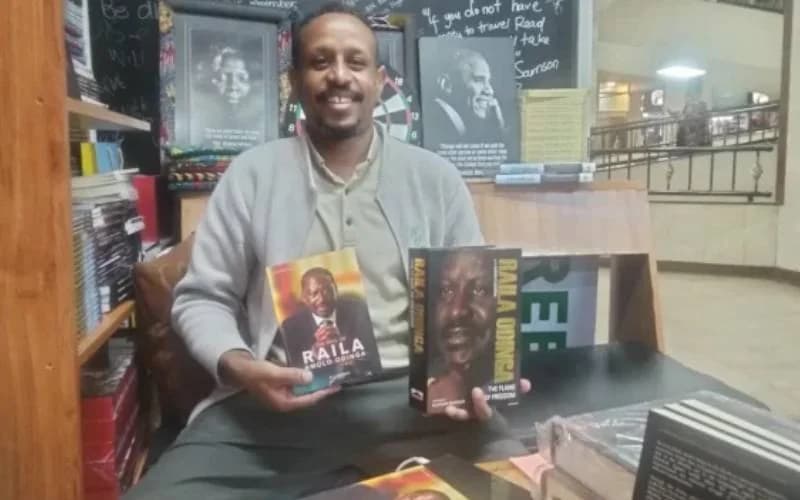
The death of former Prime Minister Raila Odinga in October 2025 has renewed calls for more books and memoirs on Kenyan leaders and personalities who have made significant contributions across various fields.
This follows Thursday's commemoration of the first anniversary of his death at Migwena Cultural Grounds, which highlighted the rich literary and scholarly legacy inspired by his life and political journey, especially at a time when memoirs are becoming increasingly popular.
Literary observers agree that there is a need for more memoirs by public leaders to, among other things, offer insights into their lives, careers and impact, including their regrets, while helping future generations understand how life was in the past and draw lessons from it.
Political memoirs, in particular, provide a rare insider view of institutional power struggles, coalition government negotiations and executive decisions that are not always publicly documented. Prolific writers such as Ngũgĩ wa Thiong'o used childhood and youth memoirs as a form of scriptotherapy, addressing colonial trauma, displacement and the transition into a postcolonial state.
In documenting corporate and professional milestones, business and public service memoirs, such as those by corporate trailblazers and retired military generals including Lazaro Sumbeiywo, Daniel Opande and Humphrey Njoroge, chart the professionalisation of key national institutions.
Even so, several books have been written about the late premier, including The Trial of Raila Amolo Odinga and the Unfinished Business by P.J. Okoth, which reassess the historical and legal tribulations he faced throughout four decades in Kenyan politics, particularly his years of detention without trial under the Moi regime.
His autobiography, The Flame of Freedom (2013), co-authored with Sarah Elderkin, spans nearly 1,000 pages. It details his early life, engineering studies in Germany, detention following the 1982 coup attempt, his role in Kenya's multi-party democracy movement and his tenure as Prime Minister.
Another prominent publication, The Quest for Nationhood (2017), reflects on his political journey, vision for governance and key milestones in Kenyan politics. Raila Odinga: An Enigma in Kenyan Politics (2006), written by political scientist and lawyer Babafemi Adesina Badejo, is an extensive analytical biography tracing his political lineage, relationship with his father Jaramogi Oginga Odinga, periods of detention and impact on modern Kenyan history.
Another work, One Day You Will Remember Raila Odinga: But It Will Be Too Late (2023), forms part of the Raila and Oginga series and explores his long-standing role in the opposition, anti-corruption advocacy and electoral reform efforts.
There is also How and Why Raila Odinga Can Win AUC Chairmanship Against All Hurdles (also referred to as The Last Great Battle? Raila Odinga and AUC Chairmanship), a book authored by former Nyamira Senator Kennedy Mong'are Okong'o in 2025.
Speaking to The Eastleigh Voice, Abdullahi Bulle of Nairobi-based Nuria Store lamented that, apart from Raila, few senior scholars, business leaders and political figures have documented their life stories, struggles and reflections, arguing that memoirs help preserve alternative histories often overlooked in mainstream historical accounts.
“There are several books about Raila. There are those he wrote and others written about him by scholars and fellow politicians who admired his life and actions. We can be literary rich as a country if all leaders who have served us in public and private sectors emulate Raila,” said Abdullahi.
Abdullahi said that many prominent Kenyans who have made remarkable contributions to society have not documented their lives in books, noting that official school textbooks often overlook grassroots and marginalised perspectives of history.
He highlighted that memoirs by freedom fighters such as Bildad Kaggia and J.M. Kariuki, trade unionists like Tom Mboya (Freedom and After), and political dissidents such as Oginga (Not Yet Uhuru) capture the human cost of the struggle for independence and the fight for the second liberation.


Comments
No comments yet. Be the first to share your thoughts.