
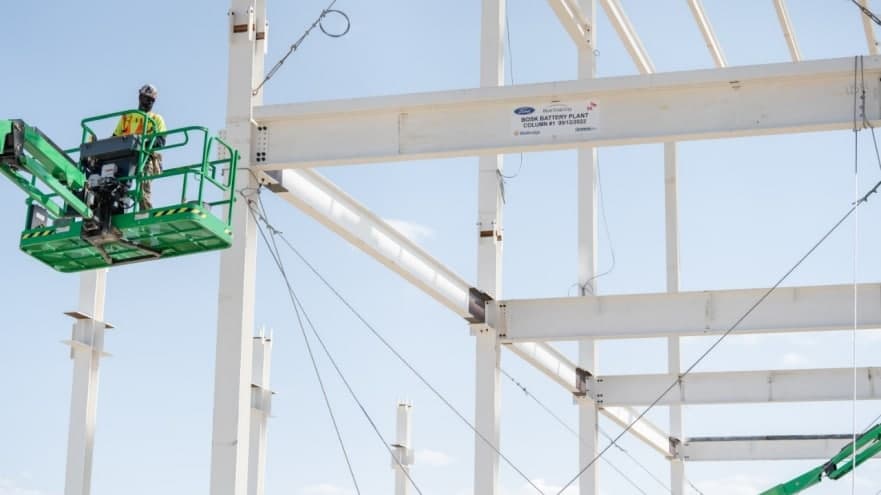
The BlueOval City construction project in Tennessee has undergone a major strategic shift as Ford Motor Company abandons plans for electric pickup production at the campus. Instead, the automaker plans to manufacture gas-powered trucks at its Tennessee Truck Plant from 2029.
Meanwhile, SK On Tennessee targets battery production from 2028. The changes follow delays, weaker-than-expected electric vehicle demand, and a restructuring of the companies’ manufacturing partnership. Consequently, the development now follows a different production strategy from the electric vehicle and battery manufacturing vision announced in 2021.
The project remains a major industrial development in West Tennessee. However, revised production schedules raise questions about when the campus will reach full operational capacity and deliver its expected employment benefits.
BlueOval City Construction Project Revises Manufacturing Plans
Ford and South Korean battery manufacturer SK On announced BlueOval City in September 2021. The original $5.6 billion investment included an electric pickup assembly plant, battery manufacturing facilities, and supporting industrial infrastructure.
The campus covers approximately six square miles near Stanton, Tennessee. Ford initially planned to manufacture next-generation electric pickup trucks, while BlueOval SK would produce batteries through a joint venture between Ford and SK On.
Construction began in July 2022, involving extensive earthworks, industrial buildings, equipment installation, utilities, and supporting infrastructure. The development aimed to establish an integrated manufacturing hub serving Ford’s future electric vehicle program.
However, Ford revised its production strategy as market conditions changed. The company postponed its electric pickup production timetable before abandoning plans to manufacture those vehicles at BlueOval City.
In December 2025, Ford and SK On agreed to dissolve their battery joint venture. Subsequently, SK On Tennessee assumed ownership of the battery plant in May 2026, while Ford retained responsibility for vehicle manufacturing.
BlueOval City Construction Project Targets New Production Dates
Ford now plans to begin producing gas-powered trucks at the Tennessee Truck Plant in 2029. The facility will manufacture new Built Ford Tough truck models, replacing the original plan for electric pickup production.
Meanwhile, SK On Tennessee intends to start battery production in 2028. The company plans to manufacture automotive batteries and energy storage systems, potentially serving customers beyond Ford.
The revised strategy preserves manufacturing activity at the campus but changes its original product mix. Ford expects approximately 2,300 people to work at the Tennessee Truck Plant, according to its project information. However, employment and production outcomes will depend on implementation of the revised manufacturing plans.
The campus also includes supporting infrastructure designed for large-scale industrial operations. Roads, utilities, logistics facilities, and supplier infrastructure will support manufacturing activities across the site.
For construction contractors, the project demonstrates how changing market conditions can influence industrial development schedules. Equipment installation, facility commissioning, workforce mobilization, and supplier coordination must align with revised production requirements.
BlueOval City Construction Project Highlights Industrial Delivery Risks
BlueOval City also provides a useful comparison with other major American manufacturing investments. For example, the proposed $15 billion Iowa steel mill project by Mesabi Metallics aims to establish a large steelmaking complex using iron ore from Minnesota.
Although the developments serve different industries, both highlight the importance of converting investment commitments into operational facilities. The Iowa proposal targets initial annual steel production of 7.5 million tons, with potential expansion to 10 million tons. Its developer expects production to begin around 2030.
For BlueOval City, the immediate priority is meeting the revised production timetable. Ford must prepare its truck assembly operations, while SK On Tennessee advances battery manufacturing. Their separate ownership arrangements also require coordination across shared infrastructure and supply chains.
Ultimately, the campus remains a significant industrial investment for Tennessee. However, its performance will depend on whether the companies deliver their new production plans and establish sustainable demand for their products.
Development plans for the BlueOval City project
The BlueOval City project is taking place at a mega-campus spanning 6-square-miles, which is thrice the size of Ford’s Rouge complex. The facility will consist of a vehicle assembly plant, and battery plant which will be operated jointly by both partners. Once the plant becomes operational by 2025, it is expected to create up to 6,000 job opportunities for the state.
The Detroit-based general contractor Walbridge, has been working on BlueOval City’s site since March. Thus far, they have made considerable progress at the site and moved over 4.6 million cubic yards of soil. In addition, they laid about 370,000 tons of stone and installed over 4,600 deep foundations. Structural steel have also been erected at the site.
Tennessee’s Governor, Bill Lee, said the BlueOval City project would have a transformational impact on the state’s residents and economy. He welcomed Ford, stating that their investment was a testament to the state’s strong business climate and unrivaled workforce.
Ford’s director, Eric Grubb mentioned that the BlueOval City project was a step towards building the future of West Tennessee. Grubb also said the new facility would serve as a blueprint for Ford’s future manufacturing facilities. This will enable the company to lead America towards a future with electric vehicles.
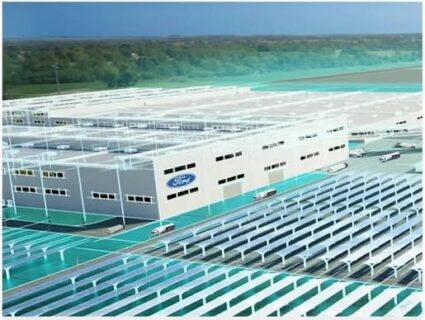
Project Fact Sheet
Name: BlueOval City.
Type: Automotive manufacturing and battery production campus.
Location: Near Stanton, Haywood County, Tennessee, United States.
Original investment: $5.6 billion.
Original announcement: September 2021.
Construction commencement: July 2022.
Vehicle manufacturer: Ford Motor Company.
Battery manufacturer: SK On Tennessee.
Former battery joint venture: BlueOval SK.
Site area: Approximately six square miles.
Vehicle production target: 2029.
Battery production target: 2028.
Planned vehicle plant workforce: Approximately 2,300 employees.
Main facilities: Tennessee Truck Plant, battery manufacturing plant, supplier facilities, and supporting infrastructure.
Revised manufacturing strategy: Gas-powered trucks, automotive batteries, and energy storage systems.
Main delivery considerations: Production scheduling, equipment commissioning, workforce mobilisation, and supply chain coordination.
Project Team
Vehicle manufacturing developer: Ford Motor Company.
Vehicle plant operator: Ford Motor Company.
Battery plant owner and operator: SK On Tennessee.
Former battery joint venture: BlueOval SK.
Battery technology partner: SK On.
State development stakeholder: Megasite Authority of West Tennessee.
State government stakeholder: Tennessee state government.
Construction contractors: Individual contractors require verification against specific construction packages.
Engineering and equipment suppliers: Individual appointments require further verification.
Workforce and training stakeholders: Ford, SK On Tennessee, and regional training partners.
Comments
No comments yet. Be the first to share your thoughts.