
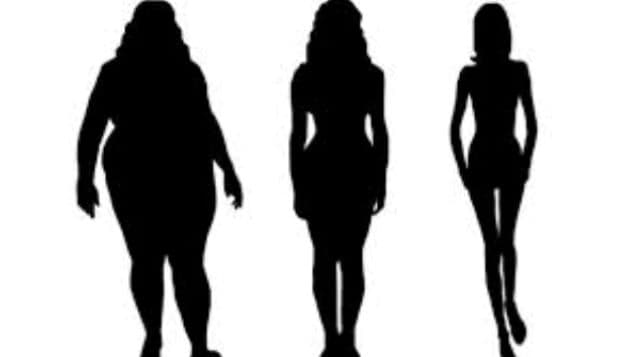
“Have you gained weight?” “You’d be so pretty if you lost a few pounds.” “No one will want to marry you if you don’t slim down.” “Are you going to eat that?”
These words land differently when they come from family. They don’t just sting in the moment; they echo through the years, shaping how we see ourselves in mirrors, how we approach meals, and how we carry ourselves through the world. When the people who are meant to be our safest harbour become the source of our deepest body insecurities, the wound cuts twice as deep.
Here is a story: Oprahdaily
My long-held suspicions were finally confirmed at our Passover seder the year I turned 12. My grandmother, a striking Ashkenazi beauty, waited until dinner was served to tell me in front of my entire extended family that she had recently heard about a book she felt I might be interested in. Evidently, the book was about an overweight preteen who struggled with self-esteem and popularity but eventually lost weight and gained confidence. Because of my situation, she said, she was sure I could relate.
A shame-filled silence fell over the table. Eyes widened; nervous looks bounced around place settings. My dad, ever the protector, uttered a quick and definitive hushing noise. My aunt moved quickly to change the subject. My mom put her hand on mine, but no one looked at me.
Hearing no protests to the contrary, I learned in that moment that my fears were true: I was fat, and being fat was very, very bad. Everyone in my family knew it, and no one had told me. Like rush-hour traffic, this fact about myself barreled into my consciousness, hit the brakes, blared the horn, and never, ever let up.
To be sure, I knew it was bad to be fat well before that moment. For as long as I can remember, my dad ate a salad for dinner every night while the rest of us enjoyed an actual meal. He rose at dawn three times a week to hit the gym, counted points, tried whatever book Suzanne Somers sold, and avoided carbs. We all bore witness to his interminable, cruel struggle, and I fully absorbed the notion that being thin was something you spent your entire life working toward. This message was gleefully reinforced outside my home, where conversations with my friends morphed into irresistible opportunities to berate ourselves over the parts of our bodies we disliked. Weight—and what we were doing to lose it—was literally always on the table.
By the time that Passover seder rolled around, I already understood, deeply, how shameful and wrenching it was to be fat. Though it hadn’t yet coagulated into a truth about myself, I could already sense that I didn’t have a good body. As it had in every previous generation in my family, the idea inevitably germinated and took root, ripened into a lifelong preoccupation, and sent sprawling vines into every corner of my existence. My body—its goodness and its badness—became the first thing I thought about every morning, and the last thing I thought about every night. Just like my black hair and my facility with a lattice piecrust, I’d inherited an obsession.
Over a decade later, I started a PhD program in education policy. In the chaos of the first year of a doctoral program, I realized quickly that one thing I could control was what I ate. I signed up for WeightWatchers and, over the course of the academic year, funneled all my anxiety into obsessively tracking every bite that went into my body. By May, I had shed 30 pounds. At the end of the term, I drove home from Michigan to Maine, stopping in Long Island to visit with family. I couldn’t wait to tell my grandmother (this time, my mother’s mother, herself a lifelong educator) about how well I was doing in my doctoral work. She opened the front door and nearly shrieked in delight. “You’ve lost nearly half your body weight,” she kvelled. “I’ve never been prouder of you!” I knew that she was, of course, proud of my graduate work, but the undergirding message was clear: My weight was germane to how my family loved me. When I was thin, they loved me for my size. When I wasn’t thin, they loved me in spite of it.
At age 34, I got pregnant with what seemed like the world’s largest set of twins. With each of the babies tipping the scales at around eight pounds and my skin retaining none of the elasticity promised by those stretch mark creams, I reemerged into the world in a different body. The familiar sounds of my vicious internal monologue, which had been temporarily muffled during my pregnancy, began to seep through the cracks, reminding me of my bad body and all its shame. At the same time, nearly everyone I interacted with commented on the babies with the same uncomfortable joke: “This is the only time in life when it’s good to have thigh/arms/tummies that fat.” The constancy of this remark unmoored me: I couldn’t separate people’s well-meaning observations from a pernicious anxiety that I had made children who might inherit the shame of my body and someday hate their bodies as much as I hated mine. It had to stop.
For the first time in my life, I really worked to retrain my brain around body image. I drew big, bright lines for myself and my family, some of which seemed like overreacting at first: Namely, we could no longer say anything negative about anyone’s body. I sought out community with other parents trying to change the narrative around “good” and “bad” foods, and I followed the leads of the myriad body-positive activists who have developed strategies for creating a home environment where all bodies are good bodies. At the beginning, it felt like trying to breathe underwater. I now realize I was subconsciously resisting these efforts to change my thinking, afraid that if I let my guard down and stopped obsessing over being thin, I would be rendered completely open to disdain and cruelty. In trying to protect myself, I realized, I was planting the seeds for future generations of pain and judgment.
Over time, I began to develop habits of mind that allowed me to relax into a less critical view of the world around me. That said, retraining one’s brain takes daily, unyielding work, and there’s no end. But our culture is slowly changing, too. Language has shifted, and there are more shapes to look at in movies and Instagram. I see a lot more beauty in the different bodies around me than I used to, and occasionally, if I have the energy, I can train that gaze on myself. I do know one thing for sure: Inheritance isn’t inevitability. We can intervene, we can choose differently, and we can work to ensure that our families aren’t the first places our children encounter fatphobia. So, while I can’t quite breathe underwater yet, I’m getting closer to ensuring my family’s future won’t be bound by the same impossible standards as our past. If you ask my 5-year-old daughter today who the most beautiful woman in the world is, she’ll answer immediately: her momma.
When love feels conditional
There’s something uniquely heartbreaking about body criticism from parents and relatives. These are the people who held us as infants, who should love every inch of us unconditionally. Their words carry ancestral weight; they’re not just comments but verdicts, delivered by the very people who taught us what to value about ourselves.
The most painful part? How these hurtful remarks often come wrapped in the language of love: “I’m just worried about your health.” “I want you to be happy.” “You know I only say this because I care.” This loving disguise makes the shame harder to recognise and nearly impossible to protest without seeming ungrateful or oversensitive.
The holiday table: Battlefield of the body
For many, the family dinner table becomes a minefield of potential humiliation. The holiday season, meant to bring warmth and connection, instead brings dread. Will Grandma comment on your plate? Will Dad make that face when you reach for seconds? Will the conversation inevitably turn to the latest diet someone is trying?
Food, which should nourish both body and soul when shared among loved ones, becomes loaded with judgment. Every bite carries the weight of approval or disapproval. Even reaching for another dinner roll becomes a political act, a statement about willpower and worth.
The joy of celebration fades under this scrutiny. The anticipatory anxiety begins weeks before family gatherings, that knot in the stomach that has nothing to do with hunger and everything to do with fear of being seen, judged, found wanting.
The inheritance of shame
Perhaps the most tragic aspect of family body shaming is its cyclical nature. The mother who scrutinises her daughter’s weight was likely once a daughter whose weight was scrutinised. The father who comments on his son’s “softness” is often working from a script handed down through generations of men.
This doesn’t excuse the behaviour, but understanding it can begin to loosen its grip. There’s something almost primal about this passing down of body anxiety, as though each generation is trying, in its misguided way, to armour the next against a world that judges harshly based on appearance.
The pain of realising this pattern can be immense. There’s grief in recognising that those who should have protected us from body shame instead initiated us into it, often because they knew no other way.
Visible and invisible all at once
The paradox of family body shaming is how it makes us feel simultaneously too seen and not seen at all. Our physical presence becomes hypervisible, subject to ongoing commentary and evaluation, while our true essence fades into background noise.
Achievements go unnoticed while pounds gained or lost merit immediate attention. Personality, intelligence, kindness, humour, all the qualities that make us who we are, become secondary to the shape of our bodies or the contents of our plates.
This creates a profound loneliness: to be known so superficially by those who should know us most deeply. To sit at a family table and feel that your body is being welcomed (or not) rather than your whole self.
Finding your voice in the family chorus
The first word of protest is often the hardest. After years or decades of accepting body commentary as normal, setting boundaries can feel like breaking sacred family code. Yet speaking up is the beginning of healing, not just for yourself but potentially for generations to come.
A simple “I’d prefer we not discuss my body”, spoken with quiet dignity, can create ripples of change. The conversation might be uncomfortable. There might be resistance or dismissal. But naming the harm begins to diminish its power.
Sometimes the words catch in the throat. Sometimes tears come first. This too is progress, the body expressing what words cannot yet form, the heart recognising a long-denied truth: that no love should come with conditions about weight, shape, or size.
The allies among us
In almost every family, there exists potential for allyship. The sister who notices your discomfort when weight is discussed. The cousin who changes the subject when body comments arise. The uncle who compliments character rather than appearance.
These quiet allies can become powerful agents of change when recognised and encouraged. Family dynamics shift not just through confrontation but through new alliances, through small moments of solidarity that gradually create new patterns of interaction.
For younger family members without much power in the system, these allies become lifelines, reminders that another way of seeing and being seen is possible, even within the family that taught them body shame.
The heart’s complex work of forgiveness
Somewhere along the healing journey comes the question of forgiveness, not for the benefit of those who caused harm, but for the liberation of one’s own heart from resentment.
This isn’t about excusing or forgetting. It’s about holding a complex truth: that many who perpetuate body shame were its victims first. That parents who scrutinise their children’s bodies often scrutinise their own with even greater harshness. People who know no other language of care sometimes express love through concern about appearance.
Forgiveness might look like understanding without accepting. Like compassion that doesn’t negate boundaries. Like recognising the humanity in those who failed to fully recognise yours.
Writing a new family story
Whether within existing family structures or in families we create ourselves, we have the power to change the narrative around bodies:
Holiday tables can become places where food is enjoyed without commentary. Family gatherings can celebrate inner qualities rather than outer appearance. Children can grow up hearing about their kindness, creativity, and courage instead of their cuteness or size.
This isn’t just personal healing, it’s cultural transformation happening one family at a time. Each time a parent bites back a body-focused comment and offers genuine praise instead, each time siblings defend each other from appearance criticism, each time a family celebrates what bodies can do rather than how they look, the generational cycle weakens.
The ongoing journey home to ourselves
Healing from family body shaming isn’t a destination but a practice. Old voices may resurface during vulnerable moments. A single comment at a family gathering might temporarily shake years of careful self-acceptance work.
This isn’t failure, it’s being human. The measure of healing isn’t never feeling hurt again; it’s developing the resilience to return more quickly to self-compassion. It’s remembering that while family voices may have been your first mirrors, they don’t have to be your truest ones.
The most profound act of courage might be showing up at the family table as your full self, taking up exactly the space you need, neither shrinking nor apologising. Eating what nourishes you. Speaking your truth with compassion. And in doing so, perhaps offering the next generation a glimpse of what family love can look like when it truly has no conditions.



Comments
No comments yet. Be the first to share your thoughts.