
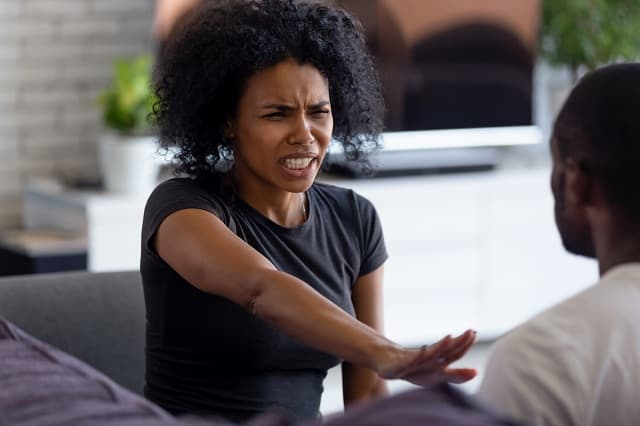
We all carry stories in our minds about how we’d react in dangerous situations. Many of us imagine ourselves fighting back, screaming for help, or running away. But the reality of how our bodies respond in threatening situations often differs dramatically from these mental scripts, and this disconnect can lead to profound confusion, shame, and self-doubt for survivors.
Recently, I came across a heartbreaking Reddit post where a 19-year-old woman described being sexually assaulted by someone she considered her best friend. Despite always believing she would “fight back, run, or scream” if ever in danger, she found herself frozen, unable to move or call out for help. Afterwards, she questioned everything about her experience and reactions, wondering if she was “crazy” or “overreacting.”
Here is the Reddit post by prvisory
I (19F) went to a party this weekend with my closest friends, being hosted by one of the girl’s bf. For most of the night everything was fine, said “bestfriend” (22M) if I can even still call him that, was telling me bout how he’s moving out of town and showing pictures of the place he got that is right next to his new college campus. At a certain point, I was drunk. And I mean, actually, I was really drunk. Laughing at everything, walking wobbly and speaking slurredly kind of drunk. That’s when he came to me, he pointed to his phone and told me he wanted to show me something – we had just talked about a girl he was flirting with over text, so I thought it was about her. I followed behind, we stopped by the door (on the outside) and he kissed me. I froze. And maybe that was my mistake, I should’ve pushed him away at that but I didn’t. I just froze. We stayed there for a while, him kissing me, pressing me against a wall, and me just completely frozen, wide eyed. There were people coming in and out of the door, and I remember telling him I wasn’t comfortable with everyone seeing me there, that I wanted to go back inside. At this point I don’t know if he misread the situation or if he was just being pushy because he didn’t let me get back in. I had my hand on the doorknob when he pushed me away, all the way out of the building to some wooden benches outside. He pushed me down and I immediately got up, it hit me in that moment that I had to get back in, that I had to be somewhere with other people, maybe that’d stop him. He sat down and pulled me back. I fell on my knees, my legs are still purple from the impact, to which he proceed to forcefully spread them open and place me on his lap. I am not sure anymore of what happened after that, it’s all blurry but I know I tried countless times to get up and each time he slammed me harder against the bench and back on his lap, I remeber I asked him to stop kissing and groping me – his hands somehow ended up under my dress, all the way up to my chest and he squeezed so hard it hurted, so hard that it bruised – and he said he could stop kissing me if that’s what I wanted but I wasn’t going anywhere till he was done. He pushed my dress up multiple times as I tried to bring it down and I said so many times I didn’t wanted to be there, that I didn’t wanted to get undressed publicly, that he was hurting me and he would just chuckle. At a certain point I saw someone exit the building too, and whoever it was got close but I didn’t scream. I always thought if something like that happened to me I would fight back, I would run, I would scream. But I didn’t. And I can’t stop thinking about it. Because when I saw that person walking out the first thing that came out of my mouth was to ask him to do that somewhere private. I thought that person could record it, could come over and want to join, could not do anything at all, I thought maybe the building had security cameras and maybe the tapes of me being assaulted would end up in some pornographic website. I asked him to rape me somewhere private.
He said no. He kept going. He got more aggressive.
When I got up a last time, and he tugged me forward again I just went “I need to go to the bathroom, you can just wait here” and for some miracle, he actually did. I don’t know why he did. I don’t know why he respected that but didn’t respect my multiple pleas for him to stop. I don’t know if a man who intended to SA me would simply stop at what I said, I don’t know if I’m the one wrong here, if maybe he just misread the situation, if maybe I wasn’t clear enough. I haven’t told anyone about this because I feel, in a way, I could be the one that mislead him, I could be the one reading this wrong, the one being overdramatic. I am trying to go on about my days normally, to get things done and not let it show to the people closest to me but at the end of everyday, since it happened, I have a meltdown everytime I am alone. I had two panic attacks in a single day because I saw the bruises he left and it felt like he was still holding me down and forcing my legs open. I cry until I’m exhausted every night when I get home, I lock myself away so no one will notice because I don’t even know what to say if someone were to ask me what happened.
Am I crazy? Was it actually not that bad? Did I just panicked over nothing?
Beyond fight or flight: Our body’s natural threat responses
The traditional “fight or flight” model only tells part of the story. There are at least four primary ways humans respond to threats:
The fight response
This is what most of us imagine we’d do: confront the threat directly by physically defending ourselves or verbally challenging the aggressor.
While movies often portray this as the default response, it’s less common than we might think, especially when:
- We know the person threatening us.
- There’s a power imbalance.
- We’re caught off guard or in a vulnerable state.
- We’ve been socialised to avoid confrontation.
- The threat is someone we trusted.
The flight response
The flight response activates our escape mechanisms:
- Running away.
- Trying to leave the situation.
- Creating distance between ourselves and the threat.
In the Reddit story, the young woman described repeatedly trying to get up, saying, “I tried countless times to get up and each time he slammed me harder against the bench.” This illustrates how her flight response was activated but thwarted by her attacker’s greater physical strength.
The freeze response
Perhaps the most misunderstood response, yet extremely common during assault:
- Feeling physically unable to move.
- Finding yourself unable to speak.
- Experiencing detachment or unreality.
The woman described this perfectly: “I just froze. We stayed there for a while, him kissing me, pressing me against a wall, and me just completely frozen, wide-eyed.”
This isn’t weakness; it’s your brain activating an ancient survival response when fighting seems impossible and fleeing isn’t working.
The fawn response
This involves attempting to please or placate the threatening person:
- Trying to calm the aggressor.
- Becoming excessively agreeable.
- Focusing on the other person’s needs over your safety.
Elements of this appeared when the woman, seeing someone who might witness her assault, asked her attacker to “do that somewhere private.” This wasn’t consent; it was her brain desperately seeking the least dangerous option in an impossible situation.
Why reality doesn’t match our expectations
Several complex factors influence why our actual responses rarely match our expectations:
Neurobiological override
During an acute threat, the thinking part of our brain becomes less active while the survival parts take control. This means:
- Our conscious plans (“I’ll scream for help”) become secondary to automatic survival mechanisms.
- Access to language centres may be impaired.
- Decision-making is compromised.
Social conditioning and power dynamics
Many of us, especially women, are socialised to:
- Avoid making scenes or drawing attention.
- Be polite and accommodating, even at personal cost.
- Preserve relationships at our own expense.
- Question our perceptions when they differ from others’.
- Avoid “overreacting” or being “dramatic”.
These social factors can make fight-and-flight responses less likely and increase freeze-and-fawn reactions, particularly in situations involving trusted individuals.
Community support: How Reddit responded
What struck me most about this post was the supportive community response. Here are some of the most impactful comments:
joshg01: “You aren’t crazy. No means no. ‘I’m not comfortable’ means No. You asked him to stop multiple times. That’s sexual assault.”
FairyFartDaydreams: “You are underreacting. You froze, which is natural when someone you trust hurts you. The normal reactions can include freezing, fawning (which might look like agreement), fighting or flight. We never know what reaction we might have.”
Shnapple8: “He’s not your friend and probably never was… He did try to rape you. You’re second-guessing yourself because you’re in shock. You need to tell people that you trust that he did this to you.”
Solstice38: “Dude here. First and foremost, this is not your fault. You did nothing wrong. It’s normal not to react – almost no one reacts when being sexually assaulted, especially when it’s a ‘friend’. You have nothing to blame yourself for in any part of this.”
Hippo_In_ Disguise: ‘I asked him to rape me somewhere private’. My god, what a sentence. OP, you are not insane. If he truly ‘misread’ the situation and wanted to engage in consensual sexual intercourse with you, it would not have included him pulling you forcefully down onto your knees to the extent that they have bruises.”
Necessary_Tap343: “This! You said words equivalent to mean stop and no, never consented, and it is highly likely you were too intoxicated to consent. You were SA. Period! Don’t let anyone tell you otherwise.”
little-finn: “This! If he had stopped after the first no by the door, it would have been miscommunication, and he really was just clueless and thought you had something, but it went just too far to be miscommunication. Luckily for some reason, he stopped it before it went even further, but it wasn’t because he didn’t try to SA the OP…”
Lightness_Being: “Listen to this OP , Please talk to a help line or family. Or a therapist. Preferably go to the police, with family support. He will do this again. I bet he’s done it before.”
PRvalz10: “You are not crazy. I’m sorry you had to go through that. It was sexual assault.”
Endless658: “ahhh the ole ‘i hope she doesn’t remember, but ima gaslight her regardless tactic’… on a serious note homie been plotting for a minute bruh. There is no way he didn’t realize what he was doing and he only stopped because he didn’t want to LITERALLY FORCE YOU.”
TraditionalPayment20: “I’m so sorry. You need to tell people you trust and block him from your life. I’m so sorry.”
libertinauk: “You’re not overreacting even a tiny bit. And you need to let your friends know that this person isn’t safe to be around.”
Threadheads: “You didn’t lead him on. You repeatedly tried to get away from him and he physically overpowered you each time. He knew you didn’t want it. He didn’t care. Never talk to this man again. Never be around him, never give him an opportunity to drug you. You are not safe with him.”
LoveVada: “-take pictures of your bruises -report it to the police so there is a file -never ever be alone with this monster -tell your friends and close family -block him”
00Lisa00: “He absolutely assaulted you. If you’re up to it you should report him to the police. If possible also see a therapist sooner rather than later.”
Dry-Necessary7664: “My heart is breaking for you. The road to normalcy is so long from here. Report it if you can, but talk to someone. I can understand that the thought of letting someone in right now is unnerving and scary, but you can’t shoulder all that trauma alone. No means no. I’m so sorry you’re going through this.”
skyr053m: “First, you’re not crazy, and you’re not exaggerating, your body knows what it went through, even if your mind isn’t ready to process it yet. If you’re having panic attacks, it’s best to talk to a professional about it. And if or when you feel comfortable, let your friends know that he is a bad person.”
archaeofeminist: “This was a serious assault where he knowingly physically overpowered you, was aware you wanted him to stop (he acknowledged you didn’t want to kiss and asserted he would continue to molest you), and he left physical injuries on your body. You are now experiencing symptoms of psychological trauma.”
Big_Question6349: “Sweetie, you need to seek support. That was absolute SA. He wasn’t confused. He overpowered and hurt you. You were smart to say you needed to use the bathroom. It saved you from further assault. This is not your fault at all.”
ContemplatingFolly: “Please make a police report on this guy. You are most certainly not the first woman he has done this to, and he will try again. Getting a paper trail going is critical even if they can’t prosecute him.”
Supporting trauma survivors (including yourself)
Understanding these natural responses transforms how we support others and ourselves:
Validate without hesitation
The most powerful first response is simple validation:
- “I believe you.”
- “What happened wasn’t your fault.”
- “Your reaction was normal.”
- “You didn’t cause this.”
Avoid qualifiers like “Well, maybe…” or “Are you sure…?” which can deepen self-doubt.
Share knowledge about natural responses
Many people blame themselves for not fighting back. Gentle education helps:
- “Freezing is a normal, involuntary response.”
- “Many people find they can’t scream or move during threatening situations.”
- “Your brain was protecting you the best way it knew how.”
Focus on survival, not “should haves”
Instead of “Why didn’t you scream?” focus on:
- Recognising that they survived was the ultimate goal.
- Acknowledging that their body’s wisdom protected them.
- Understanding that automatic responses aren’t choices.
Create safety
Perhaps most importantly, create both physical and emotional safety:
- Respect boundaries around physical touch.
- Be reliable and consistent.
- Follow through on commitments.
- Avoid judgment about their healing process.
The power of understanding
When we understand these natural responses, something remarkable happens. Self-blame often begins to lift. Isolation gives way to connection. What seemed like personal failure is recognised as the body’s wisdom.
Whether you’re processing your own experiences or supporting someone else, this understanding creates space for healing. It helps bridge the gap between expectation and reality.
Perhaps most importantly, it reminds us that, however we responded in moments of threat or trauma, our bodies were doing exactly what they needed to do to help us survive. That’s not failure, it’s the profound wisdom of our most basic survival systems working exactly as designed.
Check out:
Mental Health: Pros And Cons Of Talk Therapy
Mental Health: 8 Myths About Post-Traumatic Stress Disorder (PTSD)
Things You Should Know About Post-Traumatic Stress Disorder
Vicarious Trauma: 5 Strategies To Nurture Your Nervous System During Difficult Times
Relationships: Trauma Bonding – What It Really Means
Your Hips Can Store Trauma, Here’s Why Dancing Helps
The Secrets We Keep: How One Tweet Exposed Nigeria’s Hidden Family Traumas


Comments
No comments yet. Be the first to share your thoughts.