

When most people arrive at the casino, they come with a particular idea in mind of how they intend to conduct their leisurely stay.
Smart folk tend to have a general budget in mind of how much they would be okay with dropping there during their visit.
They also spread rumors amongst each other on how to gain the upper hand and little tricks they think help them win.
Some of these strategies indeed hold water.
They rely on all sorts of principles, sometimes opposed to each other, yet people still swear by them.
There are a lot of ideas that work well, but the problem is this – when you find yourself in the gaudy world of Ozz that a casino is, you’re deliberately engulfed in a world that feels detached from your regular life full of responsibilities and structure.
You’re a bit out of your element, which can make sticking to the plan quite a task. Ultimately, whatever merit a strategy may have, it only works if it’s applied consistently. That’s where discipline comes in.
The Strategy Obsession
Walk into any casino or log into the Odds 96 app and there’s one fascinating thing you quickly catch onto – almost nobody thinks they’re merely gambling. They think they’re playing a system.
That belief is powerful. It transforms what is largely a game of probabilities in their mind into a puzzle waiting to be cracked.
People are not interested in randomness – what they really want is leverage. Their avenue to attaining that leverage is the strategies they discover.
There’s something deeply satisfying when you get the idea that you can game and outsmart the system, that you’ve figured out something that others haven’t and are operating at the next level.
“Secret” Methods
Gambling culture is full of these, which get shared over and over with friends and family. People post and debate them on forums.
People swear and up and down that they’ve worked wonders for them. The implication is always as if there are ways to win that you just have yet to discover. So, people continue to search, tweak, and integrate little tricks.
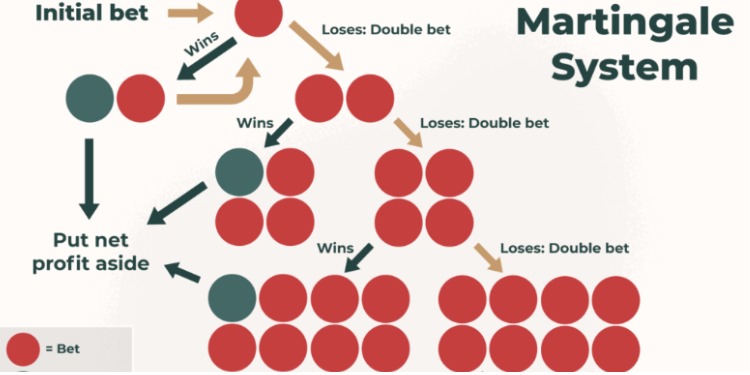
You’ve got the Martingale system, where every time you lose, you double your bet.
In that case, while new wins will be small, you automatically erase all your losses every time you win.
Then there are more superstitious beliefs, like sometimes you’re just on fire and you shouldn’t stop while you’ve got the momentum.
Others include:
- Positive expected value: when the odds used are wrong compared to true probability, like a team being stated to have a 50% chance of winning, but really it’s 60%
- Arbitrage bettors who bet on outcomes across sportsbooks and lock in profits that way.
- Blackjack card counters like in the movie The Card Counter
- Others sign up and exploit promotions and bonuses online
- Placing live bets before live odds have the chance to catch up and update
- The Kelly Criterion: adjusting bet sizes based on the edge. Phil Ivey won $20 million thanks to edge-sorting.
- D’Alembert system: increase your bet by 1 after a loss, and decrease it by 1 after a win
- Paroli system: increase bets after wins instead of after losses (opposite of the martingale)
The Problem: Humans Break Their Own Rules
All of those systems may indeed have merit to them. That’s a matter of opinion, and not everyone is going to agree.
However, there is one common theme they all have – they rely crucially and completely on execution.
Without discipline, all of these systems inevitably fall apart. Unfortunately, most people don’t follow their own systems when it matters most.
Systems start with:
- A defined budget
- A clear plan
- Strict rules about sizing and stopping
- Seizing wins patiently over a long period of time
When you draw it up, strategies look completely genius. But then what happens is a few losses stack up, and suddenly a budget starts to feel less like a boundary and more like a suggestion.
Instead of stopping where you planned, you stretch it – just a bit. Then a little bit further, then further.
It’s a slippery slope, and then it soon gets out of control. All of this occurs with little excuses like needing to recover what you lost, the next one is going to be more certain, or this is the last time.
A strategy only exists as long as you follow it. Your enemy isn’t the sportsbook or casino but your own emotions and temptations.
Short-Term Variance vs Long-Term Reality

One of the biggest traps in this respect is how woefully misleading short-term results are. You take all immediate outcomes as feedback.
If you won – that means you did something right. If you lost – it’s “proven” that something’s gone afoul.
But the reality is you can make a bad decision and still win, while you can make a good decision and still lose.
The sample size is far too small at that point. Short-term outcomes are full of noise.
It’s in the long-run that results begin to align with expected value. If your bets are fundamentally negative, no system or streak will save you in the long run.
If you indeed have discovered something that’s given you an edge, it will only show following a large sample of consistent decisions, something that requires a great deal of patience and consistency.
The Casino Environment Is Designed to Kill Discipline
The entire environment is designed to detach you from all connection to structure and self-control. Casinos famously don’t put any clocks on the wall, nor do they contain any windows. So you will keep hanging around playing and will be shocked that it’s not only dark outside but pretty much nighttime by the time you’re leaving. Day and night blur together.
There are special carpets lining the floor to get you to go to the slots where you can blow a lot of money in rapid-fire fashion. These slots give you a lot of comfort and seclusion and are deliberately located out of people’s sight so that you can remain outside people’s judgement. Employees often serve free alcohol. The sounds and flashing lights operating everywhere are enchanting as well and give you the relaxing feeling of escape. The velvet card tables make you feel like a VIP guest.
Everything about this environment is built on instability, and that’s the whole point.
What Discipline Actually Looks Like
Sometimes people look at discipline as something that either you’re born with or you’re not, that only the select among us can wield. In reality, it’s much simpler than that. It’s a set of observable behaviors. All you need to do is come up with a set up predefined rule.
Here are some good ones to start off with:
- Establish a fixed bankroll and stick to it: very few people actually respect their budgets. When money is gone, it’s gone. Don’t fall for the sunk cost fallacy.
- Consistent bet sizing: each one independent of the last. This helps eliminate impulsivity.
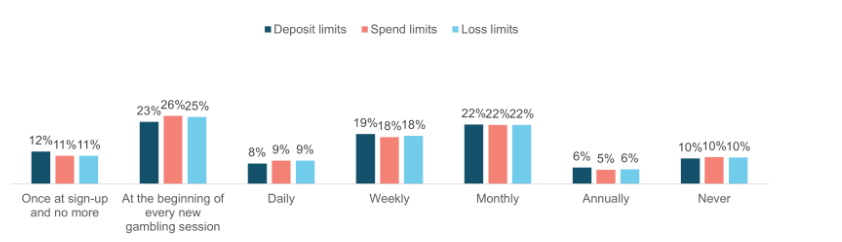
- Walking away when you hit your loss and deposit limits. Fortunately, you can set losses at the casino which they must then enforce on you. Implement a stop-win as well.
- Keep emotionally neutral: avoid overconfidence or stressing out over frustration.
- Precommit decisions before you start: choose the games and markets you’ll play ina advance
- Limit your session length.
- Don’t keep playing when you’re overfatigued and compromised.
- No in-session strategy changes


Comments
No comments yet. Be the first to share your thoughts.