

Beyond goals and assists: The missing performance data in Kenyan women's football

A GPS tracking programme involving three Mathare United Women players is highlighting the performance data missing from Kenya's women's game and the need for better ways to assess and showcase talent.
How much work does a player put in during 90 minutes, even when she does not score or provide an assist? In Kenyan women's football, there is little publicly available match data to answer that question.
While goals, assists and appearances are commonly used to assess players, other aspects of performance, such as distance covered, sprint frequency and acceleration, are rarely captured in publicly accessible records.
The information gap makes it difficult for players to demonstrate their abilities beyond what supporters see on the pitch, particularly when seeking to attract the attention of scouts and potential clubs.
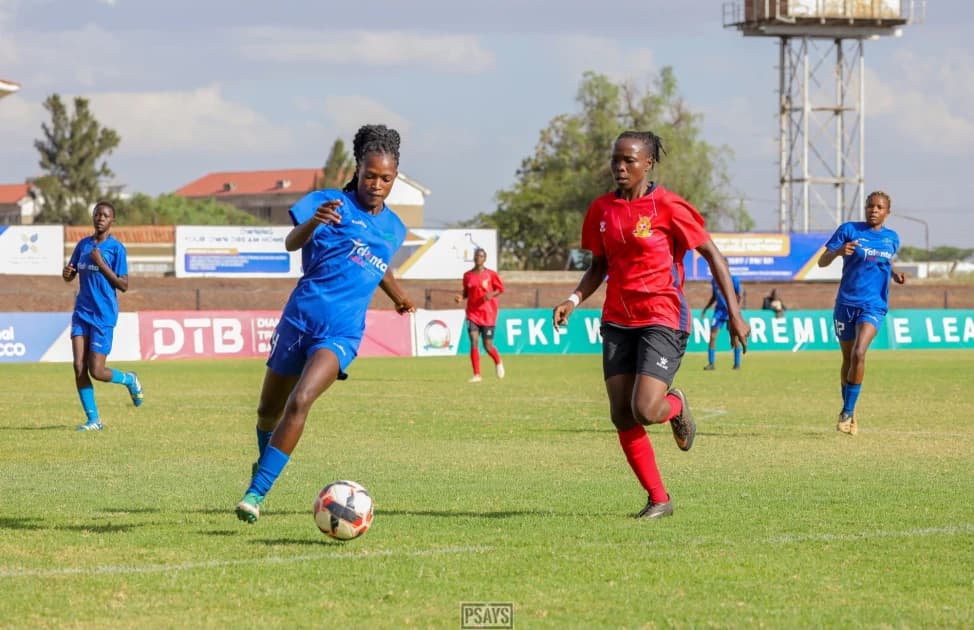
A GPS tracking programme involving three Mathare United Women players in the FKF Women's Premier League is now seeking to address this challenge.
Centre back Marline Atieno, right back Veronicah Nyambura and forward Iddah Adhiambo have been wearing performance-tracking vests during competitive matches since September 27.
In one of the tracked fixtures against Kibera Soccer Women, Nyambura covered 13.48 kilometres, while Adhiambo recorded a top speed of 29.60 kilometres per hour. Nyambura also registered a peak acceleration of 5.9 metres per second squared against Police Bullets on October 24.
Latest Stories
- Uganda begins troop withdrawal from Somalia, signalling end of 20-year military mission
- Backstabbing, secret deals and presidential ambitions tear into Opposition unity ahead of 2027 polls
- MPs drop proposal requiring county assembly nominees to be registered voters in represented wards
- MSF: Restrictions in North Kivu deny sexual violence survivors access to vital care
The figures offer a glimpse into the physical demands placed on players and provide performance measurements that are rarely captured in conventional match reports.
The initiative is being run by Nairobi-based GameOn Collective, whose co-founder, Nginda Nganga, believes the lack of recorded performance data has limited the visibility of women footballers.
 Right back Veronicah Nyambura. (Stats: GameOn Collective)
"Women footballers in Kenya train and compete just as hard as anyone, but almost nothing about their performance is recorded," Nganga said.
The programme also raises broader questions about how clubs assess players and the kind of information available to scouts when evaluating talent in the domestic women's game.
However, physical statistics alone cannot determine a player's overall contribution. A defender's positioning, a midfielder's distribution and a forward's movement, for instance, require technical and tactical assessment beyond what GPS measurements can capture.
The challenge, therefore, goes beyond collecting more numbers. It involves ensuring that physical performance records complement technical assessments and are accessible to clubs, scouts and other stakeholders involved in player recruitment and development.
As women's football continues to push for greater investment and recognition in Kenya, improved match data could provide another way to document the quality, effort and abilities of players competing in the domestic leagues.


Comments
No comments yet. Be the first to share your thoughts.