
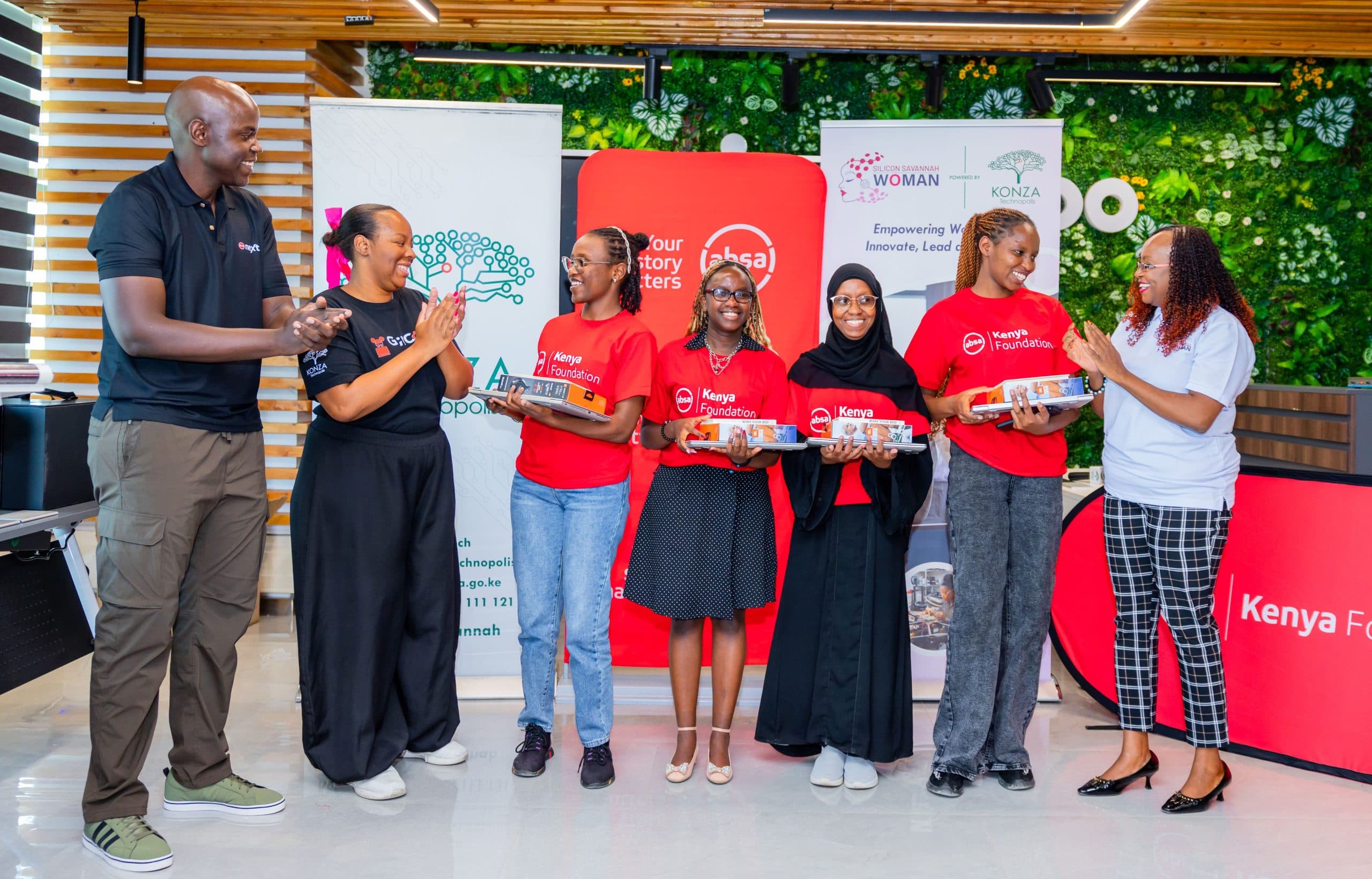
Mary Wangui, Linet Mugwanja, Aisha Barasa, and Cynthia Chepkorir emerged as the overall winners of the third edition of the GirlCode Kenya Hackathon after their Naulisako Artificial Intelligence (AI) powered transport collection system impressed judges.
The platform streamlines public transport payments, automates reconciliation for vehicle owners, and generates reliable sales records to improve efficiency, transparency, and financial tracking.
Bots team finished as first runners-up with Biashara Bot, a solution that digitises and automates financial record-keeping for underserved and unbanked small businesses.
Korva secured third place with Korva Creatives Economy, a platform that consolidates creator revenues, engagement data, and intellectual property monetisation across multiple channels, simplifying income management for digital creators.
Speaking on behalf of the winning team, Linet Mugwanja said that winning the GirlCode Kenya Hackathon is a good sign that young women have an important role to play in shaping the future of technology.
“Naulisako was inspired by everyday challenges in the public transport sector, and we are proud to have developed a solution that can make payments more efficient, transparent, and accessible,” Mugwanja said.
She added: “We hope our journey encourages more young women to embrace technology and innovation as tools for solving real-world problems.”
The top three teams received laptops, tablets, Bluetooth speakers, headsets, and inspirational books.
The two-day hackathon organised by Absa Bank Kenya, GirlCode, and the Technopolis Development Authority (Konza Technopolis) and held last weekend at Konza Technopolis. brought together 44 young women.
Participants were mostly including students, graduates, developers, and aspiring entrepreneurs.with a bias to develop tech-driven solutions to real-world challenges with support from industry mentors.
Commenting on the success of the event, Zandile Mkwanazi, CEO of GirlCode, said Kenya has one of the most exciting innovation ecosystems on the continent.
“Together, we are creating spaces where young women can learn, build, and see themselves as part of Africa’s technology future,” Mkwanazi said.
Moses Okundi, Chief Information Officer at Absa Bank Kenya, said the initiative reflects the bank’s commitment to digital inclusion and youth empowerment.
“We believe digital skills and access to technology are powerful enablers of economic opportunity. Our partnership with GirlCode over the past three years demonstrates our commitment to creating pathways for more young women to participate, innovate, and lead in the digital economy.”
Okundi said the initiative aligns with the lender’s purpose of ‘Empowering Africa’s tomorrow, together… one story at a time.’
“Through programmes such as GirlCode, we are equipping young people with the skills, confidence, and opportunities they need to realise their potential and contribute meaningfully to Kenya’s growth and digital transformation,” he added.
The Technopolis Development Authority provided mentorship, technical support, and hosted the event at Konza Technopolis, Kenya’s flagship smart city.
Josephine Ndambuki, Chief Manager, Business Development and Innovation at the Technopolis Development Authority, said hosting the hackathon aims at creating opportunities for young women to develop their skills, test their ideas, and build solutions to real-world challenges.
“We want to see more young women become innovators, entrepreneurs, and technology leaders shaping Africa’s digital future,” Ndambuki said.
Kenya was the sixth and final stop in this year’s GirlCode Pan-African Hackathon Series, following events in South Africa, Tanzania, Ghana, Botswana, and Uganda. The series forms part of GirlCode’s ambition to reach 10 million girls and women across Africa by 2030 through coding programmes, mentorship, hackathons, and digital skills development.
The Pan-African winners will be announced on 12 October 2026, with the winning team receiving approximately Ksh 790,655 (R100,000) and the winning SME receiving incubation support to help scale its solution.



Comments
No comments yet. Be the first to share your thoughts.