
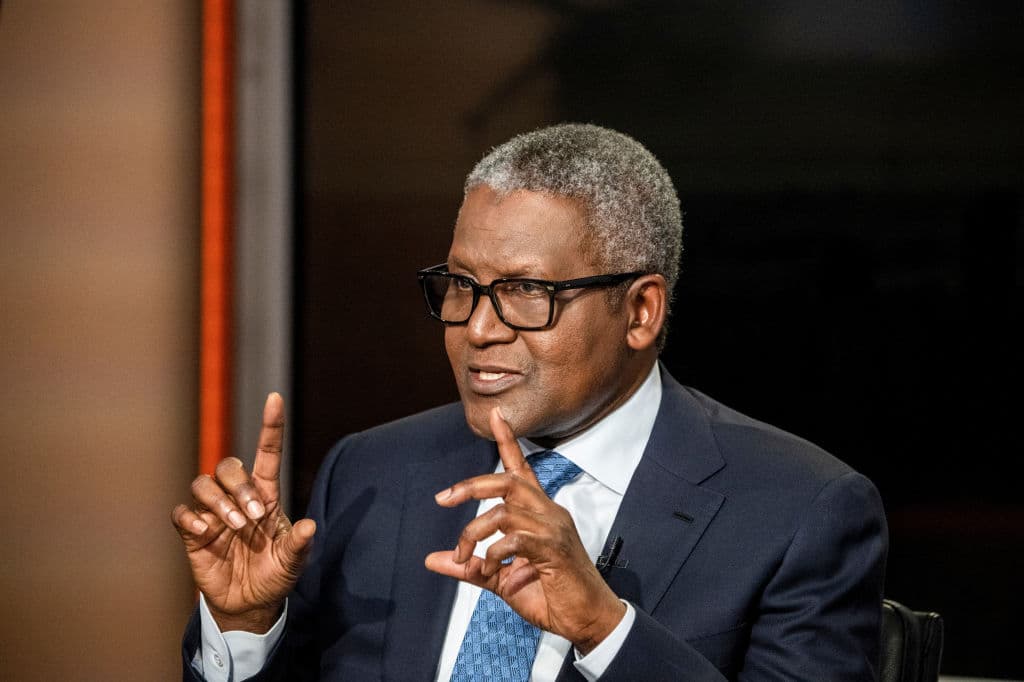
Aliko Dangote, the industrialist and billionaire, is African. And black, just like me.
That fact may sound obvious, but to a young Black African entering the corporate world, it carries a particular weight. Dangote’s story is not simply the story of a billionaire. It is evidence that an African can build institutions of extraordinary scale, compete in global markets and become a reference point far beyond the continent.
I see a similar possibility when I look at Barack Obama, Serena Williams, Oprah Winfrey, Wangari Maathai, Lupita Nyong’o and Usain Bolt. Their histories are different. An African in Nairobi does not experience race, opportunity or belonging in exactly the same way as an African-American in Atlanta, a Jamaican in Kingston or a Black Briton in London.
But their achievements speak to one another. They form part of a larger Black story. One that has never respected the borders drawn around us. And that matters because representation is often discussed as though it begins and ends with visibility. We celebrate seeing Black people on magazine covers, in Hollywood films, in political office or at the top of corporate organizations.

But sometimes representation is more consequential than that. It is seeing someone who looks like you negotiate a billion-dollar deal. It is seeing a Black woman lead a global company. It is seeing an African-born entrepreneur build a multinational institution. It is watching a Kenyan-born woman win an Academy Award. It is seeing an African-American become president of the United States.
These examples expand the imagination. For a young professional like me, that expansion matters. I am particularly fascinated by business because business is one of the clearest places where imagination becomes tangible. A company creates jobs. Capital creates possibilities. Institutions outlive individuals. Intellectual property can travel across borders. A successful enterprise can change not only the fortunes of its founder but the expectations of an entire generation.
That is why Dangote’s story interests me. Africa’s richest man represents something larger than personal wealth. His career challenges the assumption that African entrepreneurship should primarily be understood through survival – the small shop, the informal business, the hustle required to make it through another month.
There is nothing wrong with celebrating entrepreneurship born out of necessity. But Africa also needs a vocabulary for entrepreneurship built around scale. We need to imagine African companies that do not merely survive but dominate industries, develop intellectual property, compete internationally and create wealth that can be reinvested into future generations.
That lesson is not uniquely African. Madam C.J. Walker built a haircare empire at a time when Black women in America faced profound racial and economic barriers. A.G. Gaston built businesses in banking, insurance and real estate during segregation while using his wealth to support the civil rights movement.
Their significance was not simply that they became successful. They built. And that distinction matters.
Black excellence should not be reduced to individual achievement. At its best, it turns individual achievement into collective possibility. The most important question, therefore, is not simply how many Black people have reached the top. It is what they do once they get there. Success becomes transformative when it creates ladders for people who are still climbing. This is where Africa has an enormous opportunity. The continent has no shortage of talented young people. What remains uneven is the infrastructure connecting talent to capital, mentorship, technology, markets and institutional opportunity.
The next great African entrepreneur may already be sitting in a university lecture hall. The next Wangari Maathai may be working in an environmental organisation without international recognition. The next Chimamanda Ngozi Adichie may be writing stories on a phone. The next great technology founder may be building an idea from a small room in Nairobi, Lagos, Accra or Kigali.
The question is whether we will recognize and support that talent before the rest of the world does. This is why I believe the global Black success story should be understood not simply as inspiration, but as inheritance. Young Black Africans should be able to look beyond the continent without looking away from it. We should learn from Black professionals and entrepreneurs in the United States and Britain while recognizing the distinctive opportunities and challenges of building institutions in Africa.
The world our generation is entering is already global. The boardroom may be in Nairobi, but the capital may come from London. The client may be in New York. The technology may have been developed in Bengaluru. The investor may be sitting in Dubai. The competitor may be operating from Johannesburg.
The modern African professional cannot afford a small imagination. But imagination alone is insufficient. Talent needs access. Networks matter. Capital matters. Mentorship matters. Who gets invited into the room matters. This is true everywhere, but it is particularly important in places where young people are frequently told to be grateful simply for having an opportunity.
We should want more than access to existing institutions. We should want the ability to shape them. That requires governments to create environments in which African-owned businesses can grow and compete. It requires corporations to broaden recruitment, procurement and leadership pipelines. It requires successful entrepreneurs to invest not only in businesses but in people. And it requires those of us beginning our careers to think beyond securing jobs.
We should be thinking about creating value, building institutions and eventually opening doors for others. That is the part of Black excellence that is sometimes lost beneath the celebrations. We celebrate the billionaire but forget the ecosystem that made the business possible.
We celebrate the athlete but overlook the coaches, schools and facilities that helped develop the talent. We celebrate the artist but forget the institutions, producers and audiences that allowed the work to travel.
We celebrate the first person to break through and sometimes fail to ask who will be able to follow because that person broke the barrier. That is the responsibility of success. Those who have climbed should not simply celebrate that they made it to the top. They should make the climb less difficult for the people behind them.
This is the Black inheritance I want. Not a belief that every Black person will become a billionaire, a president, an Olympic champion or an internationally celebrated artist.
That would reduce achievement to fame and wealth. The inheritance I want is something more fundamental: the belief that the circumstances into which we are born do not have to determine the scale of what we build.
When I look at Dangote, I see an African who built at an extraordinary scale. When I look at Wangari Maathai, I see courage turned into an institution and a movement. When I look at Serena Williams, I see what happens when extraordinary talent meets discipline and persistence. When I look at Lupita Nyong’o, I see an African story travelling confidently across borders. And when I look at Obama, I see the power of a possibility that once seemed unimaginable to millions of people.
Their histories are not mine. But their possibilities speak to me. That is why Black achievement cannot be contained by geography. Our histories have been separated by oceans, colonial borders, migration and different political experiences. Those differences matter. They should not be erased. But neither should they prevent us from recognising the connections between us.
The Black world is bigger than borders. And perhaps that is the message my generation needs most. We do not have to inherit the limitations previous generations were forced to endure. We can inherit their courage, their creativity, their discipline and their determination to build.
The generation entering African boardrooms today should not merely ask, “Can someone like me succeed here?”
We should ask a more ambitious question: What will this institution, this industry and this continent look like because someone like me was here?
That is the legacy I want to inherit. And, eventually, the legacy I want to leave.


Comments
No comments yet. Be the first to share your thoughts.