
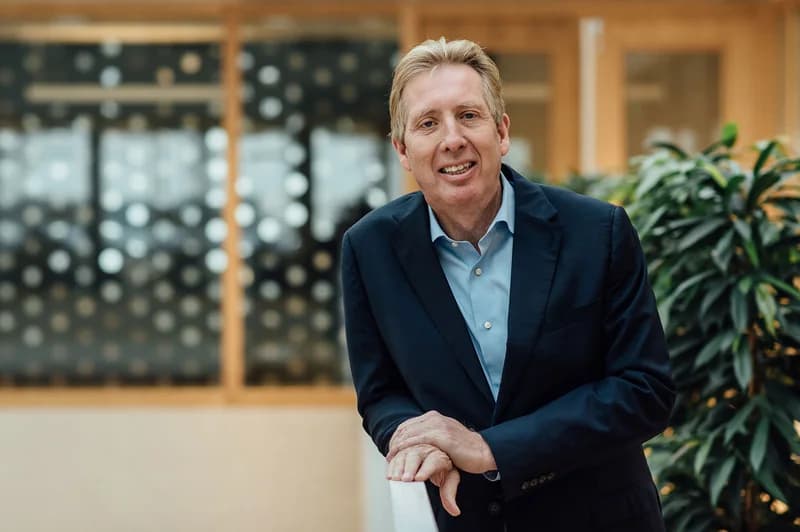
Dutch professor with terminal cancer builds AI twin to teach after his death

The first online version of Rotmans’ AI twin is expected to be ready before the end of 2026. Developers also plan to create a holographic version that could appear on stage and deliver lectures.
A Dutch professor with terminal cancer is developing an artificial intelligence version of himself that could continue delivering lectures and answering questions after his death, in a project aimed at preserving his knowledge for future generations.
Jan Rotmans, 65, is building the digital version using his books, scientific publications and recorded lectures. The project is being developed by Dutch studio The Synths, which has previously created a digital likeness of former footballer Ruud Gullit.
The first online version of Rotmans’ AI twin is expected to be ready before the end of 2026. Developers also plan to create a holographic version that could appear on stage and deliver lectures.
“That way, I can still be in places where I am no longer,” Rotmans told Dutch broadcaster NOS.
Rotmans also hopes the technology could eventually do more than reproduce information from his existing work.
He told NOS that he may use the avatar to discuss problems he has raised before and that it could even suggest solutions he has not considered himself.
Latest Stories
- Drought forces livestock farmers to make tough decisions: Our model shows the impact on inequality
- 𝐄𝐚𝐬𝐭𝐥𝐞𝐢𝐠𝐡 𝐕𝐨𝐢𝐜𝐞 𝐚𝐭 𝐍𝐢𝐧𝐞 - Families cling to hope as rescue mission at Eastleigh collapsed bulding continues
- FIFA warns FKF over court battles, raises prospect of disciplinary action
- Oburu Oginga: ODM is not supporting Ruto's government blindly
"I don't rule out the possibility that my avatar suggests solutions I don't have myself,” he said.
The 65-year-old has been living with metastatic prostate cancer for nearly two years. Doctors gave him a five-year prognosis in 2024, but he said his recent medical tests have been encouraging.
There are, however, concerns about the accuracy of the AI version, including the possibility that it could give misleading answers or attribute views to him that he does not hold.
Rotmans said the developers are testing the system to correct errors. He also wants to review the avatar's responses while he is still alive, although he expects others to take on that responsibility in the future.
Rotman similarly acknowledged that the technology could be misused but said he would rather develop it while he can still oversee the process and alert people if problems arise.

Comments
No comments yet. Be the first to share your thoughts.