
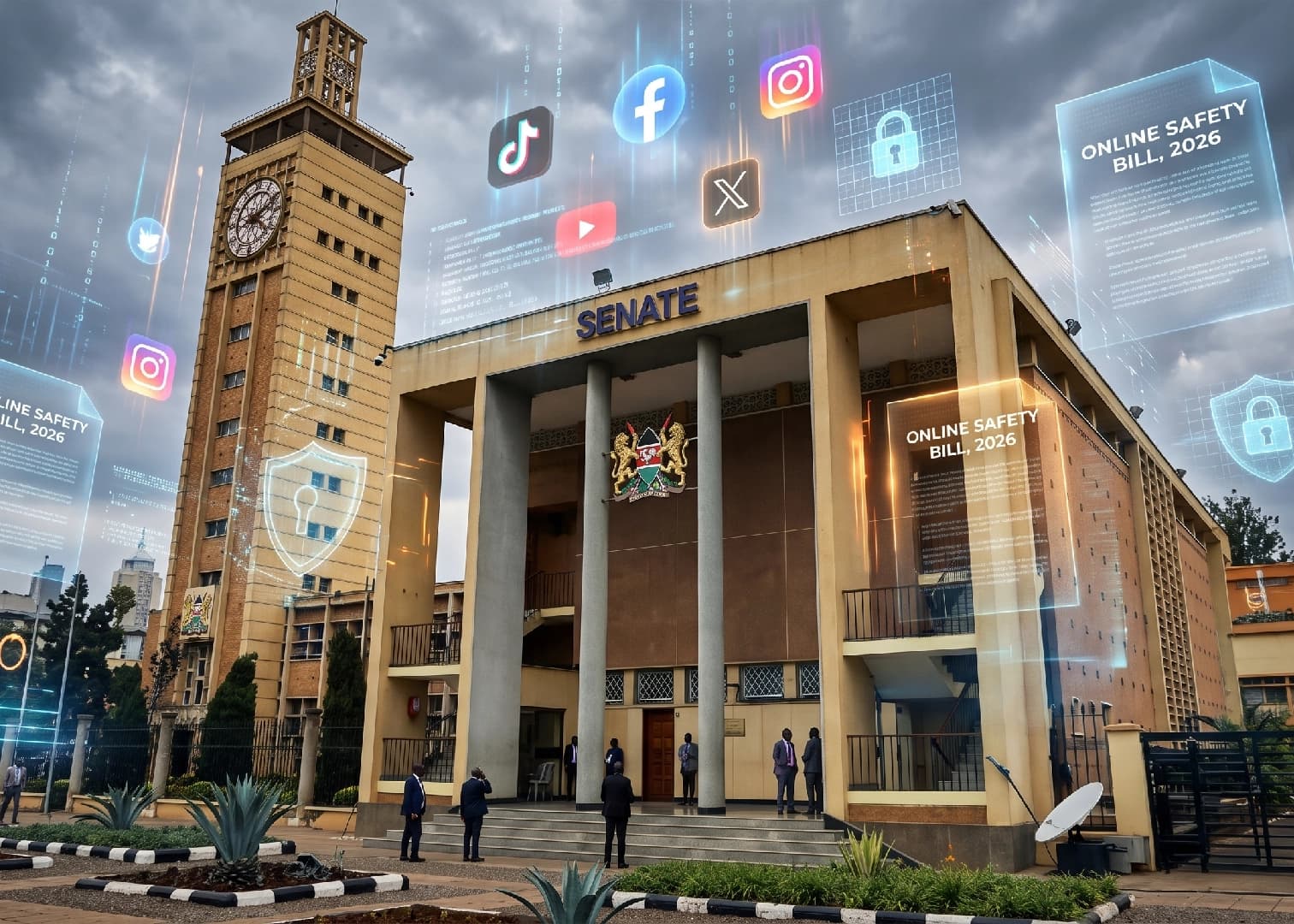
Kenya wants social media companies to answer for what happens on their platforms, and a new Bill puts children’s safety at the center, backed by fines large enough to get the attention of the biggest names in tech
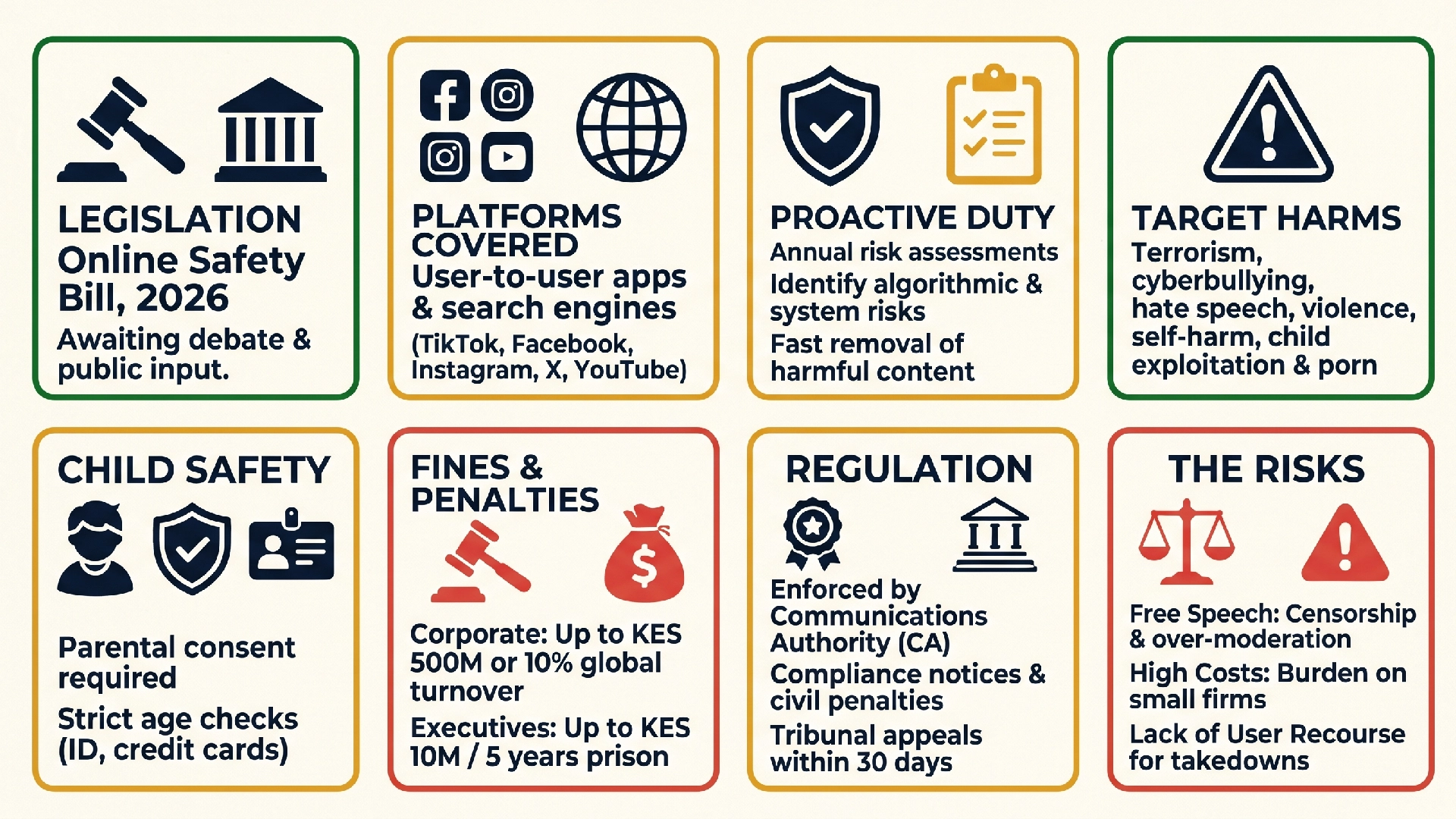
The Online Safety Bill, 2026, seeks to make technology companies more accountable for harmful content shared through their platforms, particularly material that exposes children to online risks.
The Bill proposes to cover social networks, search engines, and other online services accessible in Kenya, from TikTok, Facebook, and Instagram to X and YouTube.
It remains a proposal for now, with parliamentary debate, public participation, and likely amendments still ahead before anything becomes law.
The Bill establishes a duty of care for providers of regulated online services. This includes user-to-user platforms where people share content and interact, as well as search services. The Cabinet Secretary could add more categories through regulations.
Instead of waiting for harmful content to spread and then reacting, companies would have to assess the risks their services create at least once a year.
Those assessments would look at how recommendation algorithms, content distribution systems, and the sheer size of a platform and its business model help illegal or harmful material travel, and companies would then have to put in place measures that match the risks they find.
Once a company becomes aware of illegal content or receives a report about it, it would be expected to act quickly and appropriately.
The priority categories cover terrorism-related material, child sexual exploitation, pornography, bullying, identity-based abuse, incitement to hatred, serious violence, and content that encourages self-harm or dangerous behavior.
The Bill also separates illegal content from material that is harmful to children, so some content could trigger safety obligations even where it is not a criminal offense.
The biggest change for everyday users may come in how children get onto these services.
Platforms likely to be used by children would have to assess risks such as grooming, predatory contact, cyberbullying, and harmful recommendations, and the Bill proposes parental consent for children who access or use regulated services.
Making that work would probably push platforms past the current habit of letting users simply type in a birth date.
The methods the Bill lists include credit card verification, secure identity cross-referencing, and decentralized digital identity systems, all of which ask people to hand over more personal information, including identity or financial details.
Companies would have to square this with the Data Protection Act and collect no more than they need, and a badly designed system could shut out people who have none of the required documents.
Clause 18 proposes a fine of up to KES 500 million or 10% of a provider’s annual global turnover, whichever is higher, for failing to meet the duty of care.
It is a criminal penalty aimed at providers that neglect their statutory obligations, so a platform would not be fined automatically for every post it fails to remove.
Senior executives who consent to a breach, take part in it, or are grossly negligent could face a fine of up to KES 10 million, five years in prison, or both.
The Communications Authority of Kenya would be the main regulator. It could issue compliance notices that name the alleged breach and spell out the corrective steps required, and it could also impose civil penalties, weighing the seriousness and duration of the breach, the provider’s financial capacity, and whether the penalty is proportionate.
Providers could appeal certain decisions to the Communications and Multimedia Appeals Tribunal within 30 days.
For global companies, a penalty tied to worldwide turnover is a serious financial risk. Smaller Kenyan firms could struggle just to cover the cost of compliance, from moderation teams and reporting systems to age-verification tools and legal advice.
The Bill goes after real problems, including harassment, child exploitation, and the spread of dangerous content, but the way it is enforced could squeeze freedom of expression.
A platform staring at a fine worth 10% of its global turnover may decide it is safer to take down borderline posts than to risk the regulator’s attention, and that could sweep up political commentary, investigative journalism, satire, and criticism of public officials, especially when a post is mass-reported.
The Bill does include safeguards.
It requires proportionality, and it says platforms are not obliged to proactively scan private messages. Where scanning technology is used, it has to meet tests of necessity, proportionality, and data protection, with human review in certain circumstances.
Ordinary users, however, do not get an equally clear independent route to challenge every content removal or account restriction, a gap lawmakers should look at closely during debate.
Kenya has good reason to want safer platforms, particularly for children, but the challenge for lawmakers is to protect users without turning technology companies into nervous gatekeepers of online conversation, at the expense of privacy and access to information.


Comments
No comments yet. Be the first to share your thoughts.